Get your patient on Albuterol Sulfate Inhalation Solution, 0.5%- Albuterol Sulfate solution (Albuterol Sulfate)
Albuterol Sulfate Inhalation Solution, 0.5%- Albuterol Sulfate solution prescribing information

INDICATIONS AND USAGE
Albuterol inhalation solution is indicated for the relief of bronchospasm in patients 12 years of age and older with reversible obstructive airway disease and acute attacks of bronchospasm.
DOSAGE AND ADMINISTRATION
The usual dosage for adults and pediatric patients 12 years of age and older is 2.5 mg of albuterol (one unit-of-use vial) administered 3 to 4 times daily by nebulization. More frequent administration or higher doses are not recommended. To administer 2.5 mg of albuterol, dilute 0.5 mL of the 0.5% solution for inhalation to a total volume of 3 mL with sterile normal saline solution and administer by nebulization. The flow rate is regulated to suit the particular nebulizer so that albuterol inhalation solution will be delivered over approximately 5 to 15 minutes.
Drug compatibility (physical and chemical), efficacy, and safety of albuterol inhalation solution when mixed with other drugs in a nebulizer have not been established.
The use of albuterol inhalation solution can be continued as medically indicated to control recurring bouts of bronchospasm. During treatment, most patients gain optimum benefit from regular use of the nebulizer solution.
If a previously effective dosage regimen fails to provide the usual relief, medical advice should be sought immediately, as this is often a sign of seriously worsening asthma which would require reassessment of therapy.
The nebulizer should be cleaned in accordance with the manufacturer’s instructions. Failure to do so could lead to bacterial contamination of the nebulizer and possible infection.
CONTRAINDICATIONS
Albuterol inhalation solution is contraindicated in patients with a history of hypersensitivity to albuterol or any of its components.
ADVERSE REACTIONS
The results of clinical trials with albuterol inhalation solution in 135 patients showed the following side effects which were considered probably or possibly drug related:
| Reaction | Percent Incidence (N=135) |
| Central Nervous System | |
| Tremors | 20 |
| Dizziness | 7 |
| Nervousness | 4 |
| Headache | 3 |
| Insomnia | 1 |
| Gastrointestinal | |
| Nausea | 4 |
| Dyspepsia | 1 |
Ear, nose and throat Nasal congestion | 1 |
| Pharyngitis | <1 |
| Cardiovascular | |
| Tachycardia | 1 |
| Hypertensions | 1 |
| Respiratory | |
| Bronchospasm | 8 |
| Cough | 4 |
| Bronchitis | 4 |
| Wheezing | 1 |
No clinically relevant laboratory abnormalities related to albuterol inhalation solution were determined in these studies.
Cases of urticaria, angioedema, rash, bronchospasm, hoarseness, oropharyngeal edema, and arrhythmias (including atrial fibrillation, supraventricular tachycardia, and extrasystoles) have also been reported after the use of inhaled albuterol.
To report SUSPECTED ADVERSE REACTIONS, contact Ritedose Pharmaceuticals, LLC at 1-855-806-3300 or FDA at 1-800-FDA-1088 or www.fda.gov/medwatch .
Drug Interactions
Other short-acting sympathomimetic aerosol bronchodilators or epinephrine should not be used concomitantly with albuterol inhalation solution.
DESCRIPTION
Albuterol Inhalation Solution, USP 0.5% contains albuterol sulfate, USP, the racemic form of albuterol and a relatively selective beta 2 - adrenergic bronchodilator. Albuterol sulfate has the chemical name α 1 [(tert-Butylamino) methyl]-4-hydroxy-m-xylene-α, α’-diol sulfate (2:1) (salt), and the following chemical structure:
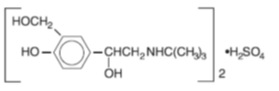
The molecular weight of albuterol sulfate is 576.7, and the empirical formula is (C 13 H 21 NO 3 ) 2 • H 2 SO 4 . Albuterol sulfate USP is a white crystalline powder, soluble in water and slightly soluble in ethanol. The World Health Organization’s recommended name for albuterol base is salbutamol.
Albuterol inhalation solution, USP 0.5%, is in concentrated form. Dilute 0.5 mL of the solution to 3 mL with sterile normal saline solution prior to administration.
Each 0.5 mL Unit-Dose Vial Contains: 2.5 mg of albuterol (equivalent to 3 mg of albuterol sulfate, USP) in a sterile, aqueous solution; sulfuric acid is used to adjust the pH to between 3 and 5. Albuterol Inhalation Solution, USP contains no sulfiting agents or preservatives. It is supplied in 0.5 mL sterile Unit-Dose Vials.
Albuterol Inhalation Solution, USP is a clear, colorless to light yellow solution.
CLINICAL PHARMACOLOGY
The primary action of beta-adrenergic drugs, including albuterol, is to stimulate adenyl cyclase, the enzyme that catalyzes the formation of cyclic-3' ,5'-adenosine monophosphate (cyclic AMP) from adenosine triphosphate (ATP) in beta-adrenergic cells. The cyclic AMP thus fanned mediates the cellular responses. Increased cyclic AMP levels are associated with relaxation of bronchial smooth muscle and inhibition of release of mediators of immediate hypersensitivity from cells, especially from mast cells.
In vitro studies and in vivo pharmacologic studies have demonstrated that albuterol has a preferential effect on beta 2 -adrenergic receptors compared with isoproterenol. While it is recognized that beta 2 -adrenergic receptors are the predominant receptors in bronchial smooth muscle, data indicate that there is a population of beta 2 -receptors in the human heart existing in a concentration between 10% and 50%. The precise function of these receptors has not been established.
In controlled clinical trials, albuterol has been shown to have more effect on the respiratory tract, in the form of bronchial smooth muscle relaxation, than isoproterenol at comparable doses while producing fewer cardiovascular effects.
Controlled clinical studies and other clinical experience have shown that inhaled albuterol, like other beta-adrenergic agonist drugs, can produce a significant cardiovascular effect in some patients, as measured by pulse rate, blood pressure, symptoms, and/or ECG changes.
Albuterol is longer acting than isoproterenol in most patients by any route of administration because it is not a substrate for the cellular uptake processes for catecholamines nor for catechol-O-methyl transferase.
The effects of rising doses of albuterol and isoproterenol aerosols were studied in volunteers and asthmatic patients. Results in normal volunteers indicated that the propensity for increase in heart rate for albuterol is 1/2 to 1/4 that of isoproterenol. In asthmatic patients similar cardiovascular differentiation between the MO drugs was also seen.
Preclinical: Intravenous studies in rats with albuterol sulfate have demonstrated that albuterol crosses the blood-brain barrier and reaches brain concentrations that are amounting to approximately 5.0% of the plasma concentrations. In structures outside the brain barrier (pineal and pituitary glands), albuterol concentrations were found to be 100 times those in the whole brain.
Studies in laboratory animals (minipigs, rodents, and dogs) have demonstrated the occurrence of cardiac arrhythmias and sudden death (with histologic evidence of myocardial necrosis) when beta-agonists and methylxanthines were administered concurrently. The significance of these findings is unknown.
Pharmacokinetics
After either IPPB or nebulizer administration in asthmatic patients, less than 20% of a single albuterol dose was absorbed; the remaining amount was recovered from the nebulizer and apparatus and expired air. Most of the absorbed dose was recovered in the urine 24 hours after drug administration. Following a 3.0 mg dose of nebulized albuterol, the maximum albuterol plasma level at 0.5 hour was 2.1 ng/mL (range 1.4 to 3.2 ng/mL). It has been demonstrated that following oral administration of 4 mg of albuterol, the elimination half-life was 5 to 6 hours.
HOW SUPPLIED
Albuterol Inhalation Solution, USP 2.5 mg/0.5 mL (equivalent to 3 mg albuterol sulfate), is a clear, colorless to light yellow solution, and is supplied in plastic sterile unit-dose vials of 0.5 mL each, supplied in individual foil pouches:
NDC 76204-027-01: 30 unit-dose vials, each in an individual pouch.
Storage and Handling
Store between 2°C and 25°C (36°F – 77°F). Protect from light. Store in pouch until time of use.
Rx Only
Manufactured for:
Ritedose Pharmaceuticals, LLC
Columbia, SC 29203
Manufactured by:
The Ritedose Corporation
Columbia, SC 29203
May 2026
INSTRUCTIONS FOR USE
Albuterol Inhalation Solution, USP
2.5 mg/0.5 mL (equivalent to 3 mg albuterol sulfate)
Note: The Albuterol Inhalation Solution is concentrated and must be diluted.
Read complete instructions carefully before using.
1. Twist open the top of one Albuterol Inhalation Solution unit-of-use container (Figure 1).
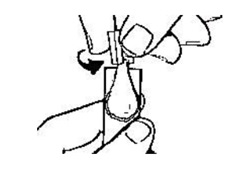
FIGURE 1
2. Squeeze the solution into the nebulizer reservoir through the appropriate opening (Figure 2).
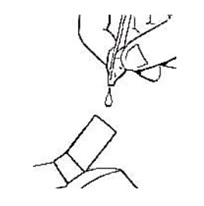
FIGURE 2
3. Add 2.5 mL of diluting fluid – sterile normal saline solution (as your doctor has directed).
4. Gently swirl the nebulizer to mix the contents and connect it with the mouthpiece or face mask (Figure 3).
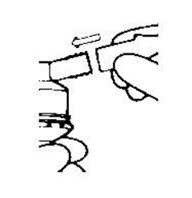
FIGURE 3
5. Connect the nebulizer to the compressor.
6. Sit in a comfortable, upright position; place the mouthpiece in your mouth (Figure 4) (or put on the face mask); and turn the compressor on.
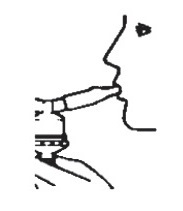
FIGURE 4
7. Breathe as calmly, deeply, and evenly as possible until no more mist is formed in the nebulizer chamber (about 5 to 15 minutes). At this point, the treatment is finished.
8. Clean the nebulizer (see manufacturer’s instructions). Failure to clean the nebulizer in accordance with the manufacturer’s instructions could lead to bacterial contamination of the nebulizer, and possible infection.
Note: Use only as directed by your physician. More frequent administration or higher doses are not recommended.
Mixing Compatibility: The safety and effectiveness of Albuterol solution for inhalation have not been determined when one or more drugs are mixed with it in a nebulizer.
Store Albuterol Inhalation Solution, USP 0.5%, between 2° and 25° C (36° and 77° F). Store in pouch until time of use.
ADDITIONAL INSTRUCTIONS________________________________
______________________________________________________
______________________________________________________
______________________________________________________
______________________________________________________
This Instructions for Use has been approved by the U.S. Food and Drug Administration.
Manufactured for:
Ritedose Pharmaceuticals, LLC
Columbia, SC 29203
Manufactured by:
The Ritedose Corporation
Columbia, SC 29203
May 2026
