Get your patient on Dextrose And Electrolyte No. 48- Sodium Lactate, Potassium Chloride, Magnesium Chloride, Monobasic Potassium Phosphate, Sodium Chloride And Dextrose Monohydrate injection (Sodium Lactate, Potassium Chloride, Magnesium Chloride, Monobasic Potassium Phosphate, Sodium Chloride And Dextrose Monohydrate)
Dextrose And Electrolyte No. 48- Sodium Lactate, Potassium Chloride, Magnesium Chloride, Monobasic Potassium Phosphate, Sodium Chloride And Dextrose Monohydrate injection prescribing information

INDICATIONS AND USAGE
5% Dextrose and Electrolyte No. 48 Injection (Multiple Electrolytes and Dextrose Injection, Type 1, USP) is indicated as a source of water, electrolytes, and calories or as an alkalinizing agent.
DOSAGE AND ADMINISTRATION
Important Administration Instructions
- 5% Dextrose and Electrolyte No. 48 Injection (Multiple Electrolytes and Dextrose Injection, Type 1, USP) is intended for intravenous administration using sterile equipment.
- Do not connect flexible plastic containers in series in order to avoid air embolism due to possible residual air contained in the primary container.
- Set the vent to the closed position on a vented intravenous administration set to prevent air embolism.
- Use a dedicated line without any connections to avoid air embolism.
- Do not pressurize intravenous solutions contained in flexible plastic containers to increase flow rates in order to avoid air embolism due to incomplete evacuation of residual air in the container.
- Prior to infusion, visually inspect the solution for particulate matter and discoloration. The solution should be clear and there should be no precipitates. Do not administer unless solution is clear, and container is undamaged.
- Do not administer 5% Dextrose and Electrolyte No. 48 Injection (Multiple Electrolytes and Dextrose Injection, Type 1, USP) simultaneously with blood through the same administration set because of the possibility of pseudoagglutination or hemolysis.
Dosing Information
The choice of product, dosage, volume, rate, and duration of administration is dependent upon the age, weight and clinical condition of the patient and concomitant therapy, and administration should be determined by a physician experienced in intravenous fluid therapy.
Introduction of Additives
Additives may be incompatible.
Evaluate all additions to the plastic container for compatibility and stability of the resulting preparation. Consult with a pharmacist, if available.
If, in the informed judgment of the physician, it is deemed advisable to introduce additives, use aseptic technique. Mix thoroughly when additives have been introduced. After addition, if there is a discoloration and/or the appearance of precipitates, insoluble complexes or crystals, do not use. Do not store solutions containing additives. Discard any unused portion.
ADVERSE REACTIONS
Post-marketing Adverse Reactions
The following adverse reactions associated with the use of 5% Dextrose and Electrolyte No. 48 Injection (Multiple Electrolytes and Dextrose Injection, Type 1, USP) were identified in clinical trials or post marketing reports. Because post marketing reactions were reported voluntarily from a population of uncertain size, it is not always possible to estimate their frequency, reliably, or to establish a causal relationship to drug exposure:
Hypersensitivity and Infusion Reactions: palpitations, feeling abnormal, piloerection, edema peripheral, hypotension, dyspnea, wheezing, urticaria, cold sweet, tachycardia, chest pain, chest discomfort, respiratory rate increased, flushing, hyperemia, asthenia, pyrexia, chills.
General Disorders and Administration Site Conditions : infusion site pain, burning sensation, febrile response, infection at the site of injection, venous thrombosis or phlebitis extending from site of injection, extravasation and hypervolemia.
Metabolism and nutrition disorders : hyperkalemia, hyperglycemia, hyponatremia.
Nervous System Disorders : hyponatremic encephalopathy.
If an adverse reaction does occur, discontinue the infusion, evaluate the patient, institute appropriate therapeutic countermeasures, and save the remainder of the fluid for examination if deemed necessary.
Overdose
Excessive administration of 5% Dextrose and Electrolyte No. 48 Injection (Multiple Electrolytes and Dextrose Injection, Type 1, USP) can cause:
- fluid overload with a risk of edema (peripheral and/or pulmonary), particularly when renal sodium excretion is impaired.
- hyperglycemia, hyperosmolarity, and osmotic diuresis, dehydration and electrolyte loss.
- hypernatremia and hyperkalemia, especially in patients with severe renal impairment.
- hypermagnesemia.
- metabolic alkalosis with or without hypokalemia and decreased ionized serum calcium and magnesium concentrations.
- Hyperphosphatemia, hypocalcemia, and hypomagnesemia. See WARNINGS
When assessing an overdose, any additives in the solution must also be considered.
The effects of an overdose may require immediate medical attention and treatment.
Interventions include discontinuation of 5% Dextrose and Electrolyte No. 48 Injection (Multiple Electrolytes and Dextrose Injection, Type 1, USP), dose reduction, and other measures as indicated for the specific clinical constellation (e.g., monitoring of fluid balance, electrolyte concentrations and acid base balance).
Drug Interactions
Other Products that Affect Fluid and/or Electrolyte Balance
Administration of 5% Dextrose and Electrolyte No. 48 Injection (Multiple Electrolytes and Dextrose Injection, Type 1, USP) to patients treated concomitantly with drugs associated with sodium and fluid retention may increase the risk of hypernatremia and volume overload. Avoid use of 5% Dextrose and Electrolyte No. 48 Injection (Multiple Electrolytes and Dextrose Injection, Type 1, USP) in patients receiving such products, such as corticosteroids or corticotropin. If use cannot be avoided, monitor serum electrolytes, fluid balance and acid-base balance.
Other Drugs that Increase the Risk of Hyponatremia
Administration of 5% Dextrose and Electrolyte No. 48 Injection (Multiple Electrolytes and Dextrose Injection, Type 1, USP) in patients treated concomitantly with medications associated with hyponatremia may increase the risk of developing hyponatremia.
Avoid use of 5% Dextrose and Electrolyte No. 48 Injection (Multiple Electrolytes and Dextrose Injection, Type 1, USP) in patients receiving products, such as diuretics, and certain antiepileptic and psychotropic medications. Drugs that increase the vasopressin effect reduce renal electrolyte free water excretion and may also increase the risk of hyponatremia following treatment with intravenous fluids. If use cannot be avoided, monitor serum sodium concentrations.
Other Products that Increase the Risk of Hyperkalemia
Because of its potassium content, avoid use of 5% Dextrose and Electrolyte No. 48 Injection (Multiple Electrolytes and Dextrose Injection, Type 1, USP) in patients receiving products that can cause hyperkalemia or increase the risk of hyperkalemia, such as potassium sparing diuretics, ACE inhibitors, angiotensin II receptor antagonists, or the immunosuppressants tacrolimus and cyclosporine. If use cannot be avoided, monitor serum potassium concentrations.
Lithium
Renal clearance of lithium may be increased during administration of 5% Dextrose and Electrolyte No. 48 Injection (Multiple Electrolytes and Dextrose Injection, Type 1, USP). Monitor serum lithium concentrations during concomitant use.
Drugs with pH Dependent Renal Elimination
Due to its alkalinizing effect (formation of bicarbonate), 5% Dextrose and Electrolyte No. 48 Injection (Multiple Electrolytes and Dextrose Injection, Type 1, USP) may interfere with the elimination of drugs with pH dependent renal elimination. Renal clearance of acidic drugs may be increased. Renal clearance of alkaline drugs may be decreased.
DESCRIPTION
5% Dextrose and Electrolyte No. 48 Injection (Multiple Electrolytes and Dextrose Injection, Type 1, USP) is a sterile, nonpyrogenic solution for fluid and electrolyte replenishment and caloric supply in a single dose container for intravenous administration. Each 100 mL contains 5 g Dextrose Hydrous, USP•, 260 mg Sodium Lactate (C 3 H 5 NaO 3 ), 141 mg Potassium Chloride, USP (KCl), 31 mg Magnesium Chloride, USP (MgCl 2 •6H 2 0), 20 mg Monobasic Potassium Phosphate, NF (KH 2 PO 4 ), and 12 mg Sodium Chloride, USP (NaCl). It contains no antimicrobial agents. The pH is 5.0 (4.0 to 6.5).
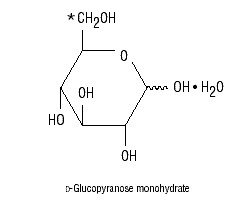
5% Dextrose and Electrolyte No. 48 Injection (Multiple Electrolytes and Dextrose Injection, Type 1, USP) administered intravenously has value as a source of water, electrolytes, and calories. One liter has an ionic concentration of 25 mEq sodium, 20 mEq potassium, 3 mEq magnesium, 24 mEq chloride, 23 mEq lactate and 3 mEq phosphate (as HPO 4 2- ). The osmolarity is 348 mOsmol/L (calc). Normal physiologic osmolarity range is approximately 280 to 310 mOsmol/L. Administration of substantially hypertonic solutions (≥ 600 mOsmol/L) may cause vein damage. The caloric content is 180 kcal/L.
Dextrose is derived from corn.
The VIAFLEX plastic container is fabricated from a specially formulated polyvinyl chloride (PL 146 Plastic). The amount of water that can permeate from inside the container into the overwrap is insufficient to affect the solution significantly. Solutions in contact with the plastic container can leach out certain of its chemical components in very small amounts within the expiration period, e.g., di-2-ethylhexyl phthalate (DEHP), up to 5 parts per million. However, the safety of the plastic has been confirmed in tests in animals according to USP biological tests for plastic containers as well as by tissue culture toxicity studies.
CLINICAL PHARMACOLOGY
5% Dextrose and Electrolyte No. 48 Injection (Multiple Electrolytes and Dextrose Injection, Type 1, USP) has value as a source of water, electrolytes and calories. They are capable of inducing diuresis depending on the clinical condition of the patient.
5% Dextrose and Electrolyte No. 48 Injection (Multiple Electrolytes and Dextrose Injection, Type 1, USP) produce a metabolic alkalinizing effect. Lactate ions are metabolized ultimately to carbon dioxide and water, which requires the consumption of hydrogen cations.
HOW SUPPLIED
5% Dextrose and Electrolyte No. 48 Injection (Multiple Electrolytes and Dextrose Injection, Type 1, USP) in VIAFLEX plastic containers is available as shown below:
Code | Size (mL) | NDC |
2B2103 | 500 | NDC 0338-0143-03 |
Exposure of pharmaceutical products to heat should be minimized. Avoid excessive heat. It is recommended the product be stored at room temperature (25°C); brief exposure up to 40°C does not adversely affect the product.
