Get your patient on Doxycycline
Doxycycline prescribing information

INDICATIONS AND USAGE
Indication
Doxycycline capsules are indicated for the treatment of only inflammatory lesions (papules and pustules) of rosacea in adult patients. No meaningful effect was demonstrated for generalized erythema (redness) of rosacea.
Limitations of Use
This formulation of doxycycline has not been evaluated in the treatment or prevention of infections. Do not use doxycycline capsules for treating bacterial infections, providing antibacterial prophylaxis, or reducing the numbers or eliminating microorganisms associated with any bacterial disease.
To reduce the development of drug-resistant bacteria as well as to maintain the effectiveness of other antibacterial drugs, doxycycline capsules should be used only as indicated.
Doxycycline capsules have not been evaluated for the treatment of the erythematous, telangiectatic, or ocular components of rosacea.
DOSAGE AND ADMINISTRATION
General Dosing Information
Take one doxycycline capsule (40 mg) once daily in the morning on an empty stomach, preferably at least one hour prior to or two hours after meals.
Administration of adequate amounts of fluid along with the capsules is recommended to wash down the capsule to reduce the risk of esophageal irritation and ulceration [see Adverse Reactions (6) ] .
Important Considerations for Dosing Regimen
The dosage of doxycycline capsules differs from that of doxycycline used to treat infections. Exceeding the recommended dosage may result in an increased incidence of side effects including the development of resistant organisms.
DOSAGE FORMS AND STRENGTHS
40 mg capsule imprinted with “30” on flesh-colored opaque cap, and “10” on colorless transparent body.
USE IN SPECIFIC POPULATIONS
Pregnancy
Risk Summary
Doxycycline may cause reversible inhibition of bone growth and permanent discoloration of deciduous teeth when administered during the second and third trimesters of pregnancy [see Warnings and Precautions (5.1 and 5.2) ] . Available data from published studies have not shown a difference in major birth defect risk with doxycycline exposure in the first trimester of pregnancy compared to unexposed pregnancies. Avoid use of doxycycline capsules during the second and third trimester of pregnancy.
The background risk of major birth defects and miscarriage for the indicated population is unknown. All pregnancies have a background risk of birth defect, loss, or other adverse outcomes. In the U.S. general population, the estimated background risk of major birth defects and miscarriage in clinically recognized pregnancies is 2–4% and 15–20%, respectively.
Data
Human Data
Published studies, including epidemiological and observational studies, with use of doxycycline during the first trimester of pregnancy have not identified drug-related increases in major birth defects.
The use of tetracycline during tooth development (second and third trimester of pregnancy) may cause permanent discoloration of deciduous teeth (yellow-gray-brown). This adverse reaction is more common during long-term use of the drug but has been observed following repeated short-term courses.
Animal Data
Results from animal studies indicate that doxycycline crosses the placenta and is found in fetal tissues.
Lactation
Risk Summary
Based on available published data, doxycycline is likely to be present in human breast milk but the specific concentration in breastmilk is not clear. There is no information on the effects of doxycycline on the breastfed infant or the effects on milk production. Because there are other antibacterial drug options available to treat rosacea in lactating women and because of the potential for serious adverse reactions, including tooth discoloration and inhibition of bone growth, advise patients that breastfeeding is not recommended during treatment with doxycycline capsules and for 5 days after the last dose.
Pediatric Use
Doxycycline capsules should not be used in infants and children less than 8 years of age [see Warnings and Precautions (5.1) ] . Doxycycline capsules have not been studied in children of any age with regard to safety or efficacy, therefore use in children is not recommended.
Geriatric Use
Clinical studies of doxycycline capsules did not include sufficient numbers of subjects aged 65 and over to determine whether they respond differently from younger subjects. Other reported clinical experience has not identified differences in responses between elderly and younger patients. In general, dose selection for an elderly patient should be cautious, usually starting at the low end of the dosing range, reflecting the greater frequency of decreased hepatic, renal, or cardiac function, and concomitant disease or other drug therapy.
CONTRAINDICATIONS
This drug is contraindicated in persons who have shown hypersensitivity to doxycycline or any other tetracyclines.
WARNINGS AND PRECAUTIONS
Inhibition of Bone Growth During Fetal and Pediatric Development
Doxycycline, like other tetracycline-class drugs, may cause inhibition of bone growth when administered during the second and third trimesters of pregnancy, infancy, and childhood. All tetracyclines form a stable calcium complex in any bone-forming tissue. A decrease in fibula growth rate has been observed in premature human infants given oral tetracycline in doses of 25 mg/kg every 6 hours. This reaction was shown to be reversible when the drug was discontinued. If doxycycline is used during the second or third trimester of pregnancy, advise the patient of the potential risk to the fetus [see Use in Specific Populations (8.1) ] .
Tooth Discoloration During Fetal and Pediatric Development
The use of tetracycline class drugs orally during tooth development (last half of pregnancy, infancy, and childhood up to the age of 8 years) may cause permanent discoloration of the teeth (yellow-gray-brown). This adverse reaction is more common during long-term use of the drug but has been observed following repeated short-term courses. Enamel hypoplasia has also been reported. Use of tetracycline drugs is not recommended during tooth development [see Use in Specific Populations (8.1) ] .
Clostridium difficile Associated Diarrhea (CDAD)
Clostridium difficile associated diarrhea (CDAD) has been reported with nearly all antibacterial agents, including doxycycline, and may range in severity from mild diarrhea to fatal colitis. Treatment with antibacterial agents alters the normal flora of the colon leading to overgrowth of C. difficile .
C. difficile produces toxins A and B which contribute to the development of CDAD. Hypertoxin producing strains of C. difficile cause increased morbidity and mortality, as these infections can be refractory to antimicrobial therapy and may require colectomy. CDAD must be considered in all patients who present with diarrhea following antibiotic use. Careful medical history is necessary since CDAD has been reported to occur over two months after the administration of antibacterial agents.
If CDAD is suspected or confirmed, ongoing antibiotic use not directed against C. difficile may need to be discontinued. Appropriate management should be instituted as clinically indicated.
Metabolic Effects
The anti-anabolic action of the tetracyclines may cause an increase in BUN. While this is not a problem in those with normal renal function, in patients with significantly impaired function, higher serum levels of tetracycline-class antibiotics may lead to azotemia, hyperphosphatemia, and acidosis. If renal impairment exists, even usual oral or parenteral doses may lead to excessive systemic accumulations of the drug and possible liver toxicity. Under such conditions, lower than usual total doses are indicated, and if therapy is prolonged, serum level determinations of the drug may be advisable.
Photosensitivity
Photosensitivity manifested by an exaggerated sunburn reaction has been observed in some individuals taking tetracyclines. Although this was not observed during the duration of the clinical studies with doxycycline capsules, patients should minimize or avoid exposure to natural or artificial sunlight (tanning beds or UVA/B treatment) while using doxycycline capsules. If patients need to be outdoors while using doxycycline capsules, they should wear loose-fitting clothes that protect skin from sun exposure and discuss other sun protection measures with their physician.
Autoimmune Syndromes
Tetracyclines have been associated with the development of autoimmune syndromes. Symptoms may be manifested by fever, rash, arthralgia, and malaise. In symptomatic patients, liver function tests, ANA, CBC, and other appropriate tests should be performed to evaluate the patients. Use of all tetracycline-class drugs should be discontinued immediately.
Tissue Hyperpigmentation
Tetracycline-class drugs are known to cause hyperpigmentation. Tetracycline therapy may induce hyperpigmentation in many organs, including nails, bone, skin, eyes, thyroid, visceral tissue, oral cavity (teeth, mucosa, alveolar bone), sclerae and heart valves. Skin and oral pigmentation has been reported to occur independently of time or amount of drug administration, whereas other pigmentation has been reported to occur upon prolonged administration. Skin pigmentation includes diffuse pigmentation as well as over sites of scars or injury.
Pseudotumor Cerebri
Pseudotumor cerebri (benign intracranial hypertension) in adults has been associated with the use of tetracyclines. The usual clinical manifestations are headache and blurred vision. Bulging fontanels have been associated with the use of tetracyclines in infants. While both of these conditions and related symptoms usually resolve after discontinuation of the tetracycline, the possibility for permanent sequelae exists. Patients should be questioned for visual disturbances prior to initiation of treatment with tetracyclines and should be routinely checked for papiledema while on treatment.
Development of Drug Resistant Bacteria
Bacterial resistance to tetracyclines may develop in patients using doxycycline capsules. Because of the potential for drug-resistant bacteria to develop during the use of doxycycline capsules, it should only be used as indicated.
Superinfection
As with other antibiotic preparations, use of doxycycline capsules may result in overgrowth of non-susceptible microorganisms, including fungi. If superinfection occurs, doxycycline capsules should be discontinued and appropriate therapy instituted. Although not observed in clinical trials with doxycycline capsules, the use of tetracyclines may increase the incidence of vaginal candidiasis. Doxycycline capsules should be used with caution in patients with a history of or predisposition to Candida overgrowth.
Laboratory Monitoring
Periodic laboratory evaluations of organ systems, including hematopoietic, renal and hepatic studies should be performed. Appropriate tests for autoimmune syndromes should be performed as indicated.
Fixed Drug Eruptions
Fixed drug eruptions have occurred with doxycycline and have been associated with worsening severity upon subsequent administrations, including generalized bullous fixed drug eruption [see Adverse Reactions (6.2) ] . If severe skin reactions occur, discontinue doxycycline capsules immediately and initiate appropriate therapy.
ADVERSE REACTIONS
Clinical Trials Experience
Because clinical trials are conducted under widely varying conditions, adverse reaction rates observed in the clinical trials of a drug cannot be directly compared to rates in the clinical trials of another drug and may not reflect the rates observed in practice.
Adverse Reactions in Clinical Trials of Doxycycline Capsules: In controlled clinical trials of adult subjects with mild to moderate rosacea, 537 subjects received doxycycline capsules or placebo over a 16-week period. The following table summarizes selected adverse reactions that occurred in the clinical trials at a rate of ≥ 1% for the active arm:
| Doxycycline Capsules | Placebo | |
| Nasopharyngitis | 13 (5) | 9 (3) |
| Pharyngolaryngeal Pain | 3 (1) | 2 (1) |
| Sinusitis | 7 (3) | 2 (1) |
| Nasal Congestion | 4 (2) | 2 (1) |
| Fungal Infection | 5 (2) | 1 (0) |
| Influenza | 5 (2) | 3 (1) |
| Diarrhea | 12 (5) | 7 (3) |
| Abdominal Pain Upper | 5 (2) | 1 (0) |
| Abdominal Distention | 3 (1) | 1 (0) |
| Abdominal Pain | 3 (1) | 1 (0) |
| Stomach Discomfort | 3 (1) | 2 (1) |
| Dry Mouth | 3 (1) | 0 (0) |
| Hypertension | 8 (3) | 2 (1) |
| Blood Pressure Increase | 4 (2) | 1 (0) |
| Aspartate Aminotransferase Increase | 6 (2) | 2 (1) |
| Blood Lactate Dehydrogenase Increase | 4 (2) | 1 (0) |
| Blood Glucose Increase | 3 (1) | 0 (0) |
| Anxiety | 4 (2) | 0 (0) |
| Pain | 4 (2) | 1 (0) |
| Back Pain | 3 (1) | 0 (0) |
| Sinus Headache | 3 (1) | 0 (0) |
Note: Percentages based on total number of study participants in each treatment group.
Adverse Reactions for Tetracyclines: The following adverse reactions have been observed in patients receiving tetracyclines at higher, antimicrobial doses:
Gastrointestinal: anorexia, nausea, vomiting, diarrhea, glossitis, dysphagia, enterocolitis, and inflammatory lesions (with vaginal candidiasis) in the anogenital region. Hepatotoxicity, Esophagitis and esophageal ulcerations have been reported in patients receiving the capsule forms of the drugs in the tetracycline-class. Most of the patients experiencing esophagitis and/or esophageal ulceration took their medication immediately before lying down [see Dosage and Administration (2) ] .
Renal toxicity: Rise in BUN has been reported and is apparently dose-related [see Warnings and Precautions (5.4) ] .
Skin: maculopapular and erythematous rashes. Exfoliative dermatitis. Photosensitivity is discussed above [see Warnings and Precautions (5.5) ] .
Hypersensitivity reactions: urticaria, angioneurotic edema, anaphylaxis, anaphylactoid purpura, serum sickness, pericarditis, and exacerbation of systemic lupus erythematosus.
Blood: Hemolytic anemia, thrombocytopenia, neutropenia, and eosinophilia.
Postmarketing Adverse Reactions
Because these reactions are reported voluntarily from a population of uncertain size, it is not always possible to reliably estimate their frequency or establish a causal relationship to drug exposure. The following adverse reactions have been identified during post approval use of doxycycline capsules.
Nervous system: Pseudotumor cerebri (benign intracranial hypertension), headache.
Skin: fixed drug eruption
Psychiatric: depression, anxiety, suicidal ideation, insomnia, abnormal dreams, hallucination
DRUG INTERACTIONS
Anticoagulants
Because tetracyclines have been shown to depress plasma prothrombin activity, patients who are on anticoagulant therapy may require downward adjustment of their anticoagulant dosage.
Penicillin
Since bacteriostatic drugs may interfere with the bactericidal action of penicillin, it is advisable to avoid giving tetracycline-class drugs in conjunction with penicillin.
Methoxyflurane
The concurrent use of tetracycline and methoxyflurane has been reported to result in fatal renal toxicity.
Antacids and Iron Preparations
Absorption of tetracyclines is impaired by bismuth subsalicylate, proton pump inhibitors, antacids containing aluminum, calcium or magnesium and iron-containing preparations.
Oral Retinoids
There have been reports of pseudotumor cerebri (benign intracranial hypertension) associated with the concomitant use of isotretinoin and tetracyclines. Since both oral retinoids, including isotretinoin and acitretin, and the tetracyclines, primarily minocycline, can cause increased intracranial pressure, the concurrent use of an oral retinoid and a tetracycline should be avoided.
Barbiturates and Anti-epileptics
Barbiturates, carbamazepine, and phenytoin decrease the half-life of doxycycline.
Drug/Laboratory Test Interactions
False elevations of urinary catecholamine levels may occur due to interference with the fluorescence test.
DESCRIPTION
Doxycycline Capsules 40 mg are hard gelatin capsule shells filled with two types of doxycycline beads (30 mg immediate release and 10 mg delayed release) that together provide a dose of 40 mg of anhydrous doxycycline (C 22 H 24 N 2 O 8 ).
The structural formula of doxycycline, USP is:
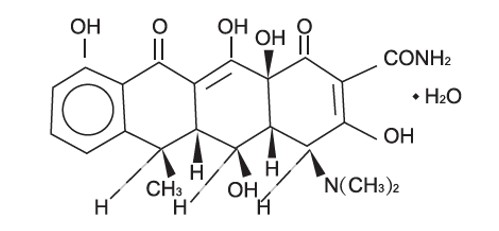
with an empirical formula of C 22 H 24 N 2 O 8 · H 2 O and a molecular weight of 462.46. The chemical designation for doxycycline is 2-Naphthacenecar-boxamide, 4-(dimethylamino)-1,4,4a,5,5a,6,11,12a-octahydro-3,5,10,12,12a-pentahydroxy-6-methyl-1,11-dioxo-, [4S-(4α, 4aα, 5α, 5aα, 6α,12aα)]-, monohydrate. It is very slightly soluble in water.
Inert ingredients in the formulation are: ferrosoferric oxide, gelatin, hypromellose, iron oxide red, iron oxide yellow, methacrylic acid and ethyl acrylate copolymer dispersion, polyethylene glycol, sugar spheres, talc, titanium dioxide and triethyl citrate. The black imprinting ink contains black iron oxide, potassium hydroxide, propylene glycol and shellac.
FDA approved dissolution test method and specifications differ from USP.
CLINICAL PHARMACOLOGY
Mechanism of Action
The mechanism of action of doxycycline capsules in the treatment of inflammatory lesions of rosacea is unknown.
Pharmacokinetics
Doxycycline capsules are not bioequivalent to other doxycycline products. The pharmacokinetics of doxycycline following oral administration of doxycycline capsules was investigated in 2 volunteer studies involving 61 adults. Pharmacokinetic parameters for doxycycline capsules following single oral doses and at steady-state in healthy subjects are presented in Table 2.
| N | C max •(ng/mL) | T max + (hr) | AUC 0-∞ • (ng·hr/mL) | t 1/2 • (hr) | |
| Single Dose 40 mg capsules | 30 | 510 ± 220.7 | 3.00 (1.0-4.1) | 9227 ± 3212.8 | 21.2 ± 7.6 |
| Steady-State# 40 mg capsules | 31 | 600 ± 194.2 | 2.00 (1.0-4.0) | 7543 ± 2443.9 | 23.2 ± 6.2 |
•Mean +Median #Day 7
Absorption: In a single-dose food-effect study involving administration of doxycycline capsules to healthy volunteers, concomitant administration with a 1000 calorie, high-fat, high-protein meal that included dairy products, resulted in a decrease in the rate and extent of absorption (C max and AUC) by about 45% and 22%, respectively, compared to dosing under fasted conditions. This decrease in systemic exposure can be clinically significant, and therefore if doxycycline capsules are taken close to meal times, it is recommended that it be taken at least one hour prior to or two hours after meals.
Distribution: Doxycycline is greater than 90% bound to plasma proteins.
Metabolism: Major metabolites of doxycycline have not been identified. However, enzyme inducers such as barbiturates, carbamazepine, and phenytoin decrease the half-life of doxycycline.
Excretion: Doxycycline is excreted in the urine and feces as unchanged drug. It is reported that between 29% and 55.4% of an administered dose can be accounted for in the urine by 72 hours. Terminal half-life averaged 21.2 hours in subjects receiving a single dose of doxycycline capsules.
Special Populations
Geriatric: Doxycycline pharmacokinetics have not been evaluated in geriatric patients.
Pediatric: Doxycycline pharmacokinetics have not been evaluated in pediatric patients [see Warnings and Precautions (5.1) ] .
Gender: The pharmacokinetics of doxycycline capsules were compared in 16 male and 14 female subjects under fed and fasted conditions. While female subjects had a higher C max and AUC than male subjects, these differences were thought to be due to differences in body weight/lean body mass.
Race: Differences in doxycycline pharmacokinetics among racial groups have not been evaluated.
Renal Insufficiency: Studies have shown no significant difference in serum half-life of doxycycline in patients with normal and severely impaired renal function. Hemodialysis does not alter the serum half-life of doxycycline.
Hepatic Insufficiency: Doxycycline pharmacokinetics have not been evaluated in patients with hepatic insufficiency.
Gastric Insufficiency: In a study in healthy volunteers (N=24) the bioavailability of doxycycline is reported to be reduced at high pH. This reduced bioavailability may be clinically significant in patients with gastrectomy, gastric bypass surgery or who are otherwise deemed achlorhydric.
Drug Interactions: [see Drug Interactions (7) ] .
Microbiology
Doxycycline is a member of the tetracycline-class of drugs. The plasma concentrations of doxycycline achieved with doxycycline capsules during administration [see Clinical Pharmacology (12.3) and Dosage and Administration (2.2) ] are less than the concentration required to treat bacterial diseases. Doxycycline capsules should not be used for treating bacterial infections, providing antibacterial prophylaxis, or reducing the numbers or eliminating microorganisms associated with any bacterial disease [see Indications and Usage (1.2) ] . In vivo microbiological studies utilizing a similar drug exposure for up to 18 months demonstrated no detectable long term effects on bacterial flora of the oral cavity, skin, intestinal tract and vagina.
NONCLINICAL TOXICOLOGY
Carcinogenesis, Mutagenesis, Impairment of Fertility
Doxycycline was assessed for potential to induce carcinogenesis in a study in which the compound was administered to Sprague-Dawley rats by gavage at dosages of 20, 75, and 200 mg/kg/day for two years. An increased incidence of uterine polyps was observed in female rats that received 200 mg/kg/day, a dosage that resulted in a systemic exposure to doxycycline approximately 12.2 times that observed in female humans who use doxycycline capsules [exposure comparison based upon area under the curve (AUC) values]. No impact upon tumor incidence was observed in male rats up to at 200 mg/kg/day, or in females at the lower dosages studied.
Doxycycline was assessed for potential to induce carcinogenesis in CD-1 mice by gavage at dosages 20, 75, and 150 mg/kg/day in males and at dosages of 20, 100, and 300 mg/kg/day in females. No impact upon tumor incidence was observed in male and female mice at systemic exposures approximately 4.2 and 8.3 times that observed in humans, respectively.
Doxycycline demonstrated no potential to cause genetic toxicity in an in vitro point mutation study with mammalian cells (CHO/HGPRT forward mutation assay) or in an in vivo micronucleus assay conducted in CD-1 mice. However, data from an in vitro mammalian chromosomal aberration assay conducted with CHO cells suggest that doxycycline is a weak clastogen. Oral administration of doxycycline to male and female Sprague-Dawley rats adversely affected fertility and reproductive performance, as evidenced by increased time for mating to occur, reduced sperm motility, velocity, and concentration, abnormal sperm morphology, and increased pre- and post-implantation losses. Doxycycline induced reproductive toxicity at all dosages that were examined in this study, as even the lowest dosage tested (50 mg/kg/day) induced a statistically significant reduction in sperm velocity. Note that 50 mg/kg/day is approximately 3.6 times the amount of doxycycline contained in the recommended daily dose of doxycycline capsules when compared on the basis of AUC estimates. Although doxycycline impairs the fertility of rats when administered at sufficient dosage, the effect of doxycycline capsules on human fertility is unknown.
CLINICAL STUDIES
The safety and efficacy of doxycycline capsules in the treatment of only inflammatory lesions (papules and pustules) of rosacea was evaluated in two randomized, placebo-controlled, multi-centered, double-blind, 16-week Phase 3 trials involving 537 subjects (total of 269 subjects on doxycycline capsules from the two trials) with rosacea (10 to 40 papules and pustules and two or fewer nodules). Mean baseline lesion counts were 20 and 21 for doxycycline capsules and placebo subject groups respectively. Pregnant and nursing women, subjects <18 years of age, and subjects with ocular rosacea and/or blepharitis/meibomianitis who require ophthalmologic treatment were excluded from trials.
At Week 16, subjects in the doxycycline capsules group were evaluated using co-primary endpoints of mean reduction in lesion counts and a dichotomized static Investigator's Global Assessment of Clear or Almost Clear (defined as 1 to 2 small papules or pustules) when compared to the placebo group in both Phase 3 trials.
| Study 1 | Study 2 | |||
| Doxycycline Capsules | Placebo | Doxycycline Capsules | Placebo | |
40 mg N=127 | N=124 | 40 mg N=142 | N=144 | |
| Mean Change in Lesion Count from Baseline | -11.8 | -5.9 | -9.5 | -4.3 |
| No. (%) of Subjects Clear or Almost Clear in the IGA• | 39 (30.7%) | 24 (19.4%) | 21 (14.8%) | 9 (6.3%) |
•Investigator’s Global Assessment
Subjects treated with doxycycline capsules did not demonstrate significant improvement in erythema when compared to those treated with placebo.
HOW SUPPLIED/STORAGE AND HANDLING
Doxycycline capsules (flesh-colored opaque cap imprinted with black “30”, and colorless transparent body imprinted with black “10”) containing doxycycline, USP in an amount equivalent to 40 mg of anhydrous doxycycline.
Bottle of 30 (NDC 11788-134-30).
Storage:
All products are to be stored at controlled room temperatures of 59°F - 86°F (15°C - 30°C) and dispensed in tight, light-resistant containers (USP). Keep out of reach of children.
Mechanism of Action
The mechanism of action of doxycycline capsules in the treatment of inflammatory lesions of rosacea is unknown.
