Glipizide And Metformin Hcl - Glipizide And Metformin Hcl tablet, Film Coated prescribing information

WARNING: LACTIC ACIDOSIS Post-marketing cases of metformin-associated lactic acidosis have resulted in death, hypothermia, hypotension, and resistant bradyarrhythmias. The onset of metformin-associated lactic acidosis is often subtle, accompanied only by nonspecific symptoms such as malaise, myalgias, respiratory distress, somnolence, and abdominal pain. Metformin-associated lactic acidosis was characterized by elevated blood lactate levels (>5 mmol/Liter), anion gap acidosis (without evidence of ketonuria or ketonemia), an increased lactate/pyruvate ratio; and metformin plasma levels generally >5 mcg/mL [see PRECAUTIONS ] Risk factors for metformin-associated lactic acidosis include renal impairment, concomitant use of certain drugs (e.g., carbonic anhydrase inhibitors such as topiramate), age 65 years old or greater, having a radiological study with contrast, surgery and other procedures, hypoxic states (e.g., acute congestive heart failure), excessive alcohol intake, and hepatic impairment. Steps to reduce the risk of and manage metformin-associated lactic acidosis in these high risk groups are provided [see PRECAUTIONS ]. If metformin-associated lactic acidosis is suspected, immediately discontinue Glipizide and Metformin HCl Tablets and institute general supportive measures in a hospital setting. Prompt hemodialysis is recommended [see PRECAUTIONS ].
SPECIAL WARNING ON INCREASED RISK OF CARDIOVASCULAR MORTALITY
The administration of oral hypoglycemic drugs has been reported to be associated with increased cardiovascular mortality as compared to treatment with diet alone or diet plus insulin. This warning is based on the study conducted by the University Group Diabetes Program (UGDP), a long-term prospective clinical trial designed to evaluate the effectiveness of glucose-lowering drugs in preventing or delaying vascular complications in patients with non-insulin-dependent diabetes. The study involved 823 patients who were randomly assigned to 1 of 4 treatment groups (Diabetes 19 (Suppl. 2):747-830, 1970).
UGDP reported that patients treated for 5 to 8 years with diet plus a fixed dose of tolbutamide (1.5 grams per day) had a rate of cardiovascular mortality approximately 2½ times that of patients treated with diet alone. A significant increase in total mortality was not observed, but the use of tolbutamide was discontinued based on the increase in cardiovascular mortality, thus limiting the opportunity for the study to show an increase in overall mortality. Despite controversy regarding the interpretation of these results, the findings of the UGDP study provide an adequate basis for this warning. The patient should be informed of the potential risks and benefits of glipizide and of alternative modes of therapy.
Although only 1 drug in the sulfonylurea class (tolbutamide) was included in this study, it is prudent from a safety standpoint to consider that this warning may also apply to other hypoglycemic drugs in this class, in view of their close similarities in mode of action and chemical structure.
INDICATIONS AND USAGE
Glipizide and Metformin HCl Tablets are indicated as an adjunct to diet and exercise to improve glycemic control in adults with type 2 diabetes mellitus.
DOSAGE AND ADMINISTRATION
General Considerations
Dosage of Glipizide and Metformin HCl Tablets must be individualized on the basis of both effectiveness and tolerance while not exceeding the maximum recommended daily dose of 20 mg glipizide/2000 mg metformin . Glipizide and Metformin HCl Tablets should be given with meals and should be initiated at a low dose, with gradual dose escalation as described below, in order to avoid hypoglycemia (largely due to glipizide), reduce GI side effects (largely due to metformin), and permit determination of the minimum effective dose for adequate control of blood glucose for the individual patient.
With initial treatment and during dose titration, appropriate blood glucose monitoring should be used to determine the therapeutic response to Glipizide and Metformin HCl Tablets and to identify the minimum effective dose for the patient. Thereafter, HbA 1c should be measured at intervals of approximately 3 months to assess the effectiveness of therapy. The therapeutic goal in all patients with type 2 diabetes is to decrease FPG, PPG, and HbA 1c to normal or as near normal as possible. Ideally, the response to therapy should be evaluated using HbA 1c , which is a better indicator of long-term glycemic control than FPG alone.
No studies have been performed specifically examining the safety and efficacy of switching to Glipizide and Metformin HCl Tablets therapy in patients taking concomitant glipizide (or other sulfonylurea) plus metformin. Changes in glycemic control may occur in such patients, with either hyperglycemia or hypoglycemia possible. Any change in therapy of type 2 diabetes should be undertaken with care and appropriate monitoring.
When colesevelam is coadministered with glipizide ER, maximum plasma concentration and total exposure to glipizide is reduced. Therefore, Glipizide and Metformin HCl Tablets should be administered at least 4 hours prior to colesevelam.
Glipizide and Metformin HCl Tablets in Patients with Inadequate Glycemic Control on Diet and Exercise Alone
For patients with type 2 diabetes whose hyperglycemia cannot be satisfactorily managed with diet and exercise alone, the recommended starting dose of Glipizide and Metformin HCl Tablets are 2.5 mg/250 mg once a day with a meal. For patients whose FPG is 280 mg/dL to 320 mg/dL a starting dose of Glipizide and Metformin HCl Tablets 2.5 mg/500 mg twice daily should be considered. The efficacy of Glipizide and Metformin HCl Tablets in patients whose FPG exceeds 320 mg/dL has not been established. Dosage increases to achieve adequate glycemic control should be made in increments of 1 tablet per day every 2 weeks up to maximum of 10 mg/1000 mg or 10 mg/2000 mg Glipizide and Metformin HCl Tablets per day given in divided doses. In clinical trials of Glipizide and Metformin HCl Tablets as initial therapy, there was no experience with total daily doses >10 mg/2000 mg per day.
Glipizide and Metformin HCl Tablets in Patients with Inadequate Glycemic Control on a Sulfonylurea and/or Metformin
For patients not adequately controlled on either glipizide (or another sulfonylurea) or metformin alone, the recommended starting dose of Glipizide and Metformin HCl Tablets are 2.5 mg/500 mg or 5 mg/500 mg twice daily with the morning and evening meals. In order to avoid hypoglycemia, the starting dose of Glipizide and Metformin HCl Tablets should not exceed the daily doses of glipizide or metformin already being taken. The daily dose should be titrated in increments of no more than 5 mg/500 mg up to the minimum effective dose to achieve adequate control of blood glucose or to a maximum dose of 20 mg/2000 mg per day.
Patients previously treated with combination therapy of glipizide (or another sulfonylurea) plus metformin may be switched to Glipizide and Metformin HCl Tablets 2.5 mg/500 mg or 5 mg/500 mg; the starting dose should not exceed the daily dose of glipizide (or equivalent dose of another sulfonylurea) and metformin already being taken. The decision to switch to the nearest equivalent dose or to titrate should be based on clinical judgment. Patients should be monitored closely for signs and symptoms of hypoglycemia following such a switch and the dose of Glipizide and Metformin HCl Tablets should be titrated as described above to achieve adequate control of blood glucose.
Recommendations for Use in Renal Impairment
Assess renal function prior to initiation of Glipizide and Metformin HCl Tablets and periodically thereafter.
Glipizide and Metformin HCl Tablets are contraindicated in patients with an estimated glomerular filtration rate (eGFR) below 30 mL/minute/1.73 m 2 .
Initiation of Glipizide and Metformin HCl Tablets in patients with an eGFR between 30 - 45 mL/minute/1.73 m 2 is not recommended.
In patients taking Glipizide and Metformin HCl Tablets whose eGFR later falls below 45 mL/min/1.73 m 2 , assess the benefit risk of continuing therapy.
Discontinue Glipizide and Metformin HCl Tablets if the patient's eGFR later falls below 30 mL/minute/1.73 m 2 . (See WARNINGS .)
Discontinuation for Iodinated Contrast Imaging Procedures
Discontinue Glipizide and Metformin HCl Tablets at the time of, or prior to, an iodinated contrast imaging procedure in patients with an eGFR between 30 and 60 mL/min/1.73 m 2 ; in patients with a history of liver disease, alcoholism or heart failure; or in patients who will be administered intra-arterial iodinated contrast. Re-evaluate eGFR 48 hours after the imaging procedure; restart Glipizide and Metformin HCl Tablets if renal function is stable.
Specific Patient Populations
Glipizide and Metformin HCl Tablets are not recommended for use during pregnancy or for use in pediatric patients. The initial and maintenance dosing of Glipizide and Metformin HCl Tablets should be conservative in patients with advanced age, due to the potential for decreased renal function in this population. Any dosage adjustment requires a careful assessment of renal function. Generally, elderly, debilitated, and malnourished patients should not be titrated to the maximum dose of Glipizide and Metformin HCl Tablets to avoid the risk of hypoglycemia. Monitoring of renal function is necessary to aid in prevention of metformin-associated lactic acidosis, particularly in the elderly. (See WARNINGS and PRECAUTIONS .)
CONTRAINDICATIONS
Glipizide and Metformin HCl Tablets are contraindicated in patients with:
1. Severe renal impairment (eGFR below 30 mL/min/1.73 m 2 )
(see WARNINGS and PRECAUTIONS ).
2. Known hypersensitivity to glipizide or metformin hydrochloride.
3. Acute or chronic metabolic acidosis, including diabetic ketoacidosis, with or without coma. Diabetic ketoacidosis should be treated with insulin.
WARNINGS
ADVERSE REACTIONS
Glipizide and Metformin HCl Tablets
In a double-blind 24-week clinical trial involving Glipizide and Metformin HCl Tablets as initial therapy, a total of 172 patients received Glipizide and Metformin HCl Tablets 2.5 mg/250 mg, 173 received Glipizide and Metformin HCl Tablets 2.5 mg/500 mg, 170 received glipizide, and 177 received metformin. The most common clinical adverse events in these treatment groups are listed in Table 4 .
Table 4: Clinical Adverse Events >5% in any Treatment Group, by Primary Term, in Initial Therapy Study
Adverse Event | Number (%) of Patients | |||
Glipizide 5 mg tablets N = 170 | Metformin 500 mg tablets N = 177 | Glipizide and Metformin HCl 2.5 mg/250 mg tablets N = 172 | Glipizide and Metformin HCl 2.5 mg/500 mg tablets N = 173 | |
Upper respiratory infection | 12 (7.1) | 15 (8.5) | 17 (9.9) | 14 (8.1) |
Diarrhea | 8 (4.7) | 15 (8.5) | 4 (2.3) | 9 (5.2) |
Dizziness | 9 (5.3) | 2 (1.1) | 3 (1.7) | 9 (5.2) |
Hypertension | 17 (10.0) | 10 (5.6) | 5 (2.9) | 6 (3.5) |
Nausea/vomiting | 6 (3.5) | 9 (5.1) | 1 (0.6) | 3 (1.7) |
In a double-blind 18-week clinical trial involving Glipizide and Metformin HCl Tablets as second-line therapy, a total of 87 patients received Glipizide and Metformin HCl Tablets, 84 received glipizide, and 75 received metformin. The most common clinical adverse events in this clinical trial are listed in Table 5.
Table 5: Clinical Adverse Events >5% in any Treatment Group, by Primary Term, in Second-Line Therapy Study
Adverse Event | Number (%) of Patients | ||
Glipizide 5 mg tablets a N = 84 | Metformin 500 mg tablets a N = 75 | Glipizide and Metformin HCl 5 mg/500 mg tablets a N = 87 | |
Diarrhea | 11 (13.1) | 13 (17.3) | 16 (18.4) |
Headache | 5 (6.0) | 4 (5.3) | 11 (12.6) |
Upper respiratory infection | 11 (13.1) | 8 (10.7) | 9 (10.3) |
Musculoskeletal pain | 6 (7.1) | 5 (6.7) | 7 (8.0) |
Nausea/vomiting | 5 (6.0) | 6 (8.0) | 7 (8.0) |
Abdominal pain | 7 (8.3) | 5 (6.7) | 5 (5.7) |
UTI | 4 (4.8) | 6 (8.0) | 1 (1.1) |
a The dose of glipizide was fixed at 30 mg daily; doses of metformin and glipizide and metformin hydrochloride tablets were titrated.
Hypoglycemia
In a controlled initial therapy trial of Glipizide and Metformin HCl Tablets 2.5 mg/250 mg and 2.5 mg/500 mg the numbers of patients with hypoglycemia documented by symptoms (such as dizziness, shakiness, sweating, and hunger) and a fingerstick blood glucose measurement ≤50 mg/dL were 5 (2.9%) for glipizide, 0 (0%) for metformin, 13 (7.6%) for Glipizide and Metformin HCl Tablets 2.5 mg/250 mg, and 16 (9.3%) for Glipizide and Metformin HCl Tablets 2.5 mg/500 mg. Among patients taking either Glipizide and Metformin HCl Tablets 2.5 mg/250 mg or Glipizide and Metformin HCl Tablets 2.5 mg/500 mg, 9 (2.6%) patients discontinued Glipizide and Metformin HCl Tablets due to hypoglycemic symptoms and 1 required medical intervention due to hypoglycemia. In a controlled second-line therapy trial of Glipizide and Metformin HCl Tablets 5 mg/500 mg, the numbers of patients with hypoglycemia documented by symptoms and a fingerstick blood glucose measurement ≤50 mg/dL were 0 (0%) for glipizide, 1 (1.3%) for metformin, and 11 (12.6%) for Glipizide and Metformin HCl Tablets. One (1.1%) patient discontinued Glipizide and Metformin HCl Tablets therapy due to hypoglycemic symptoms and none required medical intervention due to hypoglycemia. (See PRECAUTIONS )
Gastrointestinal Reactions
Among the most common clinical adverse events in the initial therapy trial were diarrhea and nausea/vomiting; the incidences of these events were lower with both Glipizide and Metformin HCl Tablets dosage strengths than with metformin therapy. There were 4 (1.2%) patients in the initial therapy trial who discontinued Glipizide and Metformin HCl Tablets therapy due to gastrointestinal (GI) adverse events. Gastrointestinal symptoms of diarrhea, nausea/vomiting, and abdominal pain were comparable among Glipizide and Metformin HCl Tablets, glipizide and metformin in the second-line therapy trial. There were 4 (4.6%) patients in the second-line therapy trial who discontinued Glipizide and Metformin HCl Tablets therapy due to GI adverse events.
Glipizide
Gastrointestinal Reactions
Cholestatic and hepatocellular forms of liver injury accompanied by jaundice have been reported rarely in association with glipizide; Glipizide and Metformin HCl Tablets should be discontinued if this occurs.
To report SUSPECTED ADVERSE REACTIONS, contact Chartwell RX, LLC. at 1-845-232-1683 or FDA at 1-800-FDA-1088 or www.fda.gov/medwatch
Drug Interactions
Glipizide and Metformin HCl Tablets
Certain drugs tend to produce hyperglycemia and may lead to loss of blood glucose control. These drugs include thiazides and other diuretics, corticosteroids, phenothiazines, thyroid products, estrogens, oral contraceptives, phenytoin, nicotinic acid, sympathomimetics, calcium channel blocking drugs, and isoniazid. When such drugs are administered to a patient receiving Glipizide and Metformin HCl Tablets, the patient should be closely observed for loss of blood glucose control. When such drugs are withdrawn from a patient receiving Glipizide and Metformin HCl Tablets, the patient should be observed closely for hypoglycemia. Metformin is negligibly bound to plasma proteins and is, therefore, less likely to interact with highly protein-bound drugs such as salicylates, sulfonamides, chloramphenicol, and probenecid as compared to sulfonylureas, which are extensively bound to serum proteins.
Glipizide
The hypoglycemic action of sulfonylureas may be potentiated by certain drugs, including nonsteroidal anti-inflammatory agents, some azoles, and other drugs that are highly protein-bound, salicylates, sulfonamides, chloramphenicol, probenecid, coumarins, monoamine oxidase inhibitors, and beta adrenergic blocking agents. When such drugs are administered to a patient receiving Glipizide and Metformin HCl Tablets, the patient should be observed closely for hypoglycemia. When such drugs are withdrawn from a patient receiving Glipizide and Metformin HCl Tablets, the patient should be observed closely for loss of blood glucose control. In vitro binding studies with human serum proteins indicate that glipizide binds differently than tolbutamide and does not interact with salicylate or dicumarol. However, caution must be exercised in extrapolating these findings to the clinical situation and in the use of Glipizide and Metformin HCl Tablets with these drugs.
A potential interaction between oral miconazole and oral hypoglycemic agents leading to severe hypoglycemia has been reported. Whether this interaction also occurs with the intravenous, topical, or vaginal preparations of miconazole is not known. The effect of concomitant administration of fluconazole and glipizide has been demonstrated in a placebo-controlled crossover study in normal volunteers. All subjects received glipizide alone and following treatment with 100 mg of fluconazole as a single oral daily dose for 7 days, the mean percent increase in the glipizide AUC after fluconazole administration was 56.9% (range: 35% - 81%).
In studies assessing the effect of colesevelam on the pharmacokinetics of glipizide ER in healthy volunteers, reductions in glipizide AUC 0-∞ and C max of 12% and 13%, respectively, were observed when colesevelam was coadministered with glipizide ER. When glipizide ER was administered 4 hours prior to colesevelam, there was no significant change in glipizide AUC 0-∞ or C max , -4% and 0%, respectively. Therefore, Glipizide and Metformin HCl Tablets should be administered at least 4 hours prior to colesevelam to ensure that colesevelam does not reduce the absorption of glipizide.
Metformin Hydrochloride
Furosemide
A single-dose, metformin-furosemide drug interaction study in healthy subjects demonstrated that pharmacokinetic parameters of both compounds were affected by coadministration. Furosemide increased the metformin plasma and blood C max by 22% and blood AUC by 15%, without any significant change in metformin renal clearance. When administered with metformin, the C max and AUC of furosemide were 31% and 12% smaller, respectively, than when administered alone, and the terminal half-life was decreased by 32%, without any significant change in furosemide renal clearance. No information is available about the interaction of metformin and furosemide when coadministered chronically.
Nifedipine
A single-dose, metformin-nifedipine drug interaction study in normal healthy volunteers demonstrated that coadministration of nifedipine increased plasma metformin C max and AUC by 20% and 9%, respectively, and increased the amount excreted in the urine. T max and half-life were unaffected. Nifedipine appears to enhance the absorption of metformin. Metformin had minimal effects on nifedipine.
Drugs that reduce metformin clearance
Concomitant use of drugs that interfere with common renal tubular transport systems involved in the renal elimination of metformin (e.g., organic cationic transporter-2 [OCT2] / multidrug and toxin extrusion [MATE] inhibitors such as ranolazine, vandetanib, dolutegravir, and cimetidine) could increase systemic exposure to metformin and may increase the risk for lactic acidosis. Consider the benefits and risks of concomitant use. Such interaction between metformin and oral cimetidine has been observed in normal healthy volunteers in both single- and multiple-dose, metformin-cimetidine drug interaction studies, with a 60% increase in peak metformin plasma and whole blood concentrations and a 40% increase in plasma and whole blood metformin AUC. There was no change in elimination half-life in the single-dose study. Metformin had no effect on cimetidine pharmacokinetics.
In healthy volunteers, the pharmacokinetics of metformin and propranolol, and metformin and ibuprofen were not affected when coadministered in single-dose interaction studies.
Metformin is negligibly bound to plasma proteins and is, therefore, less likely to interact with highly protein-bound drugs such as salicylates, sulfonamides, chloramphenicol, and probenecid, as compared to the sulfonylureas, which are extensively bound to serum proteins.
Other
Carbonic Anhydrase Inhibitors
Topiramate or other carbonic anhydrase inhibitors (e.g., zonisamide, acetazolamide or dichlorphenamide) frequently causes a decrease in serum bicarbonate and induce non-anion gap, hyperchloremic metabolic acidosis. Concomitant use of these drugs with Glipizide and Metformin HCl Tablets may increase the risk for lactic acidosis. Consider more frequent monitoring of these patients.
Alcohol
Alcohol is known to potentiate the effect of metformin on lactate metabolism. Warn patients against excessive alcohol intake while receiving Glipizide and Metformin HCl Tablets.
Carcinogenesis, Mutagenesis, Impairment of Fertility
No animal studies have been conducted with the combined products in Glipizide and Metformin HCl Tablets. The following data are based on findings in studies performed with the individual products.
Glipizide
A 20-month study in rats and an 18-month study in mice at doses up to 75 times the maximum human dose revealed no evidence of drug-related carcinogenicity. Bacterial and in vivo mutagenicity tests were uniformly negative. Studies in rats of both sexes at doses up to 75 times the human dose showed no effects on fertility.
Metformin Hydrochloride
Long-term carcinogenicity studies were performed with metformin alone in rats (dosing duration of 104 weeks) and mice (dosing duration of 91 weeks) at doses up to and including 900 mg/kg/day and 1500 mg/kg/day, respectively. These doses are both approximately 4 times the maximum recommended human daily (MRHD) dose of 2000 mg of the metformin component of Glipizide and Metformin HCl Tablets based on body surface area comparisons. No evidence of carcinogenicity with metformin alone was found in either male or female mice. Similarly, there was no tumorigenic potential observed with metformin alone in male rats. There was, however, an increased incidence of benign stromal uterine polyps in female rats treated with 900 mg/kg/day of metformin alone.
There was no evidence of a mutagenic potential of metformin alone in the following in vitro tests: Ames test (S. typhimurium), gene mutation test (mouse lymphoma cells), or chromosomal aberrations test (human lymphocytes). Results in the in vivo mouse micronucleus test were also negative.
Fertility of male or female rats was unaffected by metformin alone when administered at doses as high as 600 mg/kg/day, which is approximately 3 times the MRHD dose of the metformin component of Glipizide and Metformin HCl Tablets based on body surface area comparisons.
Pregnancy
Teratogenic Effects: Pregnancy Category C
Recent information strongly suggests that abnormal blood glucose levels during pregnancy are associated with a higher incidence of congenital abnormalities. Most experts recommend that insulin be used during pregnancy to maintain blood glucose as close to normal as possible. Because animal reproduction studies are not always predictive of human response, Glipizide and Metformin HCl Tablets should not be used during pregnancy unless clearly needed. (See below.)
There are no adequate and well-controlled studies in pregnant women with Glipizide and Metformin HCl Tablets or its individual components. No animal studies have been conducted with the combined products in Glipizide and Metformin HCl Tablets. The following data are based on findings in studies performed with the individual products.
Glipizide
Glipizide was found to be mildly fetotoxic in rat reproductive studies at all dose levels (5-50 mg/kg). This fetotoxicity has been similarly noted with other sulfonylureas, such as tolbutamide and tolazamide. The effect is perinatal and believed to be directly related to the pharmacologic (hypoglycemic) action of glipizide. In studies in rats and rabbits, no teratogenic effects were found.
Metformin Hydrochloride
Metformin alone was not teratogenic in rats or rabbits at doses up to 600 mg/kg/day. This represents an exposure of about 2 and 6 times the MRHD dose of 2000 mg of the metformin component of Glipizide and Metformin HCl Tablets based on body surface area comparisons for rats and rabbits, respectively. Determination of fetal concentrations demonstrated a partial placental barrier to metformin.
Nonteratogenic Effects
Prolonged severe hypoglycemia (4-10 days) has been reported in neonates born to mothers who were receiving a sulfonylurea drug at the time of delivery. This has been reported more frequently with the use of agents with prolonged half-lives. It is not recommended that Glipizide and Metformin HCl Tablets be used during pregnancy. However, if it is used, Glipizide and Metformin HCl Tablets should be discontinued at least 1 month before the expected delivery date. (See Pregnancy: Teratogenic Effects: Pregnancy Category C. )
Nursing Mothers
Although it is not known whether glipizide is excreted in human milk, some sulfonylurea drugs are known to be excreted in human milk. Studies in lactating rats show that metformin is excreted into milk and reaches levels comparable to those in plasma. Similar studies have not been conducted in nursing mothers. Because the potential for hypoglycemia in nursing infants may exist, a decision should be made whether to discontinue nursing or to discontinue Glipizide and Metformin HCl Tablets, taking into account the importance of the drug to the mother. If Glipizide and Metformin HCl Tablets are discontinued, and if diet alone is inadequate for controlling blood glucose, insulin therapy should be considered.
Pediatric Use
N Safety and effectiveness of Glipizide and Metformin HCl Tablets in pediatric patients have not been established.
Geriatric Use
Of the 345 patients who received Glipizide and Metformin HCl Tablets 2.5 mg/250 mg and 2.5 mg/500 mg in the initial therapy trial, 67 (19.4%) were aged 65 and older while 5 (1.4%) were aged 75 and older. Of the 87 patients who received Glipizide and Metformin HCl Tablets in the second-line therapy trial, 17 (19.5%) were aged 65 and older while 1 (1.1%) was at least aged 75. No overall differences in effectiveness or safety were observed between these patients and younger patients in either the initial therapy trial or the second-line therapy trial, and other reported clinical experience has not identified differences in response between the elderly and younger patients, but greater sensitivity of some older individuals cannot be ruled out.
In general, dose selection for an elderly patient should be cautious, usually starting at the low end of the dosing range, reflecting the greater frequency of decreased hepatic, renal, or cardiac function, and of concomitant disease or other drug therapy and the higher risk of lactic acidosis. Assess renal function more frequently in elderly patients (see also WARNINGS , PRECAUTIONS and DOSAGE AND ADMINISTRATION ).
DESCRIPTION
Glipizide and Metformin HCl Tablets, USP contain 2 oral antihyperglycemic drugs used in the management of type 2 diabetes, glipizide and metformin hydrochloride.
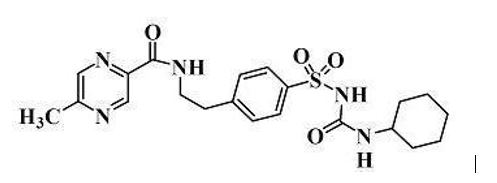
Glipizide is an oral antihyperglycemic drug of the sulfonylurea class. The chemical name for glipizide is 1-cyclohexyl-3-[[p-[2-(5-methylpyrazinecarboxamido) ethyl] phenyl] sulfonyl] urea. Glipizide is a whitish, odorless powder with a molecular formula of C 21 H 27 N 5 O 4 S, a molecular weight of 445.55 and a pK a of 5.9. It is insoluble in water and alcohols, but soluble in 0.1 N NaOH; it is freely soluble in dimethylformamide. The structural formula is represented below.
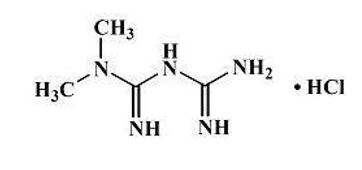
Metformin hydrochloride is an oral antihyperglycemic drug used in the management of type 2 diabetes. Metformin hydrochloride (N,N-dimethylimidodicarbonimidic diamide monohydrochloride) is not chemically or pharmacologically related to sulfonylureas, thiazolidinediones, or α -glucosidase inhibitors. It is a white to off-white crystalline compound with a molecular formula of C 4 H 12 ClN 5 (monohydrochloride) and a molecular weight of 165.63. Metformin hydrochloride is freely soluble in water and is practically insoluble in acetone, ether, and chloroform. The pKa of metformin is 12.4. The pH of a 1% aqueous solution of metformin hydrochloride is 6.68. The structural formula is as shown:
Glipizide and Metformin HCl Tablets, USP are available for oral administration in tablets containing 2.5 mg glipizide with 250 mg metformin hydrochloride, 2.5 mg glipizide with 500 mg metformin hydrochloride, and 5 mg glipizide with 500 mg metformin hydrochloride. In addition, each tablet contains the following inactive ingredients: Sodium Starch Glycolate, Corn Starch, Povidone, Magnesium Stearate, Colloidal Silicon Dioxide, Hypromellose, Talc, Titanium Dioxide, Polyethylene Glycol 6000, Propylene Glycol and Iron Oxide Red. The tablets are film coated, which provides color differentiation.
CLINICAL PHARMACOLOGY
Mechanism of Action
Glipizide and Metformin HCl Tablets combines glipizide and metformin hydrochloride, 2 antihyperglycemic agents with complementary mechanisms of action, to improve glycemic control in patients with type 2 diabetes.
Glipizide appears to lower blood glucose acutely by stimulating the release of insulin from the pancreas, an effect dependent upon functioning beta cells in the pancreatic islets. Extrapancreatic effects may play a part in the mechanism of action of oral sulfonylurea hypoglycemic drugs. The mechanism by which glipizide lowers blood glucose during long-term administration has not been clearly established. In man, stimulation of insulin secretion by glipizide in response to a meal is undoubtedly of major importance. Fasting insulin levels are not elevated even on long-term glipizide administration, but the postprandial insulin response continues to be enhanced after at least 6 months of treatment.
Metformin hydrochloride is an antihyperglycemic agent that improves glucose tolerance in patients with type 2 diabetes, lowering both basal and postprandial plasma glucose. Metformin hydrochloride decreases hepatic glucose production, decreases intestinal absorption of glucose, and improves insulin sensitivity by increasing peripheral glucose uptake and utilization.
Pharmacokinetics
Absorption and Bioavailability
Glipizide and Metformin HCl Tablets
In a single-dose study in healthy subjects, the glipizide and metformin components of Glipizide and Metformin HCl Tablets 5 mg/500 mg were bioequivalent to coadministered GLUCOTROL ® and GLUCOPHAGE ® . Following administration of a single Glipizide and Metformin HCl Tablets 5 mg/500 mg tablet in healthy subjects with either a 20% glucose solution or a 20% glucose solution with food, there was a small effect of food on peak plasma concentration (C max ) and no effect of food on area under the curve (AUC) of the glipizide component. Time to peak plasma concentration (T max ) for the glipizide component was delayed 1 hour with food relative to the same tablet strength administered fasting with a 20% glucose solution. C max for the metformin component was reduced approximately 14% by food whereas AUC was not affected. T max for the metformin component was delayed 1 hour after food.
Glipizide
Gastrointestinal absorption of glipizide is uniform, rapid, and essentially complete. Peak plasma concentrations occur 1 to 3 hours after a single oral dose. Glipizide does not accumulate in plasma on repeated oral administration. Total absorption and disposition of an oral dose was unaffected by food in normal volunteers, but absorption was delayed by about 40 minutes.
Metformin Hydrochloride
The absolute bioavailability of a 500 mg metformin hydrochloride tablet given under fasting conditions is approximately 50% to 60%. Studies using single oral doses of metformin tablets of 500 mg and 1500 mg, and 850 mg to 2550 mg, indicate that there is a lack of dose proportionality with increasing doses, which is due to decreased absorption rather than an alteration in elimination. Food decreases the extent of and slightly delays the absorption of metformin, as shown by approximately a 40% lower peak concentration and a 25% lower AUC in plasma and a 35-minute prolongation of time to peak plasma concentration following administration of a single 850 mg tablet of metformin with food, compared to the same tablet strength administered fasting. The clinical relevance of these decreases is unknown.
Distribution
Glipizide
Protein binding was studied in serum from volunteers who received either oral or intravenous glipizide and found to be 98% to 99% 1 hour after either route of administration. The apparent volume of distribution of glipizide after intravenous administration was 11 liters, indicative of localization within the extracellular fluid compartment. In mice, no glipizide or metabolites were detectable autoradiographically in the brain or spinal cord of males or females, nor in the fetuses of pregnant females. In another study, however, very small amounts of radioactivity were detected in the fetuses of rats given labeled drug.
Metformin Hydrochloride
The apparent volume of distribution (V/F) of metformin following single oral doses of 850 mg averaged 654±358 L. Metformin is negligibly bound to plasma proteins. Metformin partitions into erythrocytes, most likely as a function of time. At usual clinical doses and dosing schedules of metformin, steady state plasma concentrations of metformin are reached within 24 to 48 hours and are generally <1 μg/mL. During controlled clinical trials, maximum metformin plasma levels did not exceed 5 μg/mL, even at maximum doses.
Metabolism and Elimination
Glipizide
The metabolism of glipizide is extensive and occurs mainly in the liver. The primary metabolites are inactive hydroxylation products and polar conjugates and are excreted mainly in the urine. Less than 10% unchanged glipizide is found in the urine. The half-life of elimination ranges from 2 to 4 hours in normal subjects, whether given intravenously or orally. The metabolic and excretory patterns are similar with the 2 routes of administration, indicating that first-pass metabolism is not significant.
Metformin Hydrochloride
Intravenous single-dose studies in normal subjects demonstrate that metformin is excreted unchanged in the urine and does not undergo hepatic metabolism (no metabolites have been identified in humans) nor biliary excretion. Renal clearance (see Table 1) is approximately 3.5 times greater than creatinine clearance, which indicates that tubular secretion is the major route of metformin elimination. Following oral administration, approximately 90% of the absorbed drug is eliminated via the renal route within the first 24 hours, with a plasma elimination half-life of approximately 6.2 hours. In blood, the elimination half-life is approximately 17.6 hours, suggesting that the erythrocyte mass may be a compartment of distribution.
Specific Populations
Patients With Type 2 Diabetes
In the presence of normal renal function, there are no differences between single- or multiple-dose pharmacokinetics of metformin between patients with type 2 diabetes and normal subjects (see Table 1), nor is there any accumulation of metformin in either group at usual clinical doses.
Renal Impairment
The metabolism and excretion of glipizide may be slowed in patients with impaired renal function (see CONTRAINDICATIONS , WARNINGS , PRECAUTIONS and DOSAGE AND ADMINISTRATION ).
In patients with decreased renal function, the plasma and blood half-life of metformin is prolonged and the renal clearance is decreased (see; also, see WARNINGS ).
Hepatic Impairment
The metabolism and excretion of glipizide may be slowed in patients with impaired hepatic function (see PRECAUTIONS ).
No pharmacokinetic studies have been conducted in patients with hepatic insufficiency for metformin.
Geriatrics
There is no information on the pharmacokinetics of glipizide in elderly patients.
Limited data from controlled pharmacokinetic studies of metformin in healthy elderly subjects suggest that total plasma clearance is decreased, the half-life is prolonged, and C max is increased, when compared to healthy young subjects. From these data, it appears that the change in metformin pharmacokinetics with aging is primarily accounted for by a change in renal function (see Table 1 ).
Table 1: Select Mean (±SD) Metformin Pharmacokinetic Parameters Following Single or Multiple Oral Doses of Metformin
Subject Groups: Metformin Dose a (Number of Subjects) | C max b (μg/mL) | T max c (hrs) | Renal Clearance (mL/min) |
Healthy, Nondiabetic Adults: 500 mg SD d (24) 850 mg SD (74) e 850 mg t.i.d. for 19 doses f (9) | 1.03 (± 0.33) 1.60 (± 0.38) 2.01 (± 0.42) | 2.75 (± 0.81) 2.64 (± 0.82) 1.79 (± 0.94) | 600 (± 132) 552 (± 139) 642 (± 173) |
Adults with Type 2 Diabetes: 850 mg SD (23) 850 mg t.i.d. for 19 doses f (9) | 1.48 (± 0.5) 1.90 (± 0.62) | 3.32 (± 1.08) 2.01 (± 1.22) | 491 (± 138) 550 (± 160) |
Elderlyg, Healthy Nondiabetic Adults: 850 mg SD (12) | 2.45 (± 0.70) | 2.71 (± 1.05) | 412 (± 98) |
Renal-impaired Adults: 850 mg SD Mild (CL cr h 61 to 90 mL/min) (5) Moderate (CL cr 31 to 60 mL/min) (4) Severe (CL cr 10 to 30 mL/min) (6) | 1.86 (± 0.52) 4.12 (± 1.83) 3.93 (± 0.92) | 3.20 (± 0.45) 3.75 (± 0.50) 4.01 (± 1.10) | 384 (± 122) 108 (± 57) 130 (± 90) |
a All doses given fasting except the first 18 doses of the multiple-dose studies
b Peak plasma concentration
c Time to peak plasma concentration
d SD = single dose
e Combined results (average means) of 5 studies: mean age 32 years (range 23 to 59 years)
f Kinetic study done following dose 19, given fasting
g Elderly subjects, mean age 71 years (range 65 to 81 years)
h CL cr = creatinine clearance normalized to body surface area of 1.73 m 2
Pediatrics
No data from pharmacokinetic studies in pediatric subjects are available for glipizide.
After administration of a single oral GLUCOPHAGE 500 mg tablet with food, geometric mean metformin C max and AUC differed <5% between pediatric type 2 diabetic patients (12 - 16 years of age) and gender- and weight-matched healthy adults (20 - 45 years of age), all with normal renal function.
Gender
There is no information on the effect of gender on the pharmacokinetics of glipizide.
Metformin pharmacokinetic parameters did not differ significantly in subjects with or without type 2 diabetes when analyzed according to gender (males=19, females=16). Similarly, in controlled clinical studies in patients with type 2 diabetes, the antihyperglycemic effect of metformin was comparable in males and females.
Race
No information is available on race differences in the pharmacokinetics of glipizide.
No studies of metformin pharmacokinetic parameters according to race have been performed. In controlled clinical studies of metformin in patients with type 2 diabetes, the antihyperglycemic effect was comparable in whites (n=249), blacks (n=51), and Hispanics (n=24).
Clinical Studies
Patients with Inadequate Glycemic Control on Diet and Exercise Alone
In a 24-week, double-blind, active-controlled, multicenter international clinical trial, patients with type 2 diabetes, whose hyperglycemia was not adequately controlled with diet and exercise alone (hemoglobin A 1c [HbA 1c ] >7.5% and ≤12%, and fasting plasma glucose [FPG] <300 mg/dL) were randomized to receive initial therapy with glipizide 5 mg, metformin 500 mg, Glipizide and Metformin HCl Tablets 2.5 mg/250 mg, or Glipizide and Metformin HCl Tablets 2.5 mg/500 mg. After 2 weeks, the dose was progressively increased (up to the 12-week visit) to a maximum of 4 tablets daily in divided doses as needed to reach a target mean daily glucose (MDG) of ≤130 mg/dL. Trial data at 24 weeks are summarized in Table 2 .
Table 2: Active-Controlled Trial of Glipizide and Metformin HCl Tablets in Patients with Inadequate Glycemic Control on Diet and Exercise Alone: Summary of Trial Data at 24 Weeks
Glipizide 5 mg tablets | Metformin 500 mg tablets | Glipizide and Metformin HCl 2.5 mg/250 mg tablets | Glipizide and Metformin HCl 2.5 mg/500 mg tablets | |
Mean Final Dose | 16.7 mg | 1749 mg | 7.9 mg/791 mg | 7.4 mg/1477 mg |
Hemoglobin A 1C (%) | N = 168 | N = 171 | N = 166 | N = 163 |
Baseline Mean | 9.17 | 9.15 | 9.06 | 9.10 |
Final Mean | 7.36 | 7.67 | 6.93 | 6.95 |
Adjusted Mean Change from Baseline | -1.77 | -1.46 | -2.15 | -2.14 |
Difference from Glipizide | -0.38a | -0.37a | ||
Difference from Glipizide | -0.70a | -0.69a | ||
% Patients with Final HbA1c < 7% | 43.5% | 35.1% | 59.6% | 57.1% |
Fasting Plasma Glucose (mg/dL) | N = 169 | N = 176 | N = 170 | N = 169 |
Baseline Mean | 210.7 | 207.4 | 206.8 | 203.1 |
Final Mean | 162.1 | 163.8 | 152.1 | 148.7 |
Adjusted Mean Change from Baseline | -46.2 | -42.9 | -54.2 | -56.5 |
Difference from Glipizide | -8.0 | -10.4 | ||
Difference from Metformin | -11.3 | -13.6 |
a p < 0.001
After 24 weeks, treatment with Glipizide and Metformin HCl Tablets 2.5 mg/250 mg and 2.5 mg/500 mg resulted in significantly greater reduction in HbA 1c compared to glipizide and metformin therapy. Also, Glipizide and Metformin HCl Tablets 2.5 mg/250 mg therapy resulted in significant reductions in FPG versus metformin therapy.
Increases above fasting glucose and insulin levels were determined at baseline and final study visits by measurement of plasma glucose and insulin for 3 hours following a standard mixed liquid meal. Treatment with Glipizide and Metformin HCl Tablets lowered the 3-hour postprandial glucose AUC, compared to baseline, to a significantly greater extent than did the glipizide and the metformin therapies. Compared to baseline, Glipizide and Metformin HCl Tablets enhanced the postprandial insulin response, but did not significantly affect fasting insulin levels.
There were no clinically meaningful differences in changes from baseline for all lipid parameters between Glipizide and Metformin HCl Tablets therapy and either metformin therapy or glipizide therapy. The adjusted mean changes from baseline in body weight were: Glipizide and Metformin HCl Tablets 2.5 mg/250 mg, -0.4 kg; Glipizide and Metformin HCl Tablets 2.5 mg/500 mg, -0.5 kg; glipizide, -0.2 kg; and metformin, -1.9 kg. Weight loss was greater with metformin than with Glipizide and Metformin HCl Tablets.
Patients with Inadequate Glycemic Control on Sulfonylurea Monotherapy
In an 18-week, double-blind, active-controlled U.S. clinical trial, a total of 247 patients with type 2 diabetes not adequately controlled (HbA 1c ≥7.5% and ≤12%, and FPG <300 mg/dL) while being treated with at least one-half the maximum labeled dose of a sulfonylurea (eg, glyburide 10 mg, glipizide 20 mg) were randomized to receive glipizide (fixed dose, 30 mg), metformin (500 mg), or Glipizide and Metformin HCl Tablets 5 mg/500 mg. The doses of metformin and Glipizide and Metformin HCl Tablets were titrated (up to the 8-week visit) to a maximum of 4 tablets daily as needed to achieve MDG ≤130 mg/dL. Trial data at 18 weeks are summarized in Table 3.
Table 3: Glipizide and Metformin HCl Tablets in Patients with Inadequate Glycemic Control on Sulfonylurea Alone: Summary of Trial Data at 18 Weeks
Glipizide 5 mg tablets | Metformin 500 mg tablets | Glipizide and Metformin HCl 5 mg/500 mg tablets | |
Mean Final Dose | 30.0 mg | 1927 mg | 17.5 mg/1747 mg |
Hemoglobin A 1c (%) | N = 79 | N = 71 | N = 80 |
Baseline Mean | 8.87 | 8.61 | 8.66 |
Final Adjusted Mean | 8.45 | 8.36 | 7.39 |
Difference from Glipizide | -1.06 a | ||
Difference from Metformin | -0.98 a | ||
% Patients with Final HbA1c < 7% | 8.9% | 9.9% | 36.3% |
Fasting Plasma Glucose (mg/dL) | N = 82 | N = 75 | N = 81 |
Baseline Mean | 203.6 | 191.3 | 194.3 |
Adjusted Mean Change from Baseline | 7.0 | 6.7 | -30.4 |
Difference from Glipizide | -37.4 | ||
Difference from Metformin | -37.2 |
a p < 0.001
After 18 weeks, treatment with Glipizide and Metformin HCl Tablets at doses up to 20 mg/2000 mg per day resulted in significantly lower mean final HbA 1c and significantly greater mean reductions in FPG compared to glipizide and metformin therapy. Treatment with Glipizide and Metformin HCl Tablets lowered the 3-hour postprandial glucose AUC, compared to baseline, to a significantly greater extent than did the glipizide and the metformin therapies. Glipizide and Metformin HCl Tablets did not significantly affect fasting insulin levels.
There were no clinically meaningful differences in changes from baseline for all lipid parameters between Glipizide and Metformin HCl Tablets therapy and either metformin therapy or glipizide therapy. The adjusted mean changes from baseline in body weight were: Glipizide and Metformin HCl Tablets 5 mg/500 mg, -0.3 kg; glipizide, -0.4 kg; and metformin, -2.7 kg. Weight loss was greater with metformin than with Glipizide and Metformin HCl Tablets.
HOW SUPPLIED
Glipizide and Metformin HCl Tablets, USP
Glipizide and Metformin HCl Tablet, USP 2.5 mg/250 mg is a pink colored, capsule shape, film-coated tablet with "U 787" debossed on one side and plain on the other side.
They are available as follows,
Bottle of 60’s - NDC 62135-731-60
Glipizide and Metformin HCl Tablet, USP 2.5 mg/500 mg is a white to off white, capsule shape, film-coated tablet with "U 785" debossed on one side and plain on the other side.
They are available as follows,
Bottle of 60’s - NDC 62135-732-60
Glipizide and Metformin HCl Tablet, USP 5 mg/500 mg is a pink colored, capsule shape, film-coated tablet with "U 786" debossed on one side and plain on the other side.
They are available as follows,
Bottle of 60’s - NDC 62135-733-60
Storage
Store at 20°-25°C (68°-77°F); excursions permitted to 15°-30°C (59°-86°F). [See USP Controlled Room Temperature.]
GLUCOPHAGE ® is a registered trademark of Merck Sant¡SR S.A.S., an associate of Merck KGaA of Darmstadt, Germany. Licensed to Bristol-Myers Squibb Company.
GLUCOTROL ® is a registered trademark of Pfizer Inc.
Manufactured by:
USV Private Limited
Daman - 396210, India
Manufactured for:
Chartwell RX, LLC.
Congers, NY 10920
Revised: 08/2023-01
L71642
Print Patient Information at: www.chartwellpharma.com/our-products/
