Get your patient on Ketoconazole - Ketoconazole tablet (Ketoconazole)
Ketoconazole - Ketoconazole tablet prescribing information

WARNING
Because ketoconazole tablets have been associated with serious adverse reactions (see WARNINGS section), ketoconazole tablets are not indicated for treatment of onychomycosis, cutaneous dermatophyte infections, or Candida infections.
Ketoconazole tablets should be used only when other effective antifungal therapy is not available or tolerated and the potential benefits are considered to outweigh the potential risks. Hepatotoxicity Serious hepatotoxicity, including cases with a fatal outcome or requiring liver transplantation has occurred with the use of oral ketoconazole. Some patients had no obvious risk factors for liver disease. Patients receiving this drug should be informed by the physician of the risk and should be closely monitored. See WARNINGS section. QT Prolongation and Drug Interactions Leading to QT Prolongation Coadministration of the following drugs with ketoconazole is contraindicated: dofetilide, quinidine, pimozide, lurasidone, cisapride, methadone, disopyramide, dronedarone, ranolazine. Ketoconazole can cause elevated plasma concentrations of these drugs and may prolong QT intervals, sometimes resulting in life- threatening ventricular dysrhythmias such as torsades de pointes. See CONTRAINDICATIONS , WARNINGS , and PRECAUTIONS : Drug Interactions sections.
INDICATIONS AND USAGE
Ketoconazole tablets are not indicated for treatment of onychomycosis, cutaneous dermatophyte infections, or Candida infections. Ketoconazole tablets should be used only when other effective antifungal therapy is not available or tolerated and the potential benefits are considered to outweigh the potential risks. Ketoconazole tablets are indicated for the treatment of the following systemic fungal infections in patients who have failed or who are intolerant to other therapies: blastomycosis, coccidioidomycosis, histoplasmosis, chromomycosis, and paracoccidioidomycosis. Ketoconazole tablets should not be used for fungal meningitis because it penetrates poorly into the cerebrospinal fluid.
DOSAGE AND ADMINISTRATION
There should be laboratory as well as clinical documentation of infection prior to starting ketoconazole therapy. The usual duration of therapy for systemic infection is 6 months. Treatment should be continued until active fungal infection has subsided. Adults The recommended starting dose of ketoconazole tablets is a single daily administration of 200 mg (one tablet). If clinical responsiveness is insufficient within the expected time, the dose of ketoconazole tablets may be increased to 400 mg (two tablets) once daily. Children In small numbers of children over 2 years of age, a single daily dose of 3.3 to 6.6 mg/kg has been used. Ketoconazole tablets have not been studied in children under 2 years of age.
CONTRAINDICATIONS
Drug Interactions Coadministration of a number of CYP3A4 substrates such as dofetilide, quinidine, cisapride and pimozide is contraindicated with ketoconazole tablets. Coadministration with ketoconazole can cause elevated plasma concentrations of these drugs and may increase or prolong both therapeutic and adverse effects to such an extent that a potentially serious adverse reaction may occur. For example, increased plasma concentrations of some of these drugs can lead to QT prolongation and sometimes resulting in life-threatening ventricular tachyarrhythmias including occurrences of torsades de pointes, a potentially fatal arrhythmia. (See PRECAUTIONS : Drug Interactions .) Coadministration of ketoconazole tablets with lurasidone is contraindicated since it may result in an increase in lurasidone exposure and the potential for serious adverse reactions (see PRECAUTIONS : Drug Interactions ). Additionally, the following other drugs are contraindicated with ketoconazole tablets: methadone, disopyramide, dronedarone, ergot alkaloids such as dihydroergotamine, ergometrine, ergotamine, methylergometrine, irinotecan, lurasidone, oral midazolam, alprazolam, triazolam, felodipine, nisoldipine, ranolazine, tolvaptan, eplerenone, lovastatin, simvastatin and colchicine. (See PRECAUTIONS : Drug Interactions .) Enhanced Sedation
Coadministration of ketoconazole tablets with oral midazolam, oral triazolam or alprazolam has resulted in elevated plasma concentrations of these drugs. This may potentiate and prolong hypnotic and sedative effects, especially with repeated dosing or chronic administration of these agents. Concomitant administration of ketoconazole tablets with oral triazolam, oral midazolam or alprazolam is contraindicated. (See PRECAUTIONS : Drug Interactions .) Myopathy
Coadministration of CYP3A4 metabolized HMG-CoA reductase inhibitors such as simvastatin, and lovastatin is contraindicated with ketoconazole tablets. (See PRECAUTIONS : Drug Interactions . ) Ergotism
Concomitant administration of ergot alkaloids such as dihydroergotamine and ergotamine with ketoconazole tablets is contraindicated. (See PRECAUTIONS : Drug Interactions .) Liver Disease
The use of ketoconazole tablets is contraindicated in patients with acute or chronic liver disease. Hypersensitivity
Ketoconazole tablets USP, 200 mg is contraindicated in patients who have shown hypersensitivity to the drug.
ADVERSE REACTIONS
Because clinical trials are conducted under widely varying conditions, adverse reaction rates observed in the clinical trials of a drug cannot be directly compared to rates in the clinical trials of another drug and may not reflect the rates observed in practice.
The following adverse reactions were reported in clinical trials:
Immune System Disorders: anaphylactoid reaction
Endocrine Disorders: gynecomastia
Metabolism and Nutrition Disorders: alcohol intolerance, anorexia, hyperlipidemia, increased appetite
Psychiatric Disorders: insomnia, nervousness
Nervous System Disorders: headache, dizziness, paresthesia, somnolence
Eye Disorders: photophobia
Vascular Disorders: orthostatic hypotension
Respiratory, Thoracic and Mediastinal Disorders: epistaxis
Gastrointestinal Disorders: vomiting, diarrhea, nausea, constipation, abdominal pain, abdominal pain upper, dry mouth, dysgeusia, dyspepsia, flatulence, tongue discoloration
Hepatobiliary Disorders: hepatitis, jaundice, hepatic function abnormal
Skin and Subcutaneous Tissues Disorders: erythema multiforme, rash, dermatitis, erythema, urticaria, pruritus, alopecia, xeroderma
Musculoskeletal and Connective Tissue Disorders: myalgia
Reproductive System and Breast Disorders: menstrual disorder
General Disorders and Administration Site Conditions: asthenia, fatigue, hot flush, malaise, edema peripheral, pyrexia, chills
Investigations: platelet count decreased.
Post-Marketing Experience The following adverse reactions have been identified during postapproval use of ketoconazole tablets. Because these reactions are reported voluntarily from a population of uncertain size, it is not always possible to reliably estimate their frequency or establish a causal relationship to drug exposure.
The following adverse reactions were reported during post-marketing experience:
Blood and Lymphatic System Disorders: thrombocytopenia
Immune System Disorders: allergic conditions including anaphylactic shock, anaphylactic reaction, angioneurotic edema
Endocrine Disorders: adrenocortical insufficiency
Nervous System Disorders: reversible intracranial pressure increased (e.g. papilloedema, fontanelle bulging in infants)
Hepatobiliary Disorders: serious hepatotoxicity including hepatitis cholestatic, biopsy-confirmed hepatic necrosis, cirrhosis, hepatic failure including cases resulting in transplantation or death
Skin and Subcutaneous Tissue Disorders: acute generalized exanthematous pustulosis, photosensitivity
Musculoskeletal and Connective Tissue Disorders: arthralgia
Reproductive System and Breast Disorders: erectile dysfunction; with doses higher than the recommended therapeutic dose of 200 or 400 mg daily, azoospermia.
To report SUSPECTED ADVERSE REACTIONS, contact Esjay Pharma LLC at 1-845-652-0377 or FDA at 1-800-FDA-1088 or www.fda.gov/medwatch.
Drug Interactions
Ketoconazole is mainly metabolized through CYP3A4. Other substances that either share this metabolic pathway or modify CYP3A4 activity may influence the pharmacokinetics of ketoconazole. Similarly, ketoconazole may modify the pharmacokinetics of other substances that share this metabolic pathway. Ketoconazole is a potent CYP3A4 inhibitor and a P-glycoprotein inhibitor. When using concomitant medication, the corresponding label should be consulted for information on the route of metabolism and the possible need to adjust dosages.
Interaction studies have only been performed in adults. The relevance of the results from these studies in pediatric patients is unknown.
Drugs that may decrease ketoconazole plasma concentrations
Drugs that reduce the gastric acidity (e.g. acid neutralizing medicines such as aluminum hydroxide, or acid secretion suppressors such as H -receptor antagonists and proton pump inhibitors) impair the absorption of ketoconazole from ketoconazole tablets. These drugs should be used with caution when coadministered with ketoconazole tablets:
- Ketoconazole tablets should be administered with an acidic beverage (such as non-diet cola) upon co-treatment with drugs reducing gastric acidity.
- Acid neutralizing medicines (e.g. aluminum hydroxide) should be administered at least 1 hour before or 2 hours after the intake of ketoconazole tablets.
- Upon coadministration, the antifungal activity should be monitored and the ketoconazole tablets dose increased as deemed necessary.
Coadministration of ketoconazole tablets with potent enzyme inducers of CYP3A4 may decrease the bioavailability of ketoconazole to such an extent that efficacy may be reduced. Examples include:
- Antibacterials: isoniazid, rifabutin (see also under 'Drugs that may have their plasma concentrations increased'), rifampicin.
- Anticonvulsants: carbamazepine (see also under 'Drugs that may have their plasma concentrations increased'), phenytoin. Antivirals: efavirenz, nevirapine.
Therefore, administration of potent enzyme inducers of CYP3A4 with ketoconazole tablets is not recommended. The use of these drugs should be avoided from 2 weeks before and during treatment with ketoconazole tablets, unless the benefits outweigh the risk of potentially reduced ketoconazole efficacy. Upon coadministration, the antifungal activity should be monitored and the ketoconazole tablets dose increased as deemed necessary.
Drugs that may increase ketoconazole plasma concentrations
Potent inhibitors of CYP3A4 (e.g. antivirals such as ritonavir, ritonavir-boosted darunavir and ritonavir-boosted fosamprenavir) may increase the bioavailability of ketoconazole.
These drugs should be used with caution when coadministered with ketoconazole tablets. Patients who must take ketoconazole tablets concomitantly with potent inhibitors of CYP3A4 should be monitored closely for signs or symptoms of increased or prolonged pharmacologic effects of ketoconazole, and the ketoconazole tablets dose should be decreased as deemed necessary. When appropriate, ketoconazole plasma concentrations should be measured.
Drugs that may have their plasma concentrations increased by ketoconazole
Ketoconazole can inhibit the metabolism of drugs metabolized by CYP3A4 and can inhibit the drug transport by P-glycoprotein, which may result in increased plasma concentrations of these drugs and/or their active metabolite(s) when they are administered with ketoconazole. These elevated plasma concentrations may increase or prolong both therapeutic and adverse effects of these drugs. CYP3A4-metabolized drugs known to prolong the QT interval may be contraindicated with ketoconazole tablets, since the combination may lead to ventricular tachyarrhythmias, including occurrences of torsade de pointes, a potentially fatal arrhythmia.
Examples of drugs that may have their plasma concentrations increased by ketoconazole presented by drug class with advice regarding coadministration with ketoconazole tablets:
| Drug Class | Contraindicated | Not Recommended | Use with Caution | Comments |
| Under no circumstances should the drug be coadministered with ketoconazole tablets, and up to one week after discontinuation of treatment with ketoconazole. | The use of the drug should be avoided during and up to one week after discontinuation of treatment with ketoconazole tablets, unless the benefits outweigh the potentially increased risks of side effects. If coadministration cannot be avoided, clinical monitoring for signs or symptoms of increased or prolonged effects or side effects of the interacting drug is recommended, and its dosage should be reduced or interrupted as deemed necessary. When appropriate, plasma concentrations should be measured. The label of the coadministered drug should be consulted for information on dose adjustment and adverse effects. | Careful monitoring is recommended when the drug is coadministered with ketoconazole tablets. Upon coadministration, patients should be monitored closely for signs or symptoms of increased or prolonged effects or side effects of the interacting drug, and its dosage should be reduced as deemed necessary. When appropriate, plasma concentrations should be measured. The label of the coadministered drug should be consulted for information on doseadjustment and adverse effects. | ||
| Alpha Blockers | tamsulosin | |||
| Analgesics | methadone | alfentanil, buprenorphine IV and sublingual, fentanyl, oxycodone, sufentanil | Methadone: The potential increase in plasma concentrations of methadone when coadministered with ketoconazole tablets may increase the risk of serious cardiovascular events including QT prolongation and torsade de pointes, or respiratory or CNS depression. [See CONTRAINDICATIONS .] Fentanyl: The potential increase in plasma concentrations of fentanyl when coadministered with ketoconazole tablets may increase the risk of potentially fatal respiratory depression. Sufentanil: No human pharmacokinetic data of an interaction with ketoconazole are available. In vitro data suggest that sufentanil is metabolized by CYP3A4 and so potentially increased sufentanil plasma concentrations would be expected when coadministered with ketoconazole tablets. | |
| Antiarrhythmics | disopyramide, dofetilide, dronedarone, quinidine | digoxin | Disopyramide, dofetilide, dronedarone, quinidine: The potential increase in plasma concentrations of these drugs when coadministered with ketoconazole may increase the risk of serious cardiovascular events including QT prolongation. Digoxin: Rare cases of elevated plasma concentrations of digoxin have been reported. It is not clear whether this was due to the combination of therapy. It is, therefore, advisable to monitor digoxin concentrations in patients receiving ketoconazole. | |
| Antibacterials | rifabutin | telithromycin | Rifabutin: see also under 'Drugs that may decrease ketoconazole plasma concentrations'. Telithromycin: A multiple-dose interaction study with ketoconazole showed that C max of telithromycin was increased by 51% and AUC by 95%. | |
| Anticoagulants and Antiplatelet Drugs | rivaroxaban | cilostazol, coumarins, dabigatran | Cilostazol: Concomitant administration of single doses of cilostazol 100 mg and ketoconazole 400 mg approximately doubled cilostazol concentrations and altered (increase/decrease) the concentrations of the active metabolites of cilostazol. Coumarins: Ketoconazole may enhance the anticoagulant effect of coumarin-like drugs, thus the anticoagulant effect should be carefully titrated and monitored. Dabigatran: In patients with moderate renal impairment (CrCL 50 mL/min to ≤ 80 mL/min), consider reducing the dose of dabigatran to 75 mg twice daily when it is coadministered with ketoconazole. | |
| Anticonvulsants | carbamazepine | Carbamazepine: In vivo studies have demonstrated an increase in plasma carbamazepine concentrations in subjects concomitantly receiving ketoconazole. In addition, the bioavailability of ketoconazole may be reduced by carbamazepine. | ||
| Antidiabetics | repaglinide, saxagliptin | |||
| Antihelmintics and Antiprotozoals | praziquantel | |||
| Antimigraine Drugs | ergot alkaloids, such as dihydroergotamine, ergometrine (ergonovine), ergotamine, methylergometrine (methylergonovine) | eletriptan | Ergot alkaloids: The potential increase in plasma concentrations of ergot alkaloids when coadministered with ketoconazole tablets may increase the risk of ergotism, i.e., a risk for vasospasm potentially leading to cerebral ischemia and/or ischemia of the extremities. Eletriptan: Eletriptan should be used with caution with ketoconazole, and specifically, should not be used within at least 72 hours of treatment with ketoconazole. | |
| Antineoplastics | irinotecan | dasatinib, lapatinib, nilotinib | bortezomib, busulphan, docetaxel, erlotinib, imatinib, ixabepilone, paclitaxel, trimetrexate, vinca alkaloids | Irinotecan: The potential increase in plasma concentrations of irinotecan when coadministered with ketoconazole tablets may increase the risk of potentially fatal adverse events. Docetaxel: In the presence of ketoconazole, the clearance of docetaxel in cancer patients was shown to decrease by 50%. |
| Antipsychotics, Anxiolytics and Hypnotics | lurasidone, alprazolam, oral midazolam, pimozide, triazolam | aripiprazole, buspirone, haloperidol, midazolam IV, quetiapine, ramelteon, risperidone | The increase in plasma concentrations of lurasidone when coadministered with ketoconazole tablets may increase the risk of serious side effects (See CONTRAINDICATIONS ). Alprazolam, midazolam, triazolam: Coadministration of ketoconazole tablets with oral midazolam or triazolam, or alprazolam may cause several-fold increases in plasma concentrations of these drugs. This may potentiate and prolong hypnotic and sedative effects, especially with repeated dosing or chronic administration of these agents. Pimozide: The potential increase in plasma concentrations of pimozide when coadministered with ketoconazole tablets may increase the risk of serious cardiovascular events including QT prolongation and torsade de pointes. Aripiprazole: Coadministration of ketoconazole (200 mg/day for 14 days) with a 15 mg single dose of aripiprazole increased the AUC of aripiprazole and its active metabolite by 63% and 77%, respectively. The effect of a higher ketoconazole dose (400 mg/day) has not been studied. When ketoconazole is given concomitantly with aripiprazole, the aripiprazole dose should be reduced to one-half of the recommended dose. Buspirone: Ketoconazole is expected to inhibit buspirone metabolism and increase plasma concentrations of buspirone. If a patient has been titrated to a stable dosage on buspirone, a dose reduction of buspirone may be necessary to avoid adverse events attributable to buspirone or diminished anxiolytic activity. | |
| Antivirals | indinavir, maraviroc, saquinavir | |||
| Beta Blockers | nadolol | |||
| Calcium Channel Blockers | felodipine, nisoldipine | other dihydropyridines, verapamil | Calcium channel blockers can have a negative inotropic effect which may be additive to those of ketoconazole. The potential increase in plasma concentrations of calcium channel blockers when co-administered with ketoconazole tablets may increase the risk of edema and congestive heart failure. Dihydropyridines: Concomitant administration of ketoconazole tablets may cause several-fold increases in plasma concentrations of dihydropyridines. | |
| Cardiovascular Drugs, Miscellaneous | ranolazine | aliskiren, bosentan | Ranolazine: The potential increase in plasma concentrations of ranolazine when coadministered with ketoconazole tablets may increase the risk of serious cardiovascular events including QT prolongation. Bosentan: Coadministration of bosentan 125 mg twice daily and ketoconazole, increased the plasma concentrations of bosentan by approximately 2-fold in normal volunteers. No dose adjustment of bosentan is necessary, but patients should be monitored for increased pharmacologic effects and adverse reactions of bosentan. | |
| Diuretics | eplerenone | The potential increase in plasma concentrations of eplerenone when coadministered with ketoconazole tablets may increase the risk of hyperkalemia and hypotension. | ||
| Gastrointestinal Drugs | cisapride | aprepitant | Cisapride: Oral ketoconazole potently inhibits the metabolism of cisapride resulting in a mean eight-fold increase in AUC of cisapride, which can lead to serious cardiovascular events including QT prolongation. | |
| Immunosuppressants | everolimus, rapamycin (also known as sirolimus), temsirolimus | budesonide, ciclesonide, cyclosporine, dexamethasone, fluticasone, methylprednisolone, tacrolimus | Rapamycin (sirolimus): Ketoconazole tablets 200 mg daily for 10 days increased the C max and AUC of a single 5 mg dose of sirolimus by 4.3- fold and 10.9-fold, respectively in 23 healthy subjects. Fluticasone: Coadministration of fluticasone propionate and ketoconazole is not recommended unless the potential benefit to the patient outweighs the risk of systemic corticosteroid side effects. | |
| Lipid Regulating Drugs | lovastatin, simvastatin | atorvastatin | The potential increase in plasma concentrations of atorvastatin, lovastatin and simvastatin when coadministered with ketoconazole tablets may increase the risk of skeletal muscle toxicity, including rhabdomyolysis. | |
| Respiratory Drugs | salmeterol | |||
| Urological Drugs | fesoterodine, sildenafil, solifenacin, tadalafil, tolterodine, vardenafil | Vardenafil: A single dose of 5 mg of vardenafil should not be exceeded when coadministered with ketoconazole. | ||
| Other | colchicine, in subjects with renal or hepatic impairment; tolvaptan | colchicine | alcohol, cinacalcet | Colchicine: The potential increase in plasma concentrations of colchicine when coadministered with ketoconazole tablets may increase the risk of potentially fatal adverse events. Tolvaptan: Ketoconazole 200 mg administered with tolvaptan increased tolvaptan exposure by 5-fold. Larger doses would be expected to produce larger increases in tolvaptan exposure. There is not adequate experience to define the dose adjustment that would be needed to allow safe use of tolvaptan with strong CYP3A inhibitors such as ketoconazole. Alcohol: Exceptional cases have been reported of a disulfiram-like reaction to alcohol, characterized by flushing, rash, peripheral edema, nausea and headache. All symptoms completely resolved within a few hours. |
DESCRIPTION
Ketoconazole tablets USP is a synthetic broad-spectrum antifungal agent available in scored white tablets, each containing 200 mg ketoconazole base for oral administration. Inactive ingredients are colloidal silicon dioxide, lactose monohydrate, magnesium stearate, microcrystalline cellulose, povidone and pregelatinized starch. Ketoconazole is cis -1-acetyl-4-[4-[[2-(2,4-dichlorophenyl)-2-(1H-imidazol-1-ylmethyl)-1,3-dioxolan-4-yl] methoxyl]phenyl] piperazine and has the following structural formula:
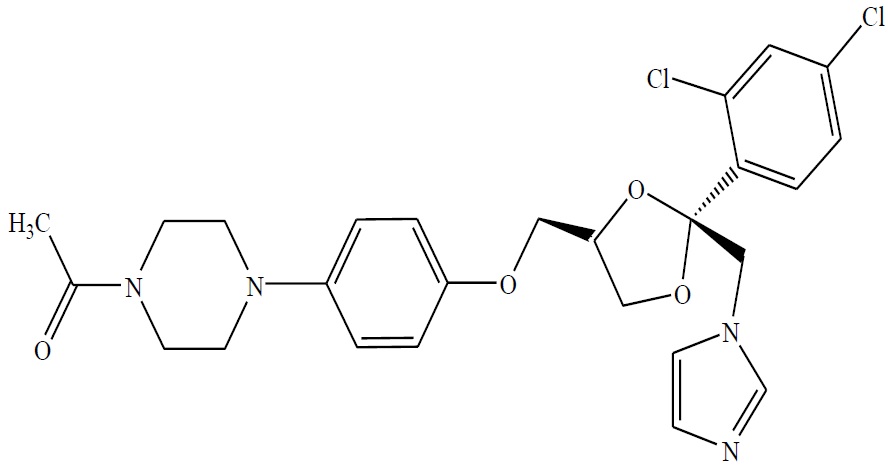
Ketoconazole is a white to off white powder, freely soluble in dichloromethane, soluble in Methanol. Sparingly soluble in ethanol (96%), with a molecular weight of 531.43.
FDA approved dissolution test specifications differ from USP.
CLINICAL PHARMACOLOGY
Pharmacokinetics
Absorption Ketoconazole is a weak dibasic agent and thus requires acidity for dissolution and absorption.
Mean peak plasma concentrations of approximately 3.5 mcg/mL are reached within 1 to 2 hours, following oral administration of a single 200 mg dose taken with a meal. Oral bioavailability is maximal when the tablets are taken with a meal.
Absorption of ketoconazole tablets is reduced in subjects with reduced gastric acidity, such as subjects taking medications known as acid neutralizing medicines (e.g. aluminum hydroxide) and gastric acid secretion suppressors (e.g. H 2 -receptor antagonists, proton pump inhibitors) or subjects with achlorhydria caused by certain diseases. (See Section PRECAUTIONS : Drug Interactions ) Absorption of ketoconazole under fasted conditions in these subjects is increased when ketoconazole tablets are administered with an acidic beverage (such as non-diet cola). After pretreatment with omeprazole, a proton pump inhibitor, the bioavailability of a single 200-mg dose of ketoconazole under fasted conditions was decreased to 17% of the bioavailability of ketoconazole administered alone. When ketoconazole was administered with non-diet cola after pretreatment with omeprazole, the bioavailability was 65% of that after administration of ketoconazole alone.
Distribution In vitro , the plasma protein binding is about 99% mainly to the albumin fraction.
Ketoconazole is widely distributed into tissues; however, only a negligible proportion reaches the cerebrospinal fluid.
Metabolism Following absorption from the gastrointestinal tract, ketoconazole tablets are converted into several inactive metabolites. In vitro studies have shown that CYP3A4 is the major enzyme involved in the metabolism of ketoconazole. The major identified metabolic pathways are oxidation and degradation of the imidazole and piperazine rings, by hepatic microsomal enzymes. In addition, oxidative O-dealkylation and aromatic hydroxylation does occur. Ketoconazole has not been demonstrated to induce its own metabolism.
Elimination Elimination from plasma is biphasic with a half-life of 2 hours during the first 10 hours and 8 hours thereafter. Approximately 13% of the dose is excreted in the urine, of which 2 to 4% is unchanged drug. The major route of excretion is through the bile into the intestinal tract with about 57% being excreted in the feces.
Special Populations
Patients with Hepatic or Renal Impairment In patients with hepatic or renal impairment, the overall pharmacokinetics of ketoconazole was not significantly different when compared with healthy subjects.
Pediatric Patients Limited pharmacokinetic data are available on the use of ketoconazole tablets in the pediatric population.
Measurable ketoconazole plasma concentrations have been observed in pre-term infants (single or daily doses of 3 to 10 mg/kg) and in pediatric patients 5 months of age and older (daily doses of 3 to 13 mg/kg) when the drug was administered as a suspension, tablet or crushed tablet. Limited data suggest that absorption may be greater when the drug is administered as a suspension compared to a crushed tablet. Conditions that raise gastric pH may lower or prevent absorption (See Section PRECAUTIONS : Drug Interactions ). Maximum plasma concentrations occurred 1 to 2 hours after dosing and were in the same general range as those seen in adults who received a 200 to 400 mg dose.
Electrocardiogram
Pre-clinical electrophysiological studies have shown that ketoconazole inhibits the rapidly activating component of the cardiac delayed rectifier potassium current, prolongs the action potential duration, and may prolong the QT c interval. Data from some clinical PK/PD studies and drug interaction studies suggest that oral dosing with ketoconazole at 200 mg twice daily for 3 to 7 days can result in an increase of the QT c interval: a mean maximum increase of about 6 to 12 msec was seen at ketoconazole peak plasma concentrations about 1 to 4 hours after ketoconazole administration.
MICROBIOLOGY
Mechanism of Action Ketoconazole blocks the synthesis of ergosterol, a key component of the fungal cell membrane, through the inhibition of cytochrome P-450 dependent enzyme lanosterol 14α-demethylase responsible for the conversion of lanosterol to ergosterol in the fungal cell membrane. This results in an accumulation of methylated sterol precursors and a depletion of ergosterol within the cell membrane thus weakening the structure and function of the fungal cell membrane. Activity In Vitro & In Vivo Ketoconazole tablets USP, 200 mg are active against clinical infections with Blastomyces dermatitidis, Coccidioides immitis, Histoplasma capsulatum, Paracoccidioides brasiliensis.
HOW SUPPLIED
Ketoconazole tablets USP, 200 mg are white to off-white round, flat tablets, one side scored and engraved with E above the score and plain below the score. The other side engraved with 001. They are supplied in bottles of 30 tablets (NDC 70685-001-01); 100 tablets (NDC 70685-001-02); 500 tablets (NDC 70685-001-03).
Store at 20° to 25°C (68° to 77°F) [See USP Controlled Room Temperature].
Protect from moisture.
Keep out of reach of children.
Mfd. by: Esjay Pharma Private Limited, Plot No: G-28 & G-29, Sipcot industrial park, Irungattukottai, Sriperumbudur (Taluk)-602117 Kanchipuram, Tamilnadu, India.
Revised: April 2025
