Get your patient on Lisinopril And Hydrochlorothiazide - Lisinopril And Hydrochlorothiazide Tablets tablet (Lisinopril And Hydrochlorothiazide Tablets)
Lisinopril And Hydrochlorothiazide - Lisinopril And Hydrochlorothiazide Tablets tablet prescribing information

WARNING: FETAL TOXICITY
- When pregnancy is detected, discontinue lisinopril and hydrochlorothiazide tablets as soon as possible.
- Drugs that act directly on the renin-angiotensin system can cause injury and death to the developing fetus. See Warnings, Fetal Toxicity .
INDICATIONS AND USAGE
Lisinopril and hydrochlorothiazide tablets are indicated for the treatment of hypertension, to lower blood pressure. Lowering blood pressure lowers the risk of fatal and non-fatal cardiovascular events, primarily strokes and myocardial infarctions. These benefits have been seen in controlled trials of antihypertensive drugs from a wide variety of pharmacologic classes including lisinopril and hydrochlorothiazide.
Control of high blood pressure should be part of comprehensive cardiovascular risk management, including, as appropriate, lipid control, diabetes management, antithrombotic therapy, smoking cessation, exercise, and limited sodium intake. Many patients will require more than 1 drug to achieve blood pressure goals. For specific advice on goals and management, see published guidelines, such as those of the National High Blood Pressure Education Program’s Joint National Committee on Prevention, Detection, Evaluation, and Treatment of High Blood Pressure (JNC).
Numerous antihypertensive drugs, from a variety of pharmacologic classes and with different mechanisms of action, have been shown in randomized controlled trials to reduce cardiovascular morbidity and mortality, and it can be concluded that it is blood pressure reduction, and not some other pharmacologic property of the drugs, that is largely responsible for those benefits. The largest and most consistent cardiovascular outcome benefit has been a reduction in the risk of stroke, but reductions in myocardial infarction and cardiovascular mortality also have been seen regularly.
Elevated systolic or diastolic pressure causes increased cardiovascular risk, and the absolute risk increase per mmHg is greater at higher blood pressures, so that even modest reductions of severe hypertension can provide substantial benefit. Relative risk reduction from blood pressure reduction is similar across populations with varying absolute risk, so the absolute benefit is greater in patients who are at higher risk independent of their hypertension (for example, patients with diabetes or hyperlipidemia), and such patients would be expected to benefit from more aggressive treatment to a lower blood pressure goal.
Some antihypertensive drugs have smaller blood pressure effects (as monotherapy) in black patients, and many antihypertensive drugs have additional approved indications and effects (e.g., on angina, heart failure, or diabetic kidney disease). These considerations may guide selection of therapy.
These fixed-dose combinations are not indicated for initial therapy (see DOSAGE AND ADMINISTRATION ).
In using lisinopril and hydrochlorothiazide tablets, consideration should be given to the fact that an angiotensin converting enzyme inhibitor, captopril, has caused agranulocytosis, particularly in patients with renal impairment or collagen vascular disease, and that available data are insufficient to show that lisinopril does not have a similar risk. (See WARNINGS .)
In considering use of lisinopril and hydrochlorothiazide tablets, it should be noted that Black patients receiving ACE inhibitors have been reported to have a higher incidence of angioedema compared to non-Black. (See WARNINGS, Head and Neck Angioedema .)
DOSAGE AND ADMINISTRATION
Lisinopril monotherapy is an effective treatment of hypertension in once-daily doses of 10 mg to 80 mg, while hydrochlorothiazide monotherapy is effective in doses of 12.5 mg to 50 mg per day. In clinical trials of lisinopril/hydrochlorothiazide combination therapy using lisinopril doses of 10 mg to 80 mg and hydrochlorothiazide doses of 6.25 mg to 50 mg, the antihypertensive response rates generally increased with increasing dose of either component.
The side effects (see WARNINGS ) of lisinopril are generally rare and apparently independent of dose; those of hydrochlorothiazide are a mixture of dose-dependent phenomena (primarily hypokalemia) and dose-independent phenomena (e.g., pancreatitis), the former much more common than the latter. Therapy with any combination of lisinopril and hydrochlorothiazide will be associated with both sets of dose-independent side effects, but addition of lisinopril in clinical trials blunted the hypokalemia normally seen with diuretics.
To minimize dose-independent side effects, it is usually appropriate to begin combination therapy only after a patient has failed to achieve the desired effect with monotherapy.
Dose Titration Guided by Clinical Effect
A patient whose blood pressure is not adequately controlled with either lisinopril or hydrochlorothiazide monotherapy may be switched to lisinopril and hydrochlorothiazide tablets 10 mg/12.5 mg or lisinopril and hydrochlorothiazide tablets 20 mg/12.5 mg. Further increases of either or both components could depend on clinical response. The hydrochlorothiazide dose should generally not be increased until 2-3 weeks have elapsed. Patients whose blood pressures are adequately controlled with 25 mg of daily hydrochlorothiazide, but who experience significant potassium loss with this regimen, may achieve similar or greater blood pressure control with less potassium loss if they are switched to lisinopril and hydrochlorothiazide tablets 10 mg/12.5 mg. Dosage higher than lisinopril 80 mg and hydrochlorothiazide 50 mg should not be used.
Replacement Therapy
The combination may be substituted for the titrated individual components.
Use in Renal Impairment
The usual regimens of therapy with lisinopril and hydrochlorothiazide tablets need not be adjusted as long as the patient's creatinine clearance is greater than 30 mL/min/1.73 m 2 (serum creatinine approximately less than or equal to 3 mg/dL or 265 μmol/L). In patients with more severe renal impairment, loop diuretics are preferred to thiazides, so lisinopril and hydrochlorothiazide tablets are not recommended (see WARNINGS, Anaphylactoid reactions during membrane exposure ).
CONTRAINDICATIONS
Lisinopril and hydrochlorothiazide tablets are contraindicated in patients who are hypersensitive to any component of this product and in patients with a history of angioedema related to previous treatment with an angiotensin converting enzyme inhibitor and in patients with hereditary or idiopathic angioedema. Because of the hydrochlorothiazide component, this product is contraindicated in patients with anuria or hypersensitivity to other sulfonamide-derived drugs.
Lisinopril and hydrochlorothiazide tablets are contraindicated in combination with a neprilysin inhibitor (e.g., sacubitril). Do not administer lisinopril and hydrochlorothiazide tablets within 36 hours of switching to or from sacubitril/valsartan, a neprilysin inhibitor (see WARNINGS ).
Do not coadminister aliskiren with lisinopril and hydrochlorothiazide tablets in patients with diabetes.
ADVERSE REACTIONS
Lisinopril and hydrochlorothiazide tablets have been evaluated for safety in 930 patients, including 100 patients treated for 50 weeks or more.
In clinical trials with lisinopril and hydrochlorothiazide tablets no adverse experiences peculiar to this combination drug have been observed. Adverse experiences that have occurred have been limited to those that have been previously reported with lisinopril or hydrochlorothiazide.
The most frequent clinical adverse experiences in controlled trials (including open label extensions) with any combination of lisinopril and hydrochlorothiazide tablets were: dizziness (7.5%), headache (5.2%), cough (3.9%), fatigue (3.7%) and orthostatic effects (3.2%) all of which were more common than in placebo-treated patients. Generally, adverse experiences were mild and transient in nature; but see WARNINGS regarding angioedema and excessive hypotension or syncope. Discontinuation of therapy due to adverse effects was required in 4.4% of patients, principally because of dizziness, cough, fatigue and muscle cramps.
Adverse experiences occurring in greater than one percent of patients treated with lisinopril plus hydrochlorothiazide in controlled clinical trials are shown below.
Percent of Patients in Controlled Studies
| Clinical adverse experiences occurring in 0.3% to 1.0% of patients in controlled trials included: | |||
Lisinopril-Hydrochlorothiazide (n=930) Incidence (discontinuation) | Placebo (n=207) Incidence | ||
Dizziness | 7.5 | (0.8) | 1.9 |
Headache | 5.2 | (0.3) | 1.9 |
Cough | 3.9 | (0.6) | 1.0 |
Fatigue | 3.7 | (0.4) | 1.0 |
Orthostatic Effects | 3.2 | (0.1) | 1.0 |
Diarrhea | 2.5 | (0.2) | 2.4 |
Nausea | 2.2 | (0.1) | 2.4 |
Upper Respiratory Infection | 2.2 | (0.0) | 0.0 |
Muscle Cramps | 2.0 | (0.4) | 0.5 |
Asthenia | 1.8 | (0.2) | 1.0 |
Paresthesia | 1.5 | (0.1) | 0.0 |
Hypotension | 1.4 | (0.3) | 0.5 |
Vomiting | 1.4 | (0.1) | 0.5 |
Dyspepsia | 1.3 | (0.0) | 0.0 |
Rash | 1.2 | (0.1) | 0.5 |
Impotence | 1.2 | (0.3) | 0.0 |
Body as a Whole: Chest pain, abdominal pain, syncope, chest discomfort, fever, trauma, virus infection. Cardiovascular: Palpitation, orthostatic hypotension. Digestive: Gastrointestinal cramps, dry mouth, constipation, heartburn. Musculoskeletal: Back pain, shoulder pain, knee pain, back strain, myalgia, foot pain. Nervous/Psychiatric: Decreased libido, vertigo, depression, somnolence. Respiratory: Common cold, nasal congestion, influenza, bronchitis, pharyngeal pain, dyspnea, pulmonary congestion, chronic sinusitis, allergic rhinitis, pharyngeal discomfort. Skin: Flushing, pruritus, skin inflammation, diaphoresis. Special Senses: Blurred vision, tinnitus, otalgia. Urogenital: Urinary tract infection.
Angioedema: Angioedema has been reported in patients receiving PRINZIDE, with an incidence higher in Black than in non-Black patients. Angioedema associated with laryngeal edema may be fatal. If angioedema of the face, extremities, lips, tongue, glottis and/or larynx occurs, treatment with PRINZIDE should be discontinued and appropriate therapy instituted immediately. In rare cases, intestinal angioedema has been reported with angiotensin converting enzyme inhibitors including lisinopril. (See WARNINGS .)
Hypotension: In clinical trials, adverse effects relating to hypotension occurred as follows: hypotension (1.4 percent), orthostatic hypotension (0.5 percent), other orthostatic effects (3.2 percent). In addition syncope occurred in 0.8 percent of patients. (See WARNINGS .)
Cough: See PRECAUTIONS, Cough .
Clinical Laboratory Test Findings
Serum Electrolytes: See PRECAUTIONS .
Creatinine, Blood Urea Nitrogen: Minor reversible increases in blood urea nitrogen and serum creatinine were observed in patients with essential hypertension treated with lisinopril and hydrochlorothiazide tablets. More marked increases have also been reported and were more likely to occur in patients with renal artery stenosis (See PRECAUTIONS ).
Serum Uric Acid, Glucose, Magnesium, Cholesterol, Triglycerides and Calcium: See PRECAUTIONS .
Hemoglobin and Hematocrit: Small decreases in hemoglobin and hematocrit (mean decreases of approximately 0.5 g% and 1.5 vol%, respectively) occurred frequently in hypertensive patients treated with lisinopril and hydrochlorothiazide tablets but were rarely of clinical importance unless another cause of anemia coexisted. In clinical trials, 0.4% of patients discontinued therapy due to anemia.
Liver Function Tests: Rarely, elevations of liver enzymes and/or serum bilirubin have occurred (see WARNINGS, Hepatic Failure ).
Other adverse reactions that have been reported with the individual components are listed below:
Lisinopril - In clinical trials adverse reactions which occurred with lisinopril were also seen with lisinopril and hydrochlorothiazide tablets. In addition, and since lisinopril has been marketed, the following adverse reactions have been reported with lisinopril and should be considered potential adverse reactions for lisinopril and hydrochlorothiazide tablets: Body as a Whole: Anaphylactoid reactions (see WARNINGS, Anaphylactoid and Possibly Related Reactions ), malaise, edema, facial edema, pain, pelvic pain, flank pain, chills; Cardiovascular: Cardiac arrest, myocardial infarction or cerebrovascular accident, possibly secondary to excessive hypotension in high-risk patients (see WARNINGS, Hypotension ), pulmonary embolism and infarction, worsening of heart failure, arrhythmias (including tachycardia, ventricular tachycardia, atrial tachycardia, atrial fibrillation, bradycardia, and premature ventricular contractions), angina pectoris, transient ischemic attacks, paroxysmal nocturnal dyspnea, decreased blood pressure, peripheral edema, vasculitis; Digestive: Pancreatitis, hepatitis (hepatocellular or cholestatic jaundice) (see WARNINGS, Hepatic Failure ), gastritis, anorexia, flatulence, increased salivation; Endocrine: Diabetes mellitus, syndrome of inappropriate antidiuretic hormone secretion (SIADH); Hematologic: Rare cases of neutropenia, thrombocytopenia, and bone marrow depression have been reported. Hemolytic anemia has been reported; a causal relationship to lisinopril cannot be excluded; Metabolic: Gout, weight loss, dehydration, fluid overload, weight gain; Musculoskeletal: Arthritis, arthralgia, neck pain, hip pain, joint pain, leg pain, arm pain, lumbago; Nervous System/Psychiatric: Ataxia, memory impairment, tremor, insomnia, stroke, nervousness, confusion, peripheral neuropathy (e.g., paresthesia, dysesthesia), spasm, hypersomnia, irritability, mood alterations (including depressive symptoms); hallucinations ; Respiratory: Malignant lung neoplasms, hemoptysis, pulmonary edema, pulmonary infiltrates, eosinophilic pneumonitis, bronchospasm, asthma, pleural effusion, pneumonia, wheezing, orthopnea, painful respiration, epistaxis, laryngitis, sinusitis, pharyngitis, rhinitis, rhinorrhea, chest sound abnormalities; Skin: Urticaria, alopecia, herpes zoster, photosensitivity, skin lesions, skin infections, pemphigus, erythema, psoriasis. Other severe skin reactions (including toxic epidermal necrolysis, Stevens-Johnson syndrome and cutaneous pseudolymphoma) have been reported rarely; causal relationship has not been established; Special Senses: Visual loss, diplopia, photophobia, taste disturbances, olfactory disturbances; Urogenital: Acute renal failure, oliguria, anuria, uremia, progressive azotemia, renal dysfunction (see PRECAUTIONS and DOSAGE AND ADMINISTRATION ), pyelonephritis, dysuria, breast pain.
Miscellaneous: A symptom complex has been reported which may include a positive ANA, an elevated erythrocyte sedimentation rate, arthralgia/arthritis, myalgia, fever, vasculitis, leukocytosis, eosinophilia, photosensitivity, rash, and other dermatological manifestations.
Fetal/Neonatal Morbidity and Mortality: See WARNINGS , Pregnancy, Lisinopril, Fetal/Neonatal Morbidity and Mortality .
Hydrochlorothiazide - Body as a Whole: Weakness; Digestive: Anorexia, gastric irritation, cramping, jaundice (intrahepatic cholestatic jaundice) (see WARNINGS, Hepatic Failure ), pancreatitis, sialadenitis, constipation; Hematologic: Leukopenia, agranulocytosis, thrombocytopenia, aplastic anemia, hemolytic anemia; Musculoskeletal: Muscle spasm; Nervous System/Psychiatric: Restlessness; Renal: Renal failure, renal dysfunction, interstitial nephritis (see WARNINGS ); Skin: Erythema multiforme including Stevens-Johnson syndrome, exfoliative dermatitis including toxic epidermal necrolysis, alopecia; Special Senses: Xanthopsia; Hypersensitivity: Purpura, photosensitivity, urticaria, necrotizing angiitis (vasculitis and cutaneous vasculitis), respiratory distress including pneumonitis and pulmonary edema, anaphylactic reactions.
Non-melanoma Skin Cancer
Hydrochlorothiazide is associated with an increased risk of non-melanoma skin cancer. In a study conducted in the Sentinel System, increased risk was predominantly for squamous cell carcinoma (SCC) and in white patients taking large cumulative doses. The increased risk for SCC in the overall population was approximately 1 additional case per 16,000 patients per year, and for white patients taking a cumulative dose of ≥50,000 mg the risk increase was approximately 1 additional SCC case for every 6,700 patients per year.
Drug Interactions
Lisinopril
Hypotension - Patients on Diuretic Therapy: Patients on diuretics, and especially those in whom diuretic therapy was recently instituted, may occasionally experience an excessive reduction of blood pressure after initiation of therapy with lisinopril. The possibility of hypotensive effects with lisinopril can be minimized by either discontinuing the diuretic or increasing the salt intake prior to initiation of treatment with lisinopril. If it is necessary to continue the diuretic, initiate therapy with lisinopril at a dose of 5 mg daily, and provide close medical supervision after the initial dose for at least two hours and until blood pressure has stabilized for at least an additional hour. (See WARNINGS and DOSAGE AND ADMINISTRATION .) When a diuretic is added to the therapy of a patient receiving lisinopril, an additional antihypertensive effect is usually observed. (See DOSAGE AND ADMINISTRATION .)
Non-steroidal Anti-inflammatory Agents Including Selective Cyclooxygenase-2 (COX-2) Inhibitors: In patients who are elderly, volume-depleted (including those on diuretic therapy), or with compromised renal function, co-administration of NSAIDs, including selective COX-2 inhibitors, with ACE inhibitors, including lisinopril, may result in deterioration of renal function, including possible acute renal failure. These effects are usually reversible. Monitor renal function periodically in patients receiving lisinopril and NSAID therapy.
The antihypertensive effect of ACE inhibitors, including lisinopril, may be attenuated by NSAIDs.
Dual Blockade of the Renin-Angiotensin System (RAS): Dual blockade of the RAS with angiotensin receptor blockers, ACE inhibitors, or direct renin inhibitors (such as aliskiren) is associated with increased risk of hypotension, syncope, hyperkalemia, and changes in renal function (including acute renal failure) compared to monotherapy.
The VA NEPHRON trial enrolled 1448 patients with type 2 diabetes, elevated urinary-albumin-to-creatinine ratio, and decreased estimated glomerular filtration rate (GFR 30 to 89.9 ml/min), randomized them to lisinopril or placebo on a background of losartan therapy and followed them for a median of 2.2 years. Patients receiving the combination of losartan and lisinopril did not obtain any additional benefit compared to monotherapy for the combined endpoint of decline in GFR, end state renal disease, or death, but experienced an increased incidence of hyperkalemia and acute kidney injury compared with the monotherapy group.
In general, avoid combined use of RAS inhibitors. Monitor blood pressure, renal function, and electrolytes in patients on lisinopril and hydrochlorothiazide tablets and other agents that affect the RAS.
Do not coadminister aliskiren with lisinopril and hydrochlorothiazide tablets in patients with diabetes. Avoid use of aliskiren with PRINZIDE in patients with renal impairment (GFR <60 ml/min).
Other Agents: Lisinopril has been used concomitantly with nitrates and/or digoxin without evidence of clinically significant adverse interactions. No meaningful clinically important pharmacokinetic interactions occurred when lisinopril was used concomitantly with propranolol, digoxin, or hydrochlorothiazide. The presence of food in the stomach does not alter the bioavailability of lisinopril.
Agents Increasing Serum Potassium: Lisinopril attenuates potassium loss caused by thiazide-type diuretics. Use of lisinopril with potassium-sparing diuretics (e.g., spironolactone, eplerenone, triamterene, or amiloride), potassium supplements, or potassium-containing salt substitutes may lead to significant increases in serum potassium. Therefore, if concomitant use of these agents is indicated, because of demonstrated hypokalemia, they should be used with caution and with frequent monitoring of serum potassium.
Lithium: Lithium toxicity has been reported in patients receiving lithium concomitantly with drugs which cause elimination of sodium, including ACE inhibitors. Lithium toxicity was usually reversible upon discontinuation of lithium and the ACE inhibitor. It is recommended that serum lithium levels be monitored frequently if lisinopril is administered concomitantly with lithium.
Gold: Nitritoid reactions (symptoms include facial flushing, nausea, vomiting and hypotension) have been reported rarely in patients on therapy with injectable gold (sodium aurothiomalate) and concomitant ACE inhibitor therapy including lisinopril and hydrochlorothiazide tablets.
mTOR (mammalian target of rapamycin) inhibitors: Patients receiving coadministration of ACE inhibitor and mTOR inhibitor (e.g., temsirolimus, sirolimus, everolimus) therapy may be at increased risk for angioedema. (see WARNINGS )
Neprilysin Inhibitors: Patients taking concomitant neprilysin inhibitors may be at increased risk for angioedema. (see WARNINGS )
Hydrochlorothiazide
When administered concurrently the following drugs may interact with thiazide diuretics.
Alcohol, barbiturates, or narcotics - potentiation of orthostatic hypotension may occur.
Antidiabetic drugs (oral agents and insulin) - dosage adjustment of the antidiabetic drug may be required.
Other antihypertensive drugs - additive effect or potentiation.
Cholestyramine and colestipol resins - Absorption of hydrochlorothiazide is impaired in the presence of anionic exchange resins. Single doses of either cholestyramine or colestipol resins bind the hydrochlorothiazide and reduce its absorption from the gastrointestinal tract by up to 85% and 43%, respectively.
Corticosteroids, ACTH - intensified electrolyte depletion, particularly hypokalemia.
Pressor amines (e.g., norepinephrine) - possible decreased response to pressor amines but not sufficient to preclude their use.
Skeletal muscle relaxants, nondepolarizing (e.g., tubocurarine) - possible increased responsiveness to the muscle relaxant.
Lithium - should not generally be given with diuretics. Diuretic agents reduce the renal clearance of lithium and add a high risk of lithium toxicity. Refer to the package insert for lithium preparations before use of such preparations with lisinopril and hydrochlorothiazide tablets.
Non-steroidal Anti-inflammatory Drugs - In some patients, the administration of a non-steroidal anti-inflammatory agent can reduce the diuretic, natriuretic, and antihypertensive effects of loop, potassium-sparing and thiazide diuretics. Therefore, when lisinopril and hydrochlorothiazide tablets and non-steroidal anti-inflammatory agents are used concomitantly, the patient should be observed closely to determine if the desired effect of lisinopril and hydrochlorothiazide tablets is obtained.
DESCRIPTION
Lisinopril and hydrochlorothiazide tablets combine an angiotensin converting enzyme inhibitor, lisinopril, and a diuretic, hydrochlorothiazide.
Lisinopril, a synthetic peptide derivative, is an oral long-acting angiotensin converting enzyme inhibitor. It is chemically described as (S)-1-[N2-(1-carboxy-3-phenylpropyl)-L-lysyl]-L-proline dihydrate. Its empirical formula is C 21 H 31 N 3 O 5 • 2H 2 O and its structural formula is:
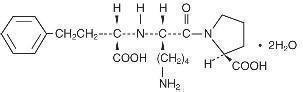
Lisinopril, USP is a white to off-white, crystalline powder, with a molecular weight of 441.52. It is soluble in water, sparingly soluble in methanol, and practically insoluble in ethanol.
Hydrochlorothiazide is 6-chloro-3,4-dihydro-2H-1,2,4-benzothiadiazine-7-sulfonamide 1,1-dioxide. Its empirical formula is C 7 H 8 ClN 3 O 4 S 2 and its structural formula is:
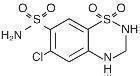
Hydrochlorothiazide, USP is a white, or practically white, crystalline powder with a molecular weight of 297.73, which is slightly soluble in water, but freely soluble in sodium hydroxide solution.
Lisinopril and hydrochlorothiazide tablets, USP are available for oral use in three tablet combinations of lisinopril with hydrochlorothiazide: lisinopril and hydrochlorothiazide tablets 10 mg/12.5 mg containing 10 mg lisinopril and 12.5 mg hydrochlorothiazide; lisinopril and hydrochlorothiazide tablets 20 mg/12.5 mg containing 20 mg lisinopril and 12.5 mg hydrochlorothiazide; and, lisinopril and hydrochlorothiazide tablets 20 mg/25 mg containing 20 mg lisinopril and 25 mg hydrochlorothiazide.
Inactive Ingredients:
10 mg/12.5 mg Tablets - dibasic calcium phosphate dihydrate, magnesium stearate, mannitol, pregelatinized starch.
20 mg/12.5 mg Tablets - dibasic calcium phosphate dihydrate, magnesium stearate, mannitol, pregelatinized starch, yellow ferric oxide.
20 mg/25 mg Tablets - dibasic calcium phosphate dihydrate, magnesium stearate, mannitol, pregelatinized starch, red ferric oxide.
CLINICAL PHARMACOLOGY
Lisinopril-Hydrochlorothiazide
As a result of its diuretic effects, hydrochlorothiazide increases plasma renin activity, increases aldosterone secretion, and decreases serum potassium. Administration of lisinopril blocks the renin-angiotensin-aldosterone axis and tends to reverse the potassium loss associated with the diuretic.
In clinical studies, the extent of blood pressure reduction seen with the combination of lisinopril and hydrochlorothiazide was approximately additive. The lisinopril and hydrochlorothiazide tablets 10 mg/12.5 mg combination worked equally well in Black and Caucasian patients. The lisinopril and hydrochlorothiazide tablets 20 mg/12.5 mg and lisinopril and hydrochlorothiazide tablets 20 mg/25 mg combinations appeared somewhat less effective in Black patients, but relatively few Black patients were studied. In most patients, the antihypertensive effect of lisinopril and hydrochlorothiazide tablets was sustained for at least 24 hours.
In a randomized, controlled comparison, the mean antihypertensive effects of lisinopril and hydrochlorothiazide tablets 20 mg/12.5 mg and lisinopril and hydrochlorothiazide tablets 20 mg/25 mg were similar, suggesting that many patients who respond adequately to the latter combination may be controlled with lisinopril and hydrochlorothiazide tablets 20 mg/12.5 mg. (See DOSAGE AND ADMINISTRATION .)
Concomitant administration of lisinopril and hydrochlorothiazide has little or no effect on the bioavailability of either drug. The combination tablet is bioequivalent to concomitant administration of the separate entities.
Lisinopril
Mechanism of Action
Lisinopril inhibits angiotensin-converting enzyme (ACE) in human subjects and animals. ACE is a peptidyl dipeptidase that catalyzes the conversion of angiotensin I to the vasoconstrictor substance, angiotensin II. Angiotensin II also stimulates aldosterone secretion by the adrenal cortex. Inhibition of ACE results in decreased plasma angiotensin II which leads to decreased vasopressor activity and to decreased aldosterone secretion. The latter decrease may result in a small increase of serum potassium. Removal of angiotensin II negative feedback on renin secretion leads to increased plasma renin activity. In hypertensive patients with normal renal function treated with lisinopril alone for up to 24 weeks, the mean increase in serum potassium was less than 0.1 mEq/L; however, approximately 15 percent of patients had increases greater than 0.5 mEq/L and approximately six percent had a decrease greater than 0.5 mEq/L. In the same study, patients treated with lisinopril plus a thiazide diuretic showed essentially no change in serum potassium. (See PRECAUTIONS )
ACE is identical to kininase, an enzyme that degrades bradykinin. Whether increased levels of bradykinin, a potent vasodepressor peptide, play a role in the therapeutic effects of lisinopril remains to be elucidated.
While the mechanism through which lisinopril lowers blood pressure is believed to be primarily suppression of the renin-angiotensin-aldosterone system, lisinopril is antihypertensive even in patients with low-renin hypertension. Although lisinopril was antihypertensive in all races studied, Black hypertensive patients (usually a low-renin hypertensive population) had a smaller average response to lisinopril monotherapy than non-Black patients.
Pharmacokinetics and Metabolism
Following oral administration of lisinopril, peak serum concentrations occur within about 7 hours. Declining serum concentrations exhibit a prolonged terminal phase which does not contribute to drug accumulation. This terminal phase probably represents saturable binding to ACE and is not proportional to dose. Lisinopril does not appear to be bound to other serum proteins.
Lisinopril does not undergo metabolism and is excreted unchanged entirely in the urine. Based on urinary recovery, the mean extent of absorption of lisinopril is approximately 25 percent, with large intersubject variability (6% to 60%) at all doses tested (5 mg to 80 mg). Lisinopril absorption is not influenced by the presence of food in the gastrointestinal tract.
Upon multiple dosing, lisinopril exhibits an effective half-life of accumulation of 12 hours.
Impaired renal function decreases elimination of lisinopril, which is excreted principally through the kidneys, but this decrease becomes clinically important only when the glomerular filtration rate is below 30 mL/min. Above this glomerular filtration rate, the elimination half-life is little changed. With greater impairment, however, peak and trough lisinopril levels increase, time to peak concentration increases and time to attain steady state is prolonged. Older patients, on average, have (approximately doubled) higher blood levels and area under the plasma concentration time curve (AUC) than younger patients. (See DOSAGE AND ADMINISTRATION ) Lisinopril can be removed by hemodialysis.
Studies in rats indicate that lisinopril crosses the blood-brain barrier poorly. Multiple doses of lisinopril in rats do not result in accumulation in any tissues. However, milk of lactating rats contains radioactivity following administration of 14 C lisinopril. By whole body autoradiography, radioactivity was found in the placenta following administration of labeled drug to pregnant rats, but none was found in the fetuses.
Pharmacodynamics
Administration of lisinopril to patients with hypertension results in a reduction of supine and standing blood pressure to about the same extent with no compensatory tachycardia. Symptomatic postural hypotension is usually not observed although it can occur and should be anticipated in volume and/or salt-depleted patients. (See WARNINGS .)
In most patients studied, onset of antihypertensive activity was seen at one hour after oral administration of an individual dose of lisinopril, with peak reduction of blood pressure achieved by six hours.
In some patients achievement of optimal blood pressure reduction may require two to four weeks of therapy.
At recommended single daily doses, antihypertensive effects have been maintained for at least 24 hours after dosing, although the effect at 24 hours was substantially smaller than the effect six hours after dosing.
The antihypertensive effects of lisinopril have continued during long-term therapy. Abrupt withdrawal of lisinopril has not been associated with a rapid increase in blood pressure; nor with a significant overshoot of pretreatment blood pressure.
In hemodynamic studies in patients with essential hypertension, blood pressure reduction was accompanied by a reduction in peripheral arterial resistance with little or no change in cardiac output and in heart rate. In a study in nine hypertensive patients, following administration of lisinopril, there was an increase in mean renal blood flow that was not significant. Data from several small studies are inconsistent with respect to the effect of lisinopril on glomerular filtration rate in hypertensive patients with normal renal function, but suggest that changes, if any, are not large.
In patients with renovascular hypertension lisinopril has been shown to be well tolerated and effective in controlling blood pressure (see PRECAUTIONS ).
Hydrochlorothiazide
The mechanism of the antihypertensive effect of thiazides is unknown. Thiazides do not usually affect normal blood pressure.
Hydrochlorothiazide is a diuretic and antihypertensive. It affects the distal renal tubular mechanism of electrolyte reabsorption. Hydrochlorothiazide increases excretion of sodium and chloride in approximately equivalent amounts. Natriuresis may be accompanied by some loss of potassium and bicarbonate.
After oral use diuresis begins within two hours, peaks in about four hours and lasts about 6 to 12 hours.
Hydrochlorothiazide is not metabolized but is eliminated rapidly by the kidney. When plasma levels have been followed for at least 24 hours, the plasma half-life has been observed to vary between 5.6 and 14.8 hours. At least 61 percent of the oral dose is eliminated unchanged within 24 hours. Hydrochlorothiazide crosses the placental but not the blood-brain barrier.
HOW SUPPLIED
Lisinopril and hydrochlorothiazide tablets USP, 10 mg/12.5 mg are white to off-white, round tablets, imprinted with ‘H150’ on one side and plain on the other side.
NDC 43547-420-10 Bottle of 100 tablets
NDC 43547-420-50 Bottle of 500 tablets
NDC 43547-420-11 Bottle of 1,000 tablets
Lisinopril and hydrochlorothiazide tablets USP, 20 mg/12.5 mg are yellow, round tablets, imprinted with ‘H151’ on one side and plain on the other side.
NDC 43547-421-10 Bottle of 100 tablets
NDC 43547-421-50 Bottle of 500 tablets
NDC 43547-421-11 Bottle of 1,000 tablets
Lisinopril and hydrochlorothiazide tablets USP, 20 mg/25 mg are pink mottled, round tablets, imprinted with ‘H152’ on one side and plain on the other side.
NDC 43547-422-10 Bottle of 100 tablets
NDC 43547-422-50 Bottle of 500 tablets
NDC 43547-422-11 Bottle of 1,000 tablets
Storage
Store at 20°C-25°C (68°F-77°F); excursions permitted to 15°C-30°C (59°F-86°F) [see USP Controlled Room Temperature]. Protect from excessive light and humidity. Dispense in a well-closed container, if product package is subdivided.
Manufactured by:
Zhejiang Huahai Pharmaceutical Co., Ltd.
Xunqiao, Linhai, Zhejiang 317024, China
Distributed by:
Solco Healthcare US, LLC
Somerset, NJ 08873, USA
Revised: 07/2025
200489-02
Mechanism of Action
Lisinopril inhibits angiotensin-converting enzyme (ACE) in human subjects and animals. ACE is a peptidyl dipeptidase that catalyzes the conversion of angiotensin I to the vasoconstrictor substance, angiotensin II. Angiotensin II also stimulates aldosterone secretion by the adrenal cortex. Inhibition of ACE results in decreased plasma angiotensin II which leads to decreased vasopressor activity and to decreased aldosterone secretion. The latter decrease may result in a small increase of serum potassium. Removal of angiotensin II negative feedback on renin secretion leads to increased plasma renin activity. In hypertensive patients with normal renal function treated with lisinopril alone for up to 24 weeks, the mean increase in serum potassium was less than 0.1 mEq/L; however, approximately 15 percent of patients had increases greater than 0.5 mEq/L and approximately six percent had a decrease greater than 0.5 mEq/L. In the same study, patients treated with lisinopril plus a thiazide diuretic showed essentially no change in serum potassium. (See PRECAUTIONS )
ACE is identical to kininase, an enzyme that degrades bradykinin. Whether increased levels of bradykinin, a potent vasodepressor peptide, play a role in the therapeutic effects of lisinopril remains to be elucidated.
While the mechanism through which lisinopril lowers blood pressure is believed to be primarily suppression of the renin-angiotensin-aldosterone system, lisinopril is antihypertensive even in patients with low-renin hypertension. Although lisinopril was antihypertensive in all races studied, Black hypertensive patients (usually a low-renin hypertensive population) had a smaller average response to lisinopril monotherapy than non-Black patients.
