Get your patient on Propranolol Hydrochloride - Propranolol Hydrochloride injection (Propranolol Hydrochloride)
Propranolol Hydrochloride - Propranolol Hydrochloride injection prescribing information

INDICATIONS AND USAGE
Cardiac Arrhythmias
Intravenous administration is usually reserved for life-threatening arrhythmias or those occurring under anesthesia.
1. Supraventricular arrhythmias Intravenous propranolol is indicated for the short-term treatment of supraventricular tachycardia, including Wolff‑Parkinson‑White syndrome and thyrotoxicosis, to decrease ventricular rate. Use in patients with atrial flutter or atrial fibrillation should be reserved for arrythmias unresponsive to standard therapy or when more prolonged control is required. Reversion to normal sinus rhythm has occasionally been observed, predominantly in patients with sinus or atrial tachycardia.
2. Ventricular tachycardias With the exception of those induced by catecholamines or digitalis, propranolol is not the drug of first choice. In critical situations when cardioversion techniques or other drugs are not indicated or are not effective, propranolol may be considered. If, after consideration of the risks involved, propranolol is used, it should be given intravenously in low dosage and very slowly, as the failing heart requires some sympathetic drive for maintenance of myocardial tone (see DOSAGE AND ADMINISTRATION ). Some patients may respond with complete reversion to normal sinus rhythm, but reduction in ventricular rate is more likely. Ventricular arrhythmias do not respond to propranolol as predictably as do the supraventricular arrhythmias. Intravenous propranolol is indicated for the treatment of persistent premature ventricular extrasystoles that impair the well‑being of the patient and do not respond to conventional measures.
3. Tachyarrhythmias of digitalis intoxication Intravenous propranolol is indicated to control ventricular rate in life-threatening digitalis-induced arrhythmias. Severe bradycardia may occur (see OVERDOSAGE ).
4. Resistant tachyarrhythmias due to excessive catecholamine action during anesthesia Intravenous propranolol is indicated to abolish tachyarrhythmias due to excessive catecholamine action during anesthesia when other measures fail. These arrhythmias may arise because of release of endogenous catecholamines or administration of catecholamines. All general inhalation anesthetics produce some degree of myocardial depression. Therefore, when propranolol is used to treat arrhythmias during anesthesia, it should be used with extreme caution, usually with constant monitoring of the ECG and central venous pressure (see WARNINGS ).
DOSAGE AND ADMINISTRATION
Parenteral drug products should be inspected visually for particulate matter and discoloration prior to administration, whenever solution and container permit.
The usual dose is 1 to 3 mg administered under careful monitoring, such as electrocardiography and central venous pressure. The rate of administration should not exceed 1 mg (1 mL) per minute to diminish the possibility of lowering blood pressure and causing cardiac standstill. Sufficient time should be allowed for the drug to reach the site of action even when a slow circulation is present. If necessary, a second dose may be given after two minutes. Thereafter, additional drug should not be given in less than four hours. Additional propranolol hydrochloride should not be given when the desired alteration in rate or rhythm is achieved.
Transfer to oral therapy as soon as possible.
Special Populations
Pediatric
The pharmacokinetics of propranolol have not been investigated in patients under 18 years of age. Propranolol injection is not recommended for treatment of cardiac arrhythmias in pediatric patients.
Geriatric
Elevated propranolol plasma concentrations, a longer mean elimination half-life (254 vs. 152 minutes), and decreased systemic clearance (8 vs. 13 mL/kg/min) have been observed in elderly subjects when compared to young subjects. However, the apparent volume of distribution seems to be similar in elderly and young subjects. These findings suggest that dose adjustment of propranolol injection may be required for elderly patients (see PRECAUTIONS ).
Gender
Intravenously administered propranolol was evaluated in 5 women and 6 men. When adjusted for weight, there were no gender-related differences in elimination half-life, volume of distribution, protein binding, or systemic clearance.
Obesity
In a study of intravenously administered propranolol, obese subjects had a higher AUC (161 versus 109 hr·mcg/L) and lower total clearance than did non-obese subjects. Propranolol plasma protein binding was similar in both groups.
Renal Insufficiency
The pharmacokinetics of propranolol and its metabolites were evaluated in 15 subjects with varying degrees of renal function after propranolol administration via the intravenous and oral routes. When compared with normal subjects, an increase in fecal excretion of propranolol conjugates was observed in patients with increased renal impairment. Propranolol was also evaluated in 5 patients with chronic renal failure, 6 patients on regular dialysis, and 5 healthy subjects, following a single oral dose of 40 mg of propranolol. The peak plasma concentrations (C max ) of propranolol in the chronic renal failure group were 2- to 3-fold higher (161 ng/mL) than those observed in the dialysis patients (47 ng/mL) and in the healthy subjects (26 ng/mL). Propranolol plasma clearance was also reduced in the patients with chronic renal failure.
Chronic renal failure has been associated with a decrease in drug metabolism via downregulation of hepatic cytochrome P-450 activity.
Hepatic Insufficiency
Propranolol is extensively metabolized by the liver. In a study conducted in 6 normal subjects and 20 patients with chronic liver disease, including hepatic cirrhosis, 40 mg of R-propranolol was administered intravenously. Compared to normal subjects, patients with chronic liver disease had decreased clearance of propranolol, increased volume of distribution, decreased protein-binding, and considerable variation in half-life. Caution should be exercised when propranolol is used in this population. Consideration should be given to lowering the dose of intravenous propranolol in patients with hepatic insufficiency (see PRECAUTIONS ).
Thyroid Dysfunction
No pharmacokinetic changes were observed in hyperthyroid or hypothyroid patients when compared to their corresponding euthyroid state. Dosage adjustment does not seem necessary in either patient population based on pharmacokinetic findings.
CONTRAINDICATIONS
Propranolol is contraindicated in 1) cardiogenic shock; 2) sinus bradycardia and greater than first-degree block; 3) bronchial asthma; and 4) in patients with known hypersensitivity to propranolol hydrochloride.
ADVERSE REACTIONS
In a series of 225 patients, there were 6 deaths (see CLINICAL STUDIES ). Cardiovascular events (hypotension, congestive heart failure, bradycardia, and heart block) were the most common. The only other event reported by more than one patient was nausea.
Other adverse events for intravenous propranolol, reported during post-marketing surveillance include cardiac arrest, dyspnea, and cutaneous ulcers.
The following adverse events have been reported with use of formulations of sustained- or immediate-release oral propranolol and may be expected with intravenous propranolol.
Cardiovascular
Bradycardia; congestive heart failure; intensification of AV block; hypotension; paresthesia of hands; thrombocytopenic purpura; arterial insufficiency, usually of the Raynaud type.
Central Nervous System
Light-headedness; mental depression manifested by insomnia, lassitude, weakness, fatigue; reversible mental depression progressing to catatonia; visual disturbances; hallucinations; vivid dreams; an acute reversible syndrome characterized by disorientation for time and place, short-term memory loss, emotional lability, slightly clouded sensorium, and decreased performance on neuropsychometrics. For immediate‑release formulations, fatigue, lethargy, and vivid dreams appear dose-related.
Gastrointestinal
Nausea, vomiting, epigastric distress, abdominal cramping, diarrhea, constipation, mesenteric arterial thrombosis, ischemic colitis.
Allergic
Pharyngitis and agranulocytosis; erythematous rash, fever combined with aching and sore throat; laryngospasm, and respiratory distress.
Respiratory
Bronchospasm.
Hematologic
Agranulocytosis, nonthrombocytopenic purpura, thrombocytopenic purpura.
Autoimmune
In extremely rare instances, systemic lupus erythematosus has been reported.
Miscellaneous
Alopecia, LE-like reactions, psoriaform rashes, dry eyes, male impotence, and Peyronie’s disease have been reported rarely. Oculomucocutaneous reactions involving the skin, serous membranes and conjunctivae reported for a beta-blocker (practolol) have not been associated with propranolol.
To report SUSPECTED ADVERSE REACTIONS, contact Hikma Pharmaceuticals USA Inc. at 1-877-845-0689 or FDA at 1-800-FDA-1088 or www.fda.gov/medwatch .
Drug Interactions
Interactions with Substrates, Inhibitors or Inducers of Cytochrome P-450 Enzymes
Because propranolol’s metabolism involves multiple pathways in the cytochrome P-450 system (CYP2D6, 1A2, 2C19), administration of propranolol with drugs that are metabolized by, or affect the activity (induction or inhibition) of one or more of these pathways may lead to clinically relevant drug interactions (see PRECAUTIONS, Drug Interactions ).
Substrates or Inhibitors of CYP2D6
Blood levels of propranolol may be increased by administration of propranolol with substrates or inhibitors of CYP2D6, such as amiodarone, cimetidine, delavirdine, fluoxetine, paroxetine, quinidine, and ritonavir. No interactions were observed with either ranitidine or lansoprazole.
Substrates or Inhibitors of CYP1A2
Blood levels of propranolol may be increased by administration of propranolol with substrates or inhibitors of CYP1A2, such as imipramine, cimetidine, ciprofloxacin, fluvoxamine, isoniazid, ritonavir, theophylline, zileuton, zolmitriptan, and rizatriptan.
Substrates or Inhibitors of CYP2C19
Blood levels of propranolol may be increased by administration of propranolol with substrates or inhibitors of CYP2C19, such as fluconazole, cimetidine, fluoxetine, fluvoxamine, teniposide, and tolbutamide. No interaction was observed with omeprazole.
Inducers of Hepatic Drug Metabolism
Blood levels of propranolol may be decreased by administration of propranolol with inducers such as rifampin and ethanol. Cigarette smoking also induces hepatic metabolism and has been shown to increase up to 100% the clearance of propranolol, resulting in decreased plasma concentrations.
Cardiovascular Drugs
Antiarrhythmics
The AUC of propafenone is increased by more than 200% with co-administration of propranolol.
The metabolism of propranolol is reduced by co-administration of quinidine, leading to a 2- to 3-fold increased blood concentrations and greater beta-blockade.
The metabolism of lidocaine is inhibited by co-administration of propranolol, resulting in a 25% increase in lidocaine concentrations.
Calcium Channel Blockers
The mean C max and AUC of propranolol are increased respectively, by 50% and 30% by co-administration of nisoldipine and by 80% and 47%, by co-administration of nicardipine.
The mean values of C max and AUC of nifedipine are increased by 64% and 79%, respectively, by co-administration of propranolol.
Propranolol does not affect the pharmacokinetics of verapamil and norverapamil. Verapamil does not affect the pharmacokinetics of propranolol.
Non-Cardiovascular Drugs
Migraine Drugs
Administration of zolmitriptan or rizatriptan with propranolol resulted in increased concentrations of zolmitriptan (AUC increased by 56% and C max by 37%) or rizatriptan (the AUC and C max were increased by 67% and 75%, respectively).
Theophylline
Co-administration of theophylline with propranolol decreases theophylline clearance by 33% to 52%.
Benzodiazepines
Propranolol can inhibit the metabolism of diazepam, resulting in increased concentrations of diazepam and its metabolites. Diazepam does not alter the pharmacokinetics of propranolol.
The pharmacokinetics of oxazepam, triazolam, lorazepam, and alprazolam are not affected by co-administration of propranolol.
Neuroleptic Drugs
Co-administration of propranolol at doses greater than or equal to 160 mg/day resulted in increased thioridazine plasma concentrations ranging from 50% to 370% and increased thioridazine metabolites concentrations ranging from 33% to 210%.
Co-administration of chlorpromazine with propranolol resulted in increased plasma levels of both drugs (70% increase in propranolol concentrations).
Anti-Ulcer Drugs
Co-administration of propranolol with cimetidine, a non-specific CYP450 inhibitor, increased propranolol concentrations by about 40%. Co‑administration with aluminum hydroxide gel (1200 mg) resulted in a 50% decrease in propranolol concentrations.
Co-administration of metoclopramide with propranolol did not have a significant effect on propranolol’s pharmacokinetics.
Lipid Lowering Drugs
Co-administration of cholesteramine or colestipol with propranolol resulted in up to 50% decrease in propranolol concentrations.
Co-administration of propranolol with lovastatin or pravastatin decreased 20% to 25% the AUC of both, but did not alter their pharmacodynamics. Propranolol did not have an effect on the pharmacokinetics of fluvastatin.
Warfarin
Concomitant administration of propranolol and warfarin has been shown to increase warfarin bioavailability and increase prothrombin time.
DESCRIPTION
Propranolol Hydrochloride, USP is a synthetic beta-adrenergic receptor blocking agent chemically described as (+)-1-(isopropylamino)-3-(1-naphthyloxy)-2-propanol hydrochloride. Its structural formula is:
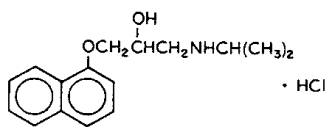
C 16 H 21 NO 2 •HCl
Propranolol Hydrochloride, USP is a stable, white, crystalline solid which is readily soluble in water and ethanol. Its molecular weight is 295.80.
Propranolol Hydrochloride Injection, USP is available as a sterile injectable solution for intravenous administration. Each mL contains 1 mg of Propranolol Hydrochloride, USP in Water for Injection, USP. The pH is adjusted with anhydrous Citric Acid, USP.
CLINICAL PHARMACOLOGY
General
Propranolol is a nonselective beta-adrenergic receptor blocking agent possessing no other autonomic nervous system activity. It specifically competes with beta-adrenergic receptor stimulating agents for available receptor sites. When access to beta‑receptor sites is blocked by propranolol, chronotropic, inotropic, and vasodilator responses to beta-adrenergic stimulation are decreased proportionately. At doses greater than required for beta blockade, propranolol also exerts a quinidine-like or anesthetic-like membrane action, which affects the cardiac action potential. The significance of the membrane action in the treatment of arrhythmias is uncertain.
Mechanism of Action
The effects of propranolol are due to selective blockade of beta-adrenergic receptors, leaving alpha-adrenergic responses intact. There are two well-characterized subtypes of beta receptors (beta 1 and beta 2 ); propranolol interacts with both subtypes equally. Beta 1 -adrenergic receptors are found primarily in the heart. Blockade of cardiac beta 1 -adrenergic receptors leads to a decrease in the activity of both normal and ectopic pacemaker cells and a decrease in A-V nodal conduction velocity. All of these actions can contribute to antiarrhythmic activity and control of ventricular rate during arrhythmias. Blockade of cardiac beta 1 ‑adrenergic receptors also decreases the myocardial force of contraction and may provoke cardiac decompensation in patients with minimal cardiac reserve.
Beta 2 -adrenergic receptors are found predominantly in smooth muscle–vascular, bronchial, gastrointestinal and genitourinary. Blockade of these receptors results in constriction. Clinically, propranolol may exacerbate respiratory symptoms in patients with obstructive pulmonary diseases such as asthma and emphysema (see CONTRAINDICATIONS and WARNINGS ).
Propranolol’s beta blocking effects are attributable to its S(-) enantiomer.
Pharmacokinetics and Drug Metabolism
Distribution
Propranolol has a distribution half-life (T½ alpha) of 5-10 minutes and a volume of distribution of about 4 to 5 L/kg. Approximately 90% of circulating propranolol is bound to plasma proteins. The binding is enantiomer-selective. The S-isomer is preferentially bound to alpha 1 glycoprotein and the R-isomer is preferentially bound to albumin.
Metabolism and Elimination
The elimination half-life (T½ beta) is between 2 and 5.5 hours. Propranolol is extensively metabolized with most metabolites appearing in the urine. The major metabolites include propranolol glucuronide, naphthyloxylactic acid, and glucuronic acid and sulfate conjugates of 4-hydroxy propranolol. Following single-dose intravenous administration, side-chain oxidative products account for approximately 40% of the metabolites, direct conjugation products account for approximately 45-50% of metabolites, and ring oxidative products account for approximately 10-15% of metabolites. Of these, only the primary ring oxidative product (4-hydroxypropranolol) possesses beta-adrenergic receptor blocking activity.
In vitro studies have indicated that the aromatic hydroxylation of propranolol is catalyzed mainly by polymorphic CYP2D6. Side‑chain oxidation is mediated mainly by CYP1A2 and to some extent by CYP2D6. 4-hydroxy propranolol is a weak inhibitor of CYP2D6.
Pharmacodynamics
As propranolol concentration increases, so does its beta-blocking effect, as evidenced by a reduction in exercise-induced tachycardia (n = 6 normal volunteers).
Special Populations
Pediatric
The pharmacokinetics of propranolol have not been investigated in patients under 18 years of age. Propranolol injection is not recommended for treatment of cardiac arrhythmias in pediatric patients.
Geriatric
Elevated propranolol plasma concentrations, a longer mean elimination half-life (254 vs. 152 minutes), and decreased systemic clearance (8 vs. 13 mL/kg/min) have been observed in elderly subjects when compared to young subjects. However, the apparent volume of distribution seems to be similar in elderly and young subjects. These findings suggest that dose adjustment of propranolol injection may be required for elderly patients (see PRECAUTIONS ).
Gender
Intravenously administered propranolol was evaluated in 5 women and 6 men. When adjusted for weight, there were no gender-related differences in elimination half-life, volume of distribution, protein binding, or systemic clearance.
Obesity
In a study of intravenously administered propranolol, obese subjects had a higher AUC (161 versus 109 hr·mcg/L) and lower total clearance than did non-obese subjects. Propranolol plasma protein binding was similar in both groups.
Renal Insufficiency
The pharmacokinetics of propranolol and its metabolites were evaluated in 15 subjects with varying degrees of renal function after propranolol administration via the intravenous and oral routes. When compared with normal subjects, an increase in fecal excretion of propranolol conjugates was observed in patients with increased renal impairment. Propranolol was also evaluated in 5 patients with chronic renal failure, 6 patients on regular dialysis, and 5 healthy subjects, following a single oral dose of 40 mg of propranolol. The peak plasma concentrations (C max ) of propranolol in the chronic renal failure group were 2- to 3-fold higher (161 ng/mL) than those observed in the dialysis patients (47 ng/mL) and in the healthy subjects (26 ng/mL). Propranolol plasma clearance was also reduced in the patients with chronic renal failure.
Chronic renal failure has been associated with a decrease in drug metabolism via downregulation of hepatic cytochrome P-450 activity.
Hepatic Insufficiency
Propranolol is extensively metabolized by the liver. In a study conducted in 6 normal subjects and 20 patients with chronic liver disease, including hepatic cirrhosis, 40 mg of R-propranolol was administered intravenously. Compared to normal subjects, patients with chronic liver disease had decreased clearance of propranolol, increased volume of distribution, decreased protein-binding, and considerable variation in half-life. Caution should be exercised when propranolol is used in this population. Consideration should be given to lowering the dose of intravenous propranolol in patients with hepatic insufficiency (see PRECAUTIONS ).
Thyroid Dysfunction
No pharmacokinetic changes were observed in hyperthyroid or hypothyroid patients when compared to their corresponding euthyroid state. Dosage adjustment does not seem necessary in either patient population based on pharmacokinetic findings.
Drug Interactions
Interactions with Substrates, Inhibitors or Inducers of Cytochrome P-450 Enzymes
Because propranolol’s metabolism involves multiple pathways in the cytochrome P-450 system (CYP2D6, 1A2, 2C19), administration of propranolol with drugs that are metabolized by, or affect the activity (induction or inhibition) of one or more of these pathways may lead to clinically relevant drug interactions (see PRECAUTIONS, Drug Interactions ).
Substrates or Inhibitors of CYP2D6
Blood levels of propranolol may be increased by administration of propranolol with substrates or inhibitors of CYP2D6, such as amiodarone, cimetidine, delavirdine, fluoxetine, paroxetine, quinidine, and ritonavir. No interactions were observed with either ranitidine or lansoprazole.
Substrates or Inhibitors of CYP1A2
Blood levels of propranolol may be increased by administration of propranolol with substrates or inhibitors of CYP1A2, such as imipramine, cimetidine, ciprofloxacin, fluvoxamine, isoniazid, ritonavir, theophylline, zileuton, zolmitriptan, and rizatriptan.
Substrates or Inhibitors of CYP2C19
Blood levels of propranolol may be increased by administration of propranolol with substrates or inhibitors of CYP2C19, such as fluconazole, cimetidine, fluoxetine, fluvoxamine, teniposide, and tolbutamide. No interaction was observed with omeprazole.
Inducers of Hepatic Drug Metabolism
Blood levels of propranolol may be decreased by administration of propranolol with inducers such as rifampin and ethanol. Cigarette smoking also induces hepatic metabolism and has been shown to increase up to 100% the clearance of propranolol, resulting in decreased plasma concentrations.
Cardiovascular Drugs
Antiarrhythmics
The AUC of propafenone is increased by more than 200% with co-administration of propranolol.
The metabolism of propranolol is reduced by co-administration of quinidine, leading to a 2- to 3-fold increased blood concentrations and greater beta-blockade.
The metabolism of lidocaine is inhibited by co-administration of propranolol, resulting in a 25% increase in lidocaine concentrations.
Calcium Channel Blockers
The mean C max and AUC of propranolol are increased respectively, by 50% and 30% by co-administration of nisoldipine and by 80% and 47%, by co-administration of nicardipine.
The mean values of C max and AUC of nifedipine are increased by 64% and 79%, respectively, by co-administration of propranolol.
Propranolol does not affect the pharmacokinetics of verapamil and norverapamil. Verapamil does not affect the pharmacokinetics of propranolol.
Non-Cardiovascular Drugs
Migraine Drugs
Administration of zolmitriptan or rizatriptan with propranolol resulted in increased concentrations of zolmitriptan (AUC increased by 56% and C max by 37%) or rizatriptan (the AUC and C max were increased by 67% and 75%, respectively).
Theophylline
Co-administration of theophylline with propranolol decreases theophylline clearance by 33% to 52%.
Benzodiazepines
Propranolol can inhibit the metabolism of diazepam, resulting in increased concentrations of diazepam and its metabolites. Diazepam does not alter the pharmacokinetics of propranolol.
The pharmacokinetics of oxazepam, triazolam, lorazepam, and alprazolam are not affected by co-administration of propranolol.
Neuroleptic Drugs
Co-administration of propranolol at doses greater than or equal to 160 mg/day resulted in increased thioridazine plasma concentrations ranging from 50% to 370% and increased thioridazine metabolites concentrations ranging from 33% to 210%.
Co-administration of chlorpromazine with propranolol resulted in increased plasma levels of both drugs (70% increase in propranolol concentrations).
Anti-Ulcer Drugs
Co-administration of propranolol with cimetidine, a non-specific CYP450 inhibitor, increased propranolol concentrations by about 40%. Co‑administration with aluminum hydroxide gel (1200 mg) resulted in a 50% decrease in propranolol concentrations.
Co-administration of metoclopramide with propranolol did not have a significant effect on propranolol’s pharmacokinetics.
Lipid Lowering Drugs
Co-administration of cholesteramine or colestipol with propranolol resulted in up to 50% decrease in propranolol concentrations.
Co-administration of propranolol with lovastatin or pravastatin decreased 20% to 25% the AUC of both, but did not alter their pharmacodynamics. Propranolol did not have an effect on the pharmacokinetics of fluvastatin.
Warfarin
Concomitant administration of propranolol and warfarin has been shown to increase warfarin bioavailability and increase prothrombin time.
CLINICAL STUDIES
In a series of 225 patients with supraventricular (n = 145), ventricular (n = 69), or both (n = 11) arrythmias resistant to digitalis, intravenous propranolol hydrochloride was administered in single doses, averaging 1 to 5 mg. Approximately one-quarter of the patients with supraventricular arrhythmias (generally those with sinus or atrial tachycardia) reverted to normal sinus rhythm. About one-half had symptoms ameliorated either by a decrease in ventricular rate or an attenuation of frequency or severity of paroxysmal attacks.
Approximately one-half of patients with ventricular arrhythmias (generally those with frequent PVCs) reverted to normal sinus rhythm or responded with a reduction in ventricular rate.
Similar findings were seen in a series of 25 Bantu patients with atrial fibrillation (n = 16), sinus tachycardia (n = 5), and multifocal ventricular extrasystoles (n = 9).
In another series, 7 of 8 patients with digitalis-related tachyarrhythmia had ventricular rate decreases after intravenous propranolol. Similarly limited clinical experience has shown that intravenous propranolol will slow the ventricular rate in patients with Wolff-Parkinson-White syndrome or with tachycardia associated with thyrotoxicosis.
Onset of activity is usually within five minutes.
HOW SUPPLIED
Each mL contains 1 mg of Propranolol Hydrochloride, USP in Water for Injection, USP. The pH is adjusted with anhydrous Citric Acid, USP. Supplied as: 1 mL vials in boxes of 10 (NDC 0143-9872-10).
Store at 20° to 25°C (68° to 77°F) [See USP Controlled Room Temperature]. Protect from freezing or excessive heat.
Manufactured by: HIKMA FARMACÊUTICA (PORTUGAL), S.A. Estrada do Rio da Mó, 8, 8A e 8B – Fervença – 2705-906 Terrugem SNT, PORTUGAL
Distributed by:
Hikma Pharmaceuticals USA Inc. Berkeley Heights, NJ 07922
Revised: May 2022 PIN166-WES/7
Mechanism of Action
The effects of propranolol are due to selective blockade of beta-adrenergic receptors, leaving alpha-adrenergic responses intact. There are two well-characterized subtypes of beta receptors (beta 1 and beta 2 ); propranolol interacts with both subtypes equally. Beta 1 -adrenergic receptors are found primarily in the heart. Blockade of cardiac beta 1 -adrenergic receptors leads to a decrease in the activity of both normal and ectopic pacemaker cells and a decrease in A-V nodal conduction velocity. All of these actions can contribute to antiarrhythmic activity and control of ventricular rate during arrhythmias. Blockade of cardiac beta 1 ‑adrenergic receptors also decreases the myocardial force of contraction and may provoke cardiac decompensation in patients with minimal cardiac reserve.
Beta 2 -adrenergic receptors are found predominantly in smooth muscle–vascular, bronchial, gastrointestinal and genitourinary. Blockade of these receptors results in constriction. Clinically, propranolol may exacerbate respiratory symptoms in patients with obstructive pulmonary diseases such as asthma and emphysema (see CONTRAINDICATIONS and WARNINGS ).
Propranolol’s beta blocking effects are attributable to its S(-) enantiomer.
