Get your patient on Purified Cortrophin Gel (Repository Corticotropin)
Purified Cortrophin Gel patient education
Patient toolkit
Dosage & administration

Purified Cortrophin Gel prescribing information

INDICATIONS AND USAGE
Purified Cortrophin Gel is indicated in the following disorders:
1. Rheumatic disorders:
- As adjunctive therapy for short-term administration (to tide the patient over an acute episode or exacerbation) in: Psoriatic arthritis. Rheumatoid arthritis, including juvenile rheumatoid arthritis (selected cases may require low-dose maintenance therapy). Ankylosing spondylitis. Acute gouty arthritis.
2. Collagen diseases:
- During an exacerbation or as maintenance therapy in selected cases of: Systemic lupus erythematosus. Systemic dermatomyositis (polymyositis).
3. Dermatologic diseases:
- Severe erythema multiforme (Stevens-Johnson syndrome). Severe psoriasis.
4. Allergic states:
- Atopic dermatitis Serum sickness.
5. Ophthalmic diseases:
- Severe acute and chronic allergic and inflammatory processes involving the eye and its adnexa such as: Allergic conjunctivitis. Keratitis. Iritis and iridocyclitis. Diffuse posterior uveitis and choroiditis. Optic neuritis. Chorioretinitis. Anterior segment inflammation.
6. Respiratory diseases:
- Symptomatic sarcoidosis.
7. Edematous states:
- To induce a diuresis or a remission of proteinuria in the nephrotic syndrome without uremia of the idiopathic type or that due to lupus erythematosus.
8. Nervous system:
- Acute exacerbations of multiple sclerosis.
DOSAGE AND ADMINISTRATION
Standard tests for verification of adrenal responsiveness to corticotropin may utilize as much as 80 units as a single injection or one or more injections of a lesser dosage. Verification tests should be performed prior to treatment with corticotropins. The test should utilize the route(s) of administration proposed for treatment. Following verification dosage should be individualized according to the disease under treatment and the general medical condition of each patient. Frequency and dose of the drug should be determined by considering severity of the disease, plasma and urine corticosteroid levels and the initial response of the patient. Only gradual change in dosage schedules should be attempted, after full drug effects have become apparent.
This product may be administered subcutaneously or intramuscularly with the vial and subcutaneously with the prefilled syringe.
In the treatment of acute exacerbations of multiple sclerosis daily subcutaneous or intramuscular doses of 80-120 units for 2-3 weeks.
The chronic administration of more than 40 units daily may be associated with uncontrollable adverse effects.
When reduction in dosage is indicated this should be accomplished gradually by either reducing the amount of each injection, or administering injections at longer intervals, or by a combination of both of the above. During reduction of dosage, careful consideration should be given to the disease being treated, the general medical condition of the patient and the duration over which corticotropin was administered.
Important Administration Instructions
- Parenteral drug products should be inspected visually for particulate matter and discoloration prior to administration whenever solution and container permit. Purified Cortrophin Gel is a clear, light amber liquid gel at room temperature. Do not use if the solution is discolored or cloudy or the solution contains particulate matter.
- Purified Cortrophin Gel will be a solid gel when refrigerated and needs to be warmed to a liquid gel before administration.
- For Purified Cortrophin Gel vials warm by rolling between your hands for a few minutes.
- For Purified Cortrophin Gel prefilled syringes remove the carton from the refrigerator and leave at room temperature for 45 minutes.
- The recommended injection sites include abdomen, upper thigh, or upper arm. Do not inject within 2 inches of navel.
Information for Patients
Advise patients and/or caregivers to read the FDA-approved patient information (Instructions for Use).
CONTRAINDICATIONS
Purified Cortrophin Gel is contraindicated for intravenous administration.
Purified Cortrophin Gel is contraindicated in patients with scleroderma, osteoporosis, systemic fungal infections, ocular herpes simplex, recent surgery, history of or the presence of a peptic ulcer, congestive heart failure, hypertension, or sensitivity to proteins derived from porcine sources.
Purified Cortrophin Gel is contraindicated in patients with primary adrenocortical insufficiency or adrenocortical hyperfunction.
ADVERSE REACTIONS
Fluid and Electrolyte Disturbances Sodium retention. Hypokalemic alkalosis. Fluid retention. Calcium loss. Potassium loss.
Musculoskeletal Muscle weakness. Loss of muscle mass. Steroid myopathy. Osteoporosis. Vertebral compression fractures. Aseptic necrosis of femoral and humeral heads. Pathologic fracture of long bones.
Gastrointestinal Peptic ulcer with possible perforation and hemorrhage. Abdominal distention. Ulcerative esophagitis. Pancreatitis.
Dermatologic Injection site reactions. Impaired wound healing. Increased sweating. Thin fragile skin. Suppression of skin test reactions. Petechiae and ecchymoses. Acne. Hyperpigmentation. Facial erythema.
Cardiovascular Hypertension. Congestive heart failure. Necrotizing angiitis.
Neurological Convulsions. Increased intracranial pressure with papilledema (pseudo-tumor cerebri), usually after treatment. Headache. Vertigo.
Endocrine Menstrual irregularities. Development of Cushingoid state. Suppression of growth in children. Secondary adrenocortical and pituitary insufficiency, particularly in times of stress, as in trauma, surgery or illness. Decreased carbohydrate tolerance. Manifestations of latent diabetes mellitus. Increased requirements for insulin or oral hypoglycemic agents in diabetics. Hirsutism.
Ophthalmic Posterior subcapsular cataracts. Increased intraocular pressure. Glaucoma with possible damage to optic nerve. Exophthalmos.
Metabolic Negative nitrogen balance due to protein catabolism.
Allergic reactions Allergic reactions manifesting as dizziness, nausea and vomiting, skin reactions, anaphylaxis (anaphylactic shock, urticaria, respiratory compromise, edema), especially in patients with allergic responses to proteins.
Miscellaneous Weight gain. Abscess. Development of antibodies and loss of stimulatory effect.
To report SUSPECTED ADVERSE REACTIONS, contact ANI Pharmaceuticals, Inc. at 1-800-308-6755 or FDA at 1-800-FDA-1088 or www.fda.gov/medwatch.
Drug Interactions
Aspirin should be used cautiously in conjunction with corticotropin in hypoprothrombinemia.
DESCRIPTION
Purified Cortrophin Gel is a porcine derived purified corticotropin (ACTH) in a sterile solution of gelatin. It is made up of a complex mixture of ACTH, ACTH related peptides and other porcine pituitary derived peptides.
The drug product is a sterile preparation containing 80 USP units per mL and it contains 0.5% phenol (as preservative), 15.0% gelatin (for prolonged activity), water for injection, and the pH is adjusted with hydrochloric acid and sodium hydroxide.
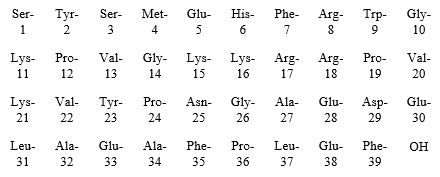
Purified Cortrophin Gel contains the porcine derived ACTH (1-39) with the following amino acid sequence:
CLINICAL PHARMACOLOGY
Purified Cortrophin Gel is the anterior pituitary hormone which stimulates the functioning adrenal cortex to produce and secrete adrenocortical hormones.
Following administration of a single intramuscular injection of 80 Units of Cortrophin Gel to healthy volunteers (n=20) in an open label pharmacodynamic study, the median time (range) to reach peak cortisol concentration was 8 (3-12) hours. The baseline corrected geometric mean maximum (CV%) cortisol levels were 34.52 µg/dL (28.2%).
HOW SUPPLIED/ STORAGE AND HANDLING
Purified Cortrophin Gel is a clear, light amber liquid gel at room temperature. It is supplied sterile in:
- Multiple-dose vials for intramuscular or subcutaneous use
Package Size | Total Volume | NDC |
1 mL multiple-dose vial | 80 USP units/mL | 62559-860-11 |
5 mL multiple-dose vial | 400 USP units/5 mL | 62559-860-15 |
- Single-dose prefilled syringes for subcutaneous use only
Package Size | Total Volume | NDC |
0.5 mL single-dose prefilled syringe | 40 USP units/0.5 mL | 62559-861-35 |
1 mL single-dose prefilled syringe | 80 USP units/mL | 62559-861-11 |
Instructions for Use
Purified Cortrophin ® Gel (Repository Corticotropin Injection USP) for intramuscular or subcutaneous use
This Instructions for Use contains information on how to inject Purified Cortrophin Gel.
Your healthcare provider should show you how to prepare and inject Purified Cortrophin Gel the right way before you inject it for the first time. Do not try to inject yourself until you have been shown the right way to give your injections by your healthcare provider.
Important information about how to inject Purified Cortrophin Gel
- Purified Cortrophin Gel is given as an injection into the muscle or under the skin as directed by your healthcare provider. Do not inject it into a vein or take by mouth.
- Inject Purified Cortrophin Gel exactly as your healthcare provider tells you. Your healthcare provider will tell you where to give the injection, how much to give, how often and when to give it.
- Do not use Purified Cortrophin Gel until your healthcare provider has taught you how to give the injection.
Before starting, collect all of the supplies that you will need to use for preparing and injecting Purified Cortrophin Gel. You will need the following supplies:
- Vial of Purified Cortrophin Gel
- Syringe
- Needle for withdrawal (20G or as prescribed by your healthcare provider)
- Needle for injection (23G or as prescribed by your healthcare provider)
- 2 alcohol pads
- Cotton balls or gauze pad
- Bandage (if needed)
- Sharps container for throwing away used syringes and needles (see “ Disposing of used needles and syringes ”)
Preparing Purified Cortrophin Gel
- Wash your hands well and dry with a clean towel.
- Remove the vial from the refrigerator. Check the expiration date on the vial. Do not use if the expiration date has passed.
- Purified Cortrophin Gel will be a solid gel when refrigerated and it needs to be warmed to a liquid gel before injecting. Warm the solid gel in the vial by rolling between your hands for a few minutes. Do not microwave or heat on the stove.
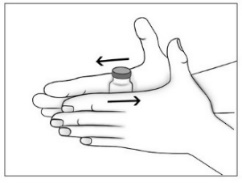
- Remove (flip off) the plastic cap from the top of the Purified Cortrophin Gel vial and throw it away in the trash. Do not put the plastic cap back on the vial.
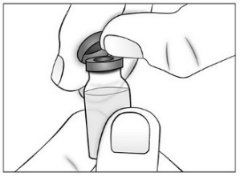
- Wipe the top of the vial rubber stopper with a new sterile alcohol pad.
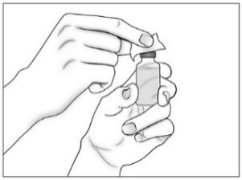
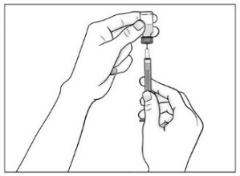
- Use a new sterile 20G needle (or needle prescribed for withdrawal) and syringe to draw up the amount of Purified Cortrophin Gel your healthcare provider has told you to use.
Injecting Purified Cortrophin Gel
- Prepare the skin where you are going to give the injection by wiping it with a new sterile alcohol pad. Allow to air dry.
- Replace the 20G needle (or needle prescribed for withdrawal) used for drawing the Purified Cortrophin Gel from the vial with the 23G needle (or needle prescribed for injection). Do not use the 20G needle for injecting.
- Give the injection the way your healthcare provider has instructed you.
- There may be a little bleeding at the injection site. You can press a cotton ball or gauze pad over the injection site (do not rub).
- If needed, you may cover the injection site with a bandage.
- Return the vial to the refrigerator as soon as possible.
Disposing of your used needles and syringe
- Put your used needles and syringe in an FDA-cleared sharps disposal container right away after use. Do not throw away (dispose of) your used needles and syringe in your household trash.
- If you do not have an FDA-cleared sharps disposal container, you may use a household container that is:
- made of a heavy-duty plastic,
- can be closed with a tight-fitting, puncture-resistant lid, without sharps being able to come out,
- upright and stable during use,
- leak-resistant, and
- properly labeled to warn of hazardous waste inside the container.
- When your sharps disposal container is almost full, you will need to follow your community guidelines for the right way to dispose of your sharps disposal container. There may be state or local laws about how you should throw away used needles and syringes. For more information about safe sharps disposal, and for specific information about sharps disposal in the state that you live in, go to the FDA’s website at: http://www.fda.gov/safesharpsdisposal.
- Do not dispose of your used sharps disposal container in your household trash unless your community guidelines permit this. Do not recycle your used sharps disposal container.
Storing Purified Cortrophin Gel
- Store vials of Purified Cortrophin Gel in the refrigerator between 36°F to 46°F (2°C to 8°C).
- 1 mL vials: Throw away (discard) any 1 mL vials 6 months after first use or by the expiration date printed on the label, whichever occurs first.
- 5 mL vials: Throw away (discard) any 5 mL vials 28 days after first use or by the expiration date printed on the label, whichever occurs first.
- Write the revised discard by date in the space provided on the carton labeling.
Keep Purified Cortrophin Gel and all medicines out of the reach of children.
Distributed by: ANI Pharmaceuticals, Inc., Baudette, MN 56623
This Instructions for Use has been approved by the U.S. Food and Drug Administration.
Revised: October 2023
