Get your patient on Terconazole vaginal Cream 0.8%- Terconazole cream (Terconazole)
Terconazole vaginal Cream 0.8%- Terconazole cream prescribing information

INDICATIONS AND USAGE
Terconazole Vaginal Cream, is indicated for the treatment of vulvovaginal candidiasis in adult females.
DOSAGE AND ADMINISTRATION
The recommended dose is one applicator full of Terconazole Vaginal Cream (5 grams of cream containing 40 mg terconazole) administered intravaginally once daily at bedtime for three consecutive days. Terconazole Vaginal Cream is not for oral or ophthalmic use.
DOSAGE FORMS AND STRENGTHS
Terconazole Vaginal Cream, 0.8% contains 8mg terconazole per gram of cream. Each measured dose applicator delivers 5 grams of cream containing 40 mg of terconazole.
USE IN SPECIFIC POPULATIONS
Pregnancy
Risk Summary
There are no available data on Terconazole Vaginal Cream use in pregnant women to evaluate for a drug-associated risk of major birth defects, miscarriage, or adverse maternal or fetal outcomes. Available data from observational studies with terconazole use in pregnancy are insufficient to identify a drug-associated risk of major birth defects, miscarriage or adverse maternal or fetal outcomes.
In animal reproduction studies with oral terconazole, no adverse development effects were observed at clinically relevant systemic exposures (see Data).
The background risk of major birth defects and miscarriage for the indicated population is unknown. All pregnancies have a background risk of birth defect, loss, or other adverse outcomes. In the U.S. general population, the estimated background risk of major birth defects and miscarriage in clinically recognized pregnancies is 2% to 4% and 15% to 20%, respectively.
Data
Animal Data
There was no evidence of malformations when terconazole was administered orally in rats, or rabbits.
There was a delay in fetal ossification at an oral dose of 10 mg/kg/day in rats. Higher doses resulted in decreased litter size, decreased number of viable young and reduced fetal weight in rats. There was also a delay in ossification and an increase incidence of skeletal variants.
The dose of 10 mg/kg/day resulted in a mean peak plasma level of terconazole in pregnant rats of 0.176 mcg/mL which exceeds by 30 times the mean peak plasma level (0.006 mcg/mL) seen in normal subjects after intravaginal administration of terconazole vaginal cream 0.8%. This safety assessment does not account for possible exposure of the fetus through direct transfer to terconazole from the irritated vagina by diffusion across amniotic membranes.
Lactation
Risk Summary
There are no data on the presence of terconazole in human milk, the effect on the breast-fed infant or on milk production. The developmental and health benefits of breastfeeding should be considered along with the mother’s clinical need for Terconazole Vaginal Cream and any potential adverse effects on the breast-fed infant from Terconazole Vaginal Cream or from the underlying maternal condition.
Pediatric Use
The safety and effectiveness of Terconazole Vaginal Cream have not been established in female pediatric patients for the treatment of vulvovaginal candidiasis.
Geriatric Use
Clinical studies of Terconazole Vaginal Cream did not include sufficient numbers of subjects aged 65 and over to determine whether they respond differently from younger subjects.
CONTRAINDICATIONS
Terconazole Vaginal Cream, 0.8% is contraindicated in patients with known hypersensitivity to terconazole or to any of the components of the cream.
WARNINGS AND PRECAUTIONS
Risk of Skin Irritation and Flu-Like Symptoms: Discontinue Terconazole Vaginal Cream and do not retreat if skin irritation, fever, chills or flu-like symptoms are reported during use. (5 )
Risk of Skin Irritation and Flu-Like Symptoms
Discontinue Terconazole Vaginal Cream and do not retreat, if skin irritation, fever, chills or flu-like symptoms are reported during use.
Hypersensitivity
There is no information regarding cross-hypersensitivity between terconazole and other azole antifungal agents. Monitor patients with a history of hypersensitivity to azoles.
ADVERSE REACTIONS
Most common adverse reactions (incidence ≥ 2%) were headache, dysmenorrhea, genital burning and itching, and abdominal pain. (6 )
To report SUSPECTED ADVERSE REACTIONS, contact Fougera at 1-800-645-9833 or FDA at 1-800-FDA-1088 or www.fda.gov/medwatch.
Clinical Trial Experience
Because clinical trials are conducted under widely varying conditions, adverse reaction rates observed in clinical trials of a drug cannot be directly compared to rates in the clinical trials of another drug and may not reflect the rates observed in practice. The adverse reaction information from clinical trials does, however, provide a basis for identifying the adverse reactions that appear to be related to drug use and estimating their relative rates.
During a controlled clinical trial conducted in the United States, patients with vulvovaginal candidiasis were treated with Terconazole Vaginal Cream, 0.8% for 3 days (n=231) or Terazol®3 for 3 days (n=229) [see Clinical Studies (14)]. Table 1 lists the adverse reactions occurring in ≥2% of patients receiving Terconazole Vaginal Cream in the trial. The therapy-related discontinuation rate was 2.0% for Terconazole Vaginal Cream. The adverse reaction most frequently causing discontinuation of Terconazole Vaginal Cream therapy was vulvovaginal itching (0.7%).
Table 1: Adverse Reactions Occurring in ≥2% of Patients Receiving Terconazole Vaginal Cream in a Randomized, Double-Blind Active Controlled Trial
Terconazole Vaginal Cream, 0.8% n=231 (%) | Terazol ® 3 n=229 (%) | |
Headache | 49 (21) | 37(16) |
Dysmenorrhea | 14 (6) | 5 (2) |
Genital Burning and Itching | 12 (5) | 15-21 (6-9) |
Abdominal Pain | 8 (3.4) | 2 (1) |
Other adverse reactions reported in less than 2% of patients receiving Terconazole Vaginal Cream was fever (1%).
Photosensitivity reactions were observed in some normal volunteers following repeated dermal application of terconazole 2.0% (not an approved strength) and 0.8% creams under conditions of filtered artificial ultraviolet light. Photosensitivity reactions were not observed in U.S. and foreign clinical trials in patients who were treated with other terconazole formulations (i.e., terconazole suppositories or vaginal cream, 0.8%).
DRUG INTERACTIONS
Oral Contraceptives: There is no known interaction with the concomitant use of this product and oral contraceptives.
DESCRIPTION
Terconazole Vaginal Cream, 0.8% is a white to off-white, water washable cream for intravaginal administration containing 0.8% of the antifungal agent terconazole, cis -1-[ p [[2-(2,4-Dichlorophenyl)-2-(1 H -1,2,4-triazol-1-ylmethyl)-1,3-dioxolan-4- yl]methoxy]phenyl]-4-isopropylpiperazine, compounded in a cream base consisting of butylated hydroxyanisole, cetyl alcohol, isopropyl myristate, polysorbate 60, polysorbate 80, propylene glycol, stearyl alcohol, and purified water. The structural formula of terconazole is as follows:
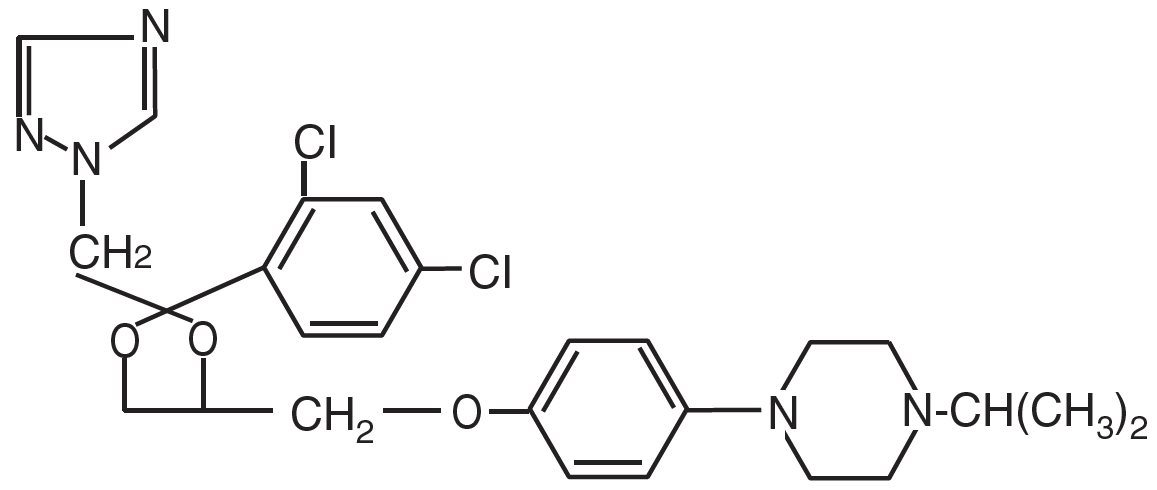
Terconazole, a triazole derivative, is a white to almost white powder with a molecular weight of 532.47. It is insoluble in water; sparingly soluble in ethanol; and soluble in butanol.
CLINICAL PHARMACOLOGY
Mechanism of Action
Terconazole is an antifungal agent [see Microbiology (12.4 )] .
Pharmacokinetics
Following intravaginal administration of Terconazole Vaginal Cream, 0.8% in adult females, absorption ranged from 5-8% in three hysterectomized subjects and 12-16% in two non-hysterectomized subjects with tubal ligations.
Following daily intravaginal administration of 0.8% terconazole 40 mg (0.8% cream x 5 g) for seven days to healthy female subjects, plasma concentrations were low and gradually rose to a daily peak (mean of 5.9 ng/mL or 0.006 mcg/mL) at 6.6 hours. Results from similar studies in female patients with vulvovaginal candidiasis indicate that the slow rate of absorption, the lack of accumulation, and the mean peak plasma concentration of terconazole was not different from that observed in healthy females. The absorption characteristics of terconazole vaginal cream, 0.8% in pregnant or non-pregnant patients with vulvovaginal candidiasis were also similar to those found in healthy subjects.
Following oral (30 mg) administration of 14 C-labelled terconazole, the mean half-life of elimination from the blood for the parent terconazole was 6.9 hours (range 4.0-11.3). Terconazole is extensively metabolized; the plasma AUC for terconazole compared to the AUC for total radioactivity was 0.6%. Total radioactivity was eliminated from the blood with a mean elimination half-life of 52.2 hours (range 44-60). Excretion of radioactivity was both by renal (32-56%) and fecal (47- 52%) routes.
In vitro , terconazole is highly protein bound (94.9%) and the degree of binding is independent of drug concentration.
Microbiology
Mechanism of Action
Terconazole inhibits the enzyme cytochrome P450 14α-demethylase which leads to inhibition of ergosterol synthesis, an essential component of the fungal cell membrane
Activity in vitro
Terconazole exhibits fungicidal activity in vitro against Candida albicans .
Drug Resistance
Studies showed no development of resistance to terconazole during successive passages of C. albicans . However, the clinical significance of such an effect is not known.
NONCLINICAL TOXICOLOGY
Carcinogenesis, Mutagenesis, Impairment of Fertility
Carcinogenesis
Studies to determine the carcinogenic potential of terconazole have not been performed.
Mutagenesis
Terconazole was not mutagenic when tested in vitro for induction of microbial point mutations (Ames test), or for inducing cellular transformation, or in vivo for chromosome breaks (micronucleus test) or dominant lethal mutations in mouse germ cells.
Impairment of Fertility
No impairment of fertility occurred when female rats were administered terconazole orally up to 40 mg/kg/day (about 10 times the recommended intravaginal human dose based on body surface area comparisons) for a three-month period.
CLINICAL STUDIES
The efficacy of Terconazole Vaginal Cream, 0.8% in the treatment of vulvovaginal candidiasis in adult women was evaluated in a multicenter, randomized, double-blind, controlled non-inferiority trial comparing Terconazole Vaginal Cream, 0.8% for 3 days (n=231) to another preparation of terconazole vaginal cream 0.8% active comparator for 3 days (n=229). The modified intent-to-treat population (randomized patients who received treatment and had a positive baseline culture for Candida) consisted of 140 Terconazole Vaginal Cream, 0.8% patients and 153 active comparator patients. Therapeutic cure defined as clinical and mycological cure was assessed at Visit 3 (Day 21-30). Table 2 shows the therapeutic, clinical and mycological cure rates in this trial. The therapeutic cure rate at Visit 3 was 67.1% for the terconazole group and 52.3% for the active comparator group (95% confidence interval about the 14.8% difference in therapeutic cure rate: 3.0% to 26.6%).
Table 2: Efficacy of Terconazole Vaginal Cream 0.8% for the Treatment of Vulvovaginal Candidiasis in a Randomized, Double-Blind Active Controlled Study•
Outcome | Terconazole Vaginal Cream 0.8% n=140 (%) | Active Control n=153 | Treatment Difference (%) [95% Confidence Interval] |
% Cure | % Cure | ||
Therapeutic Cure | 67.1 | 52.3 | 14.8 [3.0, 26.6] |
Clinical Cure | 79.3 | 66.0 | 13.3 [2.5, 24.0] |
Mycological Cure | 70.7 | 56.9 | 13.8 [2.2, 25.4] |
• Modified intent-to-treat population
HOW SUPPLIED/STORAGE AND HANDLING
Terconazole Vaginal Cream 0.8% is supplied in a 20-gram tube with a measured dose applicator.
NDC 0168-0347-20
Store at 20°C to 25°C (68°F to 77°F), excursions permitted 15°C to 30°C (59°F to 86°F) [see USP Controlled Room Temperature].
INSTRUCTIONS FOR USE
Instructions for Use
TERCONAZOLE VAGINAL CREAM (ter kon ah zol)
For vaginal use only. Do not put Terconazole vaginal cream in your eyes or mouth.
Be sure to read, understand, and follow the instructions below for how to use Terconazole vaginal cream, correctly.
Important Information
- Use Terconazole vaginal cream exactly as your healthcare provider tells you to use it.
- Use1 full applicator of terconazole vaginal cream in the vagina each night at bedtime for 3 days in a row.
- Do not stop using Terconazole vaginal cream before your healthcare provider tells you to, even if you feel better very quickly. Your infection may not clear up completely.
- If you have questions or if your vaginal symptoms do not go away, contact your healthcare provider.
How should I store terconazole vaginal cream?
- Store Terconazole vaginal cream at room temperature between 68°F to 77°F (20°C to 25°C).
Keep Terconazole vaginal cream and all medicines out of the reach of children.
| 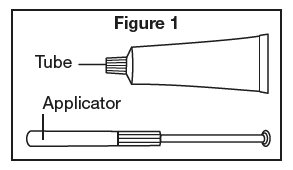 |
Step 2. Wash your hands. | |
Step 3. Prepare the Applicator:
| 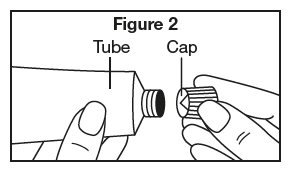 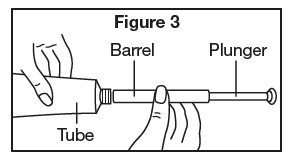 |
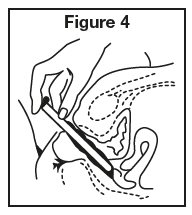
Step 4. Insert the Terconazole vaginal cream:
|  |
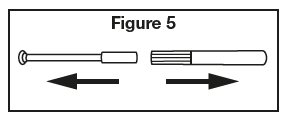
Step 5. Wash the Applicator after Use
|  |
Step 6. Wash your hands well after you finish washing and drying the applicator. | |
Step 7. Repeat Steps 1 through Step 6 until you finish your course of treatment. | |
Step 8. When you have finished your treatment, throw away (dispose of) the used applicator and tube in your household trash. | |
Manufactured by:
E. FOUGERA & CO.
A division of Fougera Pharmaceuticals Inc.
Melville, New York 11747
The brands listed are the registered trademarks of their respective owners and are not trademarks of Fougera Pharmaceuticals Inc.
This Instructions for Use has been approved by the U.S Food and Drug Administration Revised: 09/2025
Mechanism of Action
Terconazole is an antifungal agent [see Microbiology (12.4 )] .
