Get your patient on Tryngolza - Olezarsen Sodium injection, Solution (Olezarsen Sodium)
Tryngolza - Olezarsen Sodium injection, Solution prescribing information

INDICATIONS AND USAGE
TRYNGOLZA ® is indicated as an adjunct to diet:
- To reduce triglycerides (TG) in adults with familial chylomicronemia syndrome (FCS).
- To reduce TG and the risk of acute pancreatitis in adults with severe hypertriglyceridemia (sHTG: TG greater than or equal to 500 mg/dL).
DOSAGE AND ADMINISTRATION
- Adults with FCS: The recommended dosage of TRYNGOLZA is 80 mg injected subcutaneously once monthly. (2.1 )
- Adults with sHTG: The recommended dosage of TRYNGOLZA is 50 mg injected subcutaneously once monthly. For patients with sHTG who tolerate the 50 mg dosage and additional TG reduction is clinically indicated, the dosage may be increased to 80 mg injected subcutaneously once monthly. (2.1 )
- Inject TRYNGOLZA subcutaneously into the abdomen or front of the thigh. The back of the upper arm can also be used as an injection site if a healthcare provider or caregiver administers the injection. (2.2 )
Recommended Dosage
In adults with FCS:
- The recommended dosage of TRYNGOLZA is 80 mg injected subcutaneously once monthly [see Dosage and Administration (2.2) ] .
In adults with sHTG:
- The recommended dosage of TRYNGOLZA is 50 mg injected subcutaneously once monthly [see Dosage and Administration (2.2) ].
- Assess TG when clinically appropriate. The TG-lowering effect of TRYNGOLZA may be measured within 3 months after initiation.
- For patients who tolerate the 50 mg dosage and additional TG reduction is clinically indicated, the dosage may be increased to 80 mg injected subcutaneously once monthly.
Administration Instructions
- Prior to initiation, train patients and/or caregivers on proper preparation and administration of TRYNGOLZA [see Instructions for Use ] .
- Advise patients to maintain a low-fat diet in conjunction with TRYNGOLZA. Instruct patients with FCS to consume 20 g or less of fat per day.
- Remove the single-dose autoinjector from the refrigerator and let the autoinjector come to room temperature 30 minutes prior to the injection. Do not use other warming methods.
- Inspect TRYNGOLZA visually for particulate matter prior to administration. The solution should be a clear and colorless to yellow liquid. Do not use if cloudiness, particulate matter, or discoloration is observed prior to administration.
- Inject TRYNGOLZA subcutaneously into the abdomen or front of the thigh. The back of the upper arm can also be used as an injection site if a healthcare provider or caregiver administers the injection.
- Administer TRYNGOLZA as soon as possible after a missed dose. Resume dosing at monthly intervals from the date of the most recently administered dose.
DOSAGE FORMS AND STRENGTHS
Injection:
- 50 mg/0.8 mL of olezarsen as a clear, colorless to yellow solution in a single-dose autoinjector
- 80 mg/0.8 mL of olezarsen as a clear, colorless to yellow solution in a single-dose autoinjector
USE IN SPECIFIC POPULATIONS
Pregnancy
Risk Summary
There are no available data on TRYNGOLZA use in pregnant women to inform drug-associated risk of major birth defects, miscarriage, or adverse maternal or fetal outcomes. Patients with FCS or sHTG are at risk for pancreatitis during pregnancy because of increased TG levels (see Clinical Considerations ) .
In animal reproduction studies conducted with the unconjugated antisense oligonucleotide (lacking N -acetylgalactosamine [GalNAc]) in rabbits and mice, no adverse effects on development or pregnancy were observed at doses 21 times or 20 times, respectively, the maximum recommended clinical dose.
The background risk of major birth defects and miscarriage for the indicated populations are unknown. All pregnancies have a background risk of birth defect, loss, or other adverse outcomes. In the U.S. general population, the estimated background risk of major birth defects and miscarriage in clinically recognized pregnancies is 2-4% and 15-20%, respectively.
Clinical Considerations
Disease-Associated Maternal and/or Embryo-Fetal Risk Triglyceride levels increase during the third trimester of pregnancy. In patients with underlying defects in triglyceride metabolism, severe gestational hypertriglyceridemia may occur, increasing the risk of acute pancreatitis during pregnancy.
Data
Animal Data
Olezarsen was not evaluated for potential effects on embryofetal development (EFD). However, effects of the administration of the unconjugated antisense oligonucleotide (ASO), which shares the same nucleotide sequence but lacks the (GalNAc) moiety [see Description (11) ] , were evaluated.
In a combined fertility and embryo-fetal development study in mice, the unconjugated ASO was administered to male and female mice by subcutaneous injection at doses of 10.5, 35, and 87.5 mg/kg/week prior to mating and through to the completion of organogenesis (gestation day 15). No adverse developmental outcomes occurred at doses up to 87.5 mg/kg/week (approximately 21-times the monthly maximum recommended human dose (MRHD) based on a body surface area (BSA) comparison of the unconjugated ASO).
In an embryo-fetal development study in pregnant rabbits, the unconjugated ASO was administered by subcutaneous injection at doses of 10.5, 21, and 52.5 mg/kg/week during the period of organogenesis (gestation days 6 to 18). No adverse developmental effects were observed at doses up to 21 mg/kg/week (approximately 20-times the monthly MRHD based on a BSA comparison of the unconjugated ASO).
In a pre-/postnatal toxicity study in mice, the unconjugated ASO was administered at 10.5, 35, or 87.5 mg/kg/week during the period of organogenesis and continuing until weaning (gestation day 6 through lactation day 21). Offspring body weights at 87.5 mg/kg/week (21-times the monthly MRHD based on BSA) were lower throughout their lives and were associated with slight delays in the attainment of morphological and developmental landmarks. No adverse effects on offspring were observed at 35 mg/kg/week (approximately 9-times the monthly MRHD based on a BSA comparison of the unconjugated ASO).
Lactation
Risk Summary
There are no data on the presence of olezarsen in either human or animal milk, the effects on the breastfed infant, or the effects on milk production. However, the unconjugated antisense ASO, which shares the same nucleotide sequence but lacks GalNAc, was present in the milk of lactating mice at low levels. When a drug is present in animal milk, it is likely that the drug will be present in human milk. Oligonucleotide-based products typically have poor oral bioavailability; therefore, it is considered unlikely that low levels present in milk will lead to clinically relevant levels in breastfed infants. The developmental and health benefits of breastfeeding should be considered along with the mother’s clinical need for TRYNGOLZA and any potential adverse effects on the breastfed infant from TRYNGOLZA or from the underlying maternal condition.
Pediatric Use
The safety and effectiveness of TRYNGOLZA in pediatric patients have not been established.
Geriatric Use
No dose adjustment is recommended in patients aged 65 years and older [see Clinical Pharmacology (12.3) ] . In clinical trials, 243 patients treated with TRYNGOLZA were ≥65 years of age. No overall differences in safety or effectiveness of TRYNGOLZA have been observed between patients 65 years of age and older and younger adult patients.
Renal Impairment
No dose adjustment is necessary in patients with mild to moderate renal impairment [estimated glomerular filtration rate (eGFR) ≥30 to <90 mL/min] [see Clinical Pharmacology (12.3) ] . TRYNGOLZA has not been studied in patients with severe renal impairment or end-stage renal disease.
Hepatic Impairment
No dose adjustment is recommended in patients with mild or moderate hepatic impairment [see Clinical Pharmacology (12.3) ] . TRYNGOLZA has not been studied in patients with severe hepatic impairment.
CONTRAINDICATIONS
TRYNGOLZA is contraindicated in patients with a history of serious hypersensitivity to olezarsen or any of the excipients in TRYNGOLZA. Hypersensitivity reactions, including symptoms of bronchospasm, diffuse erythema, facial swelling, urticaria, chills, and myalgias, requiring medical treatment have occurred [see Warnings and Precautions (5.1) ] .
WARNINGS AND PRECAUTIONS
- Hypersensitivity Reactions: Have been reported in patients treated with TRYNGOLZA. Advise patients on the signs and symptoms of hypersensitivity reactions and instruct patients to promptly seek medical attention and discontinue use of TRYNGOLZA if hypersensitivity reactions occur. (5.1 )
- Liver Enzyme Abnormalities: Increases in liver enzymes and hepatic fat have occurred in adults. Consider liver enzyme testing before TRYNGOLZA initiation or an increase in dosage and when clinically indicated thereafter. If persistent elevations in liver enzymes occur, consider dose interruption and/or dose reduction. If serious hepatic injury with clinical symptoms and/or hyperbilirubinemia or jaundice occurs, promptly discontinue TRYNGOLZA. (5.2 )
Hypersensitivity Reactions
Hypersensitivity reactions (including symptoms of bronchospasm, diffuse erythema, facial swelling, urticaria, chills, and myalgias) have been reported in patients treated with TRYNGOLZA [see Adverse Reactions (6.1) ] . Advise patients on the signs and symptoms of hypersensitivity reactions and instruct patients to promptly seek medical attention and discontinue use of TRYNGOLZA if hypersensitivity reactions occur. TRYNGOLZA is contraindicated in patients with a history of serious hypersensitivity to olezarsen or any of the excipients in TRYNGOLZA.
Liver Enzyme Abnormalities
TRYNGOLZA can cause increases in liver enzymes and hepatic fat in adults [see Adverse Reactions (6.1) ] .
Increases in liver enzymes were more frequently reported with the 80 mg dose as compared to the 50 mg dose. In patients with sHTG, increases in liver enzymes greater than or equal to three times the upper limit of normal were reported more frequently with TRYNGOLZA 80 mg (7%) compared to TRYNGOLZA 50 mg (3%) and placebo (3%).
Consider liver enzyme testing before TRYNGOLZA initiation or an increase in dosage and when clinically indicated thereafter. If persistent elevations in liver enzymes occur (such as three times the upper limit of normal or greater), consider dose interruption and/or dose reduction. If serious hepatic injury with clinical symptoms and/or hyperbilirubinemia or jaundice occurs, promptly discontinue TRYNGOLZA.
ADVERSE REACTIONS
The following clinically significant adverse reactions are discussed elsewhere in the labeling:
- Hypersensitivity Reactions [ see Warnings and Precautions (5.1) ]
- Liver Enzyme Abnormalities [see Warnings and Precautions (5.2) ]
Clinical Trials Experience
Because clinical trials are conducted under widely varying conditions, adverse reaction rates observed in the clinical trials of TRYNGOLZA cannot be directly compared to rates in the clinical trials of another drug and may not reflect the rates observed in practice.
Clinical Trial in Patients with FCS
The safety of TRYNGOLZA was evaluated in 66 patients with FCS enrolled in Trial 1 (NCT #04568434) [see Clinical Studies (14.1) ] . In this trial, 43 patients received at least one dose of TRYNGOLZA, 50 mg (N=21) or 80 mg (N=22) and 23 patients received placebo. TRYNGOLZA 50 mg is not an approved dosing regimen for FCS [see Dosage and Administration (2.1) ]. Across treatment groups, the mean age was 45 years and 42% of patients were male. Eighty-five percent (85%) of patients were White, 9% were Asian and 6% were reported as other races; 11% identified as Hispanic or Latino ethnicity. Forty-three (43) patients were exposed to TRYNGOLZA for a median of 52 weeks; 22 patients were treated with TRYNGOLZA 80 mg every 4 weeks for a median of 52 weeks.
Adverse reactions led to discontinuation of treatment in 7% of TRYNGOLZA-treated patients and 0% of placebo-treated patients. The most common reason for TRYNGOLZA treatment discontinuation was hypersensitivity reactions. Adverse reactions (>5% of patients treated with TRYNGOLZA and at >3% higher frequency than placebo) are presented in Table 1.
Table 1. Adverse Reactions That Occurred in >5% of Patients with FCS Treated with TRYNGOLZA and at >3% Higher Frequency than with Placebo (Trial 1)
| Adverse Reaction Grouped terms composed of several similar terms | Total TRYNGOLZA (N=43) | Placebo (N=23) |
| Injection site reactions | 8 (19%) | 2 (9%) |
| Decreased platelet count | 5 (12%) | 1 (4%) |
| Arthralgia | 4 (9%) | 0 |
Clinical Trials in Patients with sHTG The safety of TRYNGOLZA was evaluated in two randomized, double-blind, placebo-controlled trials [Trial 2 (NCT #05079919) and Trial 3 (NCT #05552326)] that included a total of 1,061 adult patients with sHTG [see Clinical Studies (14.2) ] . In these trials, 705 patients received at least one dose of TRYNGOLZA, 50 mg (N=354) or 80 mg (N=351), and 356 patients received placebo. Across treatment groups, the mean age was 54 years and 76% of patients were male. Eighty-eight percent (88%) of patients were White, 5% Asian, 2% Black or African American, 2% American Indian or Alaskan Native, less than 1% Native Hawaiian or Pacific Islander, and 2% other or multiple races; 12% identified as Hispanic or Latino ethnicity. The median exposure to TRYNGOLZA was 364 days (N=705).
Adverse reactions led to discontinuation of treatment in 5% of TRYNGOLZA-treated patients and 2% of placebo-treated patients. The most common adverse reaction for TRYNGOLZA treatment discontinuation was injection site reactions.
Adverse reactions (in patients treated with TRYNGOLZA at ≥2% higher frequency than placebo) are presented in Table 2.
Table 2. Adverse Reactions Occurring in ≥2% of Patients with sHTG Treated with TRYNGOLZA than with Placebo (Trial 2 and Trial 3)
| Adverse Reaction Grouped terms composed of several similar terms | TRYNGOLZA 50 mg (N=354) | TRYNGOLZA 80 mg (N=351) | Placebo (N=356) |
| Injection site reactions | 43 (12%) | 64 (18%) | 8 (2%) |
| Transaminases increased | 11 (3%) | 14 (4%) | 2 (1%) |
Laboratory Tests Decrease in Platelet Count: TRYNGOLZA can cause reductions in platelet count. Across all trials (Trials 1, 2, and 3), mean decreases from baseline through Week 53 ranging from 6% (50 mg, Trial 2 and Trial 3) to 10% (80 mg across all trials), were observed in TRYNGOLZA-treated patients, whereas placebo-treated patients showed an increase of 22% in Trial 1 or no change in Trial 2 and Trial 3. The proportion of patients experiencing a bleeding adverse event was similar between the TRYNGOLZA and placebo groups. There were no major bleeding events associated with low platelet counts.
Increase in Glucose: Increases in average values in fasting glucose (≤17 mg/dL) and HbA1c (<0.2 percentage points) were observed over time with TRYNGOLZA treatment in the FCS population in Trial 1. The incidence of hyperglycemia (defined as adverse events, new antidiabetic medication, or laboratory values) was higher in patients with FCS treated with TRYNGOLZA without a medical history of diabetes at baseline (52%) compared to placebo-treated patients (35%).
In Trials 2 and 3, increases in average values in fasting glucose (≤9 mg/dL) and HbA1c (<0.3 percentage points) were observed over time in the sHTG population treated with TRYNGOLZA. These increases were more pronounced in patients with a history of diabetes at baseline; however, increases in fasting glucose and HbA1c were also observed more frequently with TRYNGOLZA compared to placebo in patients without a history of diabetes at baseline.
Increase in Liver Enzymes: Mean liver enzyme values increased from baseline with TRYNGOLZA treatment but remained within the normal range. These increases occurred within the first 6 months of treatment and stabilized. However, when evaluating any liver enzyme increase in patients with sHTG, increases in liver enzymes greater than or equal to three times the upper limit of normal were reported more frequently with TRYNGOLZA 80 mg (7%) compared to TRYNGOLZA 50 mg (3%) and placebo (3%). Liver enzymes returned toward baseline with discontinuation of TRYNGOLZA.
Increase in Hepatic Fat Fraction: Hepatic fat fraction (HFF) was assessed in patients with sHTG in a substudy within Trial 2 and Trial 3. Mean HFFs were elevated at baseline (17% TRYNGOLZA 50 mg, 14% TRYNGOLZA 80 mg, 14% placebo). Dose-dependent changes in HFF at 12 months of treatment were a mean increase of 2 percentage points in the TRYNGOLZA 50 mg group and 4 percentage points in the TRYNGOLZA 80 mg group versus 0 percentage points in the placebo group. The clinical meaningfulness of these findings remains uncertain.
Increase in LDL-cholesterol: In all trials, increases were observed in LDL-C in TRYNGOLZA-treated patients compared with placebo. These increases were accompanied by decreases in non–high-density lipoprotein cholesterol (non-HDL-C). Among patients with FCS, total apolipoprotein B (apoB) increased, whereas among patients with sHTG, apoB decreased [see Clinical Studies (14) ] .
DESCRIPTION
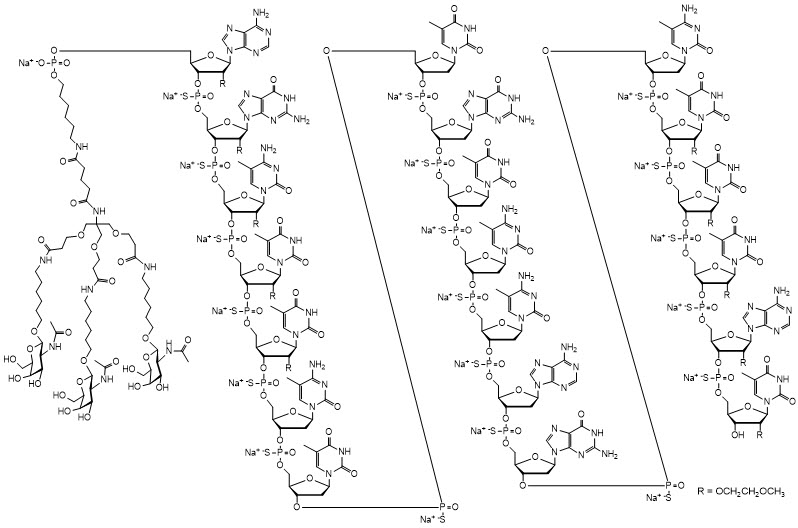
Olezarsen is an ASO directed inhibitor of apolipoprotein C-III (apoC-III) mRNA, conjugated to a ligand containing three GalNAc residues to enable delivery of the ASO to hepatocytes.
TRYNGOLZA contains olezarsen sodium as the active ingredient. Olezarsen sodium is a white to yellow solid and it is freely soluble in water and in phosphate buffer. The molecular formula of olezarsen sodium is C 296 H 419 N 71 O 154 P 20 S 19 Na 20 and the molecular weight is 9124.48 daltons. The chemical name of olezarsen sodium is DNA, d(P-thio) ([2'- O -(2-methoxyethyl)] rA-[2'- O -(2-methoxyethyl)] rG-[2'- O -(2-methoxyethyl)] m5rC-[2'- O -(2-methoxyethyl)] m5rU-[2'- O -(2-methoxyethyl)] m5rU-m5C-T-T-G-T-m5C-m5C-A-G-m5C-[2'- O -(2-methoxyethyl)] m5rU-[2'- O -(2-methoxyethyl)] m5rU-[2'- O -(2-methoxyethyl)] m5rU-[2'- O -(2-methoxyethyl)] rA-[2'- O -(2-methoxyethyl)]m5rU), 5'-[26-[[2-(acetylamino)-2-deoxy-β-D-galactopyranosyl]oxy]-14,14-bis[[3-[[6-[[2-(acetylamino)-2-deoxy-β-D-galactopyranosyl]oxy]hexyl]amino]-3-oxopropoxy]methyl]-8,12,19-trioxo-16-oxa-7,13,20-triazahexacos-1-yl hydrogen phosphate], sodium salt (1:20).
The structure of olezarsen sodium is presented below:
TRYNGOLZA is a sterile, preservative-free solution for subcutaneous injection. Each single-dose autoinjector contains 50 mg olezarsen (equivalent to 53 mg of olezarsen sodium) in 0.8 mL of solution or 80 mg olezarsen (equivalent to 84 mg of olezarsen sodium) in 0.8 mL of solution. The solution also contains the following inactive ingredients: disodium hydrogen phosphate, sodium chloride, sodium dihydrogen phosphate to maintain pH and provide tonicity, and water for injection. The solution may include hydrochloric acid and/or sodium hydroxide for pH adjustment between 6.9 to 7.9. Each 50 mg dose of TRYNGOLZA injection contains 4 mg of phosphorous and 4 mg of sodium. Each 80 mg dose of TRYNGOLZA injection contains 6 mg of phosphorous and 5 mg of sodium.
CLINICAL PHARMACOLOGY
Mechanism of Action
Olezarsen is an ASO-GalNAc 3 conjugate that binds to apoC-III mRNA leading to mRNA degradation and resulting in a reduction of serum apoC-III protein. Reduction of apoC-III protein leads to increased clearance of plasma TG and very low-density lipoprotein (VLDL).
Pharmacodynamics
Fasting apoC-III Olezarsen decreased fasting apoC-III following administration of TRYNGOLZA 80 mg dosage every 4 weeks to patients with FCS [see Clinical Studies (14.1) ] . The placebo-corrected percent change in fasting apoC-III from baseline was -57% at 1 month, -69% at 3 months, -72% at 6 months, and -80% at 12 months. Olezarsen also decreased fasting apoC-III following administration of TRYNGOLZA 50 mg and 80 mg every 4 weeks in patients with sHTG [see Clinical Studies (14.2) ] . The placebo-corrected percent change in fasting apoC-III from baseline in Trial 2 was -68% at Month 6 and -67% at Month 12 in patients treated with TRYNGOLZA 50 mg, and -77% at Month 6 and -72% at Month 12 in patients treated with TRYNGOLZA 80 mg. In Trial 3, the placebo-corrected percent change in fasting apoC-III from baseline was -57% at Month 6 and -53% at Month 12 in patients treated with TRYNGOLZA 50 mg, and -63% at Month 6 and -58% at Month 12 in patients treated with TRYNGOLZA 80 mg.
Cardiac Electrophysiology
At a dose 1.5-times the maximum approved recommended dosage, TRYNGOLZA does not prolong the QT interval to any clinically relevant extent.
Pharmacokinetics
Olezarsen steady-state geometric mean (geometric % coefficient of variation [geometric %CV]) maximum concentrations (C max ) is 659 (88.5%) ng/mL and area under the curve (AUC τ ) is 8,030 (83.7%) ng•h/mL at the approved recommended dosage in patients with FCS (80 mg per month); 157 (90%) ng/mL and 3,470 (104%) ng•h/mL, respectively, at 50 mg once monthly in patients with sHTG, and 251 (90%) ng/mL and 5,550 (104%) ng•h/mL, respectively, at 80 mg once monthly in patients with sHTG. Olezarsen C max and AUC increase dose-proportionally following single subcutaneous doses ranging from 10 to 120 mg (i.e., 0.13- to 1.5-times the approved recommended dose) in healthy volunteers. No olezarsen accumulation occurs with repeat dosing.
Absorption
Olezarsen time to C max (T max ) is approximately 2 hours following subcutaneous administration.
Distribution
The population estimates for the apparent central volume of distribution is 96.1 L and 127 L and the apparent peripheral volume of distribution is 3,920 L and 6,660 L, for patients with FCS and sHTG, respectively, for olezarsen. Olezarsen is greater than 99% bound to plasma proteins, in vitro .
Olezarsen distributes primarily to the liver and kidney after subcutaneous dosing.
Elimination
Olezarsen terminal elimination half-life is approximately 4 weeks.
Metabolism
Olezarsen is metabolized by endo- and exonucleases to short oligonucleotide fragments of varying sizes within the liver.
Excretion
Less than 1% of olezarsen administered dose is eliminated unchanged in urine within 24 hours.
Specific Populations
No clinically significant differences in the pharmacokinetics of olezarsen were observed based on age (<65 to ≥75 years), body weight, sex, race (White, Black or African American, Asian, Japanese, American Indian or Alaska Native, Native Hawaiian or Pacific Islander), mild-to-moderate renal impairment (eGFR ≥30 to <90 mL/min) [CKD-EPI], mild hepatic impairment (total bilirubin ≤ULN and AST >ULN, or total bilirubin >1 to 1.5 x ULN and any AST, National Cancer Institute Organ Dysfunction Working Group criteria), or moderate hepatic impairment (Child-Pugh Class B score of 7 to 9). The effect of severe renal impairment (eGFR<30 mL/min), end-stage renal disease, or severe hepatic impairment (total bilirubin >3x ULN with any AST) on olezarsen pharmacokinetics is unknown.
Drug Interaction Studies
In Vitro Studies CYP450 Enzymes: Olezarsen is not an inhibitor or inducer of CYP450 enzymes.
Transporter Systems: Olezarsen is not a substrate or inhibitor of OAT1, OAT3, OCT1, OCT2, OATP1B1, OATP1B3, MATE1, MATE2-K, BCRP, P-gp, and BSEP.
Protein Binding: Olezarsen does not displace warfarin and ibuprofen from plasma protein binding sites.
Immunogenicity
The observed incidence of anti-drug antibodies (ADAs) is highly dependent on the sensitivity and specificity of the assay. Differences in assay methods preclude meaningful comparisons of the incidence of ADAs in the study described below with the incidence of anti-drug antibodies in other studies, including those of olezarsen.
In Trial 1, among patients with FCS treated with TRYNGOLZA, 18 of 43 patients (42%) developed treatment-emergent anti-drug antibodies (ADAs) through 53 weeks of treatment. In Trials 2 and 3, among patients with severe hypertriglyceridemia (sHTG) treated with TRYNGOLZA, 218 of 409 patients (53%) and 147 of 296 patients (50%), respectively, developed treatment-emergent ADAs through 53 weeks of treatment. The presence of ADAs did not affect olezarsen plasma C max , but increased C trough . These ADA-associated pharmacokinetic changes were not identified to be clinically significant. There was no identified clinically significant effect of ADAs on pharmacodynamics, safety, or efficacy of TRYNGOLZA in patients with FCS or sHTG.
NONCLINICAL TOXICOLOGY
Carcinogenesis, Mutagenesis, Impairment of Fertility
Carcinogenesis
No long-term carcinogenicity studies were conducted with olezarsen in animals. However, the unconjugated antisense oligonucleotide (ASO) lacking GalNAc was administered weekly in mice and rats at subcutaneous doses of 0, 6, 25 and 40 mg/kg/week (along with a mouse-specific surrogate ASO at 25 mg/kg/week) and 0, 0.2, 1 and 5 mg/kg/week, respectively, for 2 years. In male mice, there were statistically significant increases in the incidences of hepatocellular adenomas and carcinomas at ≥25 mg/kg/week and hemangiomas and hemangiosarcomas at all doses. In female mice, there were statistically significant increases in the incidences of histiocytic sarcomas at all doses (including the mouse-specific surrogate) and pituitary gland adenomas at 25 mg/kg/week. In rats, the incidence of malignant fibrous histiocytoma at the injection site was increased in both sexes at doses ≥1 mg/kg/week. These tumors are considered a response to chronic tissue irritation and inflammation caused by repeated subcutaneous injection. The clinical significance of these findings is uncertain.
Mutagenesis
Olezarsen was negative for genotoxicity in vitro (bacterial reverse mutation assay and chromosome aberration assay in Chinese hamster lung cells) and in vivo (mouse bone marrow micronucleus assay).
Impairment of Fertility
Olezarsen was administered at doses of 0, 5, 10, or 20 mg/kg given every other week to male and female mice prior to mating, followed by every other day dosing after mating and until gestation day 6 in females. There was no effect on fertility in mice administered olezarsen at doses up to 20 mg/kg (approximately 2-times the monthly maximum recommended human dose based on body surface area).
CLINICAL STUDIES
Adult Patients with Familial Chylomicronemia Syndrome
The efficacy of TRYNGOLZA was demonstrated in a randomized, placebo-controlled, double-blind clinical trial in adult patients with genetically identified FCS and fasting TG levels ≥880 mg/dL (Trial 1; NCT04568434 ). After a ≥4-week run-in period where patients continued to follow a low-fat diet with ≤20 grams fat per day, patients were randomly assigned to receive doses every 4 weeks of TRYNGOLZA 80 mg (n=22) or matching volume of placebo (n=23) via subcutaneous injection over a 53-week treatment period.
Patient demographic and baseline characteristics were generally similar across the treatment groups [see Adverse Reactions (6.1) ] . The proportion of patients with diabetes at enrollment was 32% in the TRYNGOLZA 80 mg group compared with 26% in the placebo group. Patients in the TRYNGOLZA 80 mg and placebo groups were treated with statins (27%), omega-3 fatty acids (42%), fibrates (49%), or other lipid-lowering therapies (13%) at study entry. Seventy-one percent (71%) of patients in the TRYNGOLZA 80 mg and placebo groups combined had a history of documented acute pancreatitis in the prior 10 years. Mean (SD) and median fasting TG levels at baseline were 2,604 (1,364) mg/dL and 2,303 mg/dL, respectively (range of 334 to 6,898 mg/dL).
The primary endpoint was percent change in fasting TG from baseline to Month 6 (average of Weeks 23, 25, and 27) compared to placebo. The difference between TRYNGOLZA 80 mg group and the placebo group in percent change in fasting TG from baseline to Month 6 was -43% (95% CI: -74%, -11%; p=0.0084). For additional results see Table 3.
Table 3. Mean Baseline (BL) and Mean Percent (%) Changes from Baseline in Lipid/ Lipoprotein Parameters in Patients with FCS at Month 6 in Patients with FCS (Trial 1)
| Abbreviations: apoB = apolipoprotein B; non-HDL-C = non high-density lipoprotein cholesterol; LDL-C = low-density lipoprotein cholesterol. Note: Analyses results were based on an analysis of covariance model with treatment, the two randomization stratification factors, prior history of pancreatitis within 10 years prior to Screening (yes vs. no), previous treatment with the unconjugated ASO (yes vs. no) as the fixed effects and log-transformed Baseline value as a covariate. Missing data was imputed using placebo washout imputation. The 95% CIs of treatment differences were calculated using a robust variance estimator. For TG and non-HDL, a test of residual normality did not indicate significant departure from normal distribution. | |||||
| Parameter (mg/dL) | TRYNGOLZA 80 mg N=22 | Placebo N=23 | TRYNGOLZA 80 mg vs. Placebo | ||
| BL | % change Month 6 | BL | % change Month 6 | Treatment Difference % change (95% CI) at Month 6 | |
| TG | 2613 | -30 | 2596 | +12 | -43 Reached statistical significance (p value <0.05). (-74, -11) |
| Non-HDL-C | 263 | -18 | 271 | +6 | -23 (-45, -2) |
| LDL-C | 23 | +64 | 17 | +9 | +55 Mean LDL-C levels increased but remained within normal range (i.e., <70 mg/dL for 74% of patients treated with TRYNGOLZA). (1, 109) |
| Total ApoB | 58 | +20 | 60 | +9 | +12 (-13, 36) |
| ApoB-48 | 12 | -51 | 14 | +25 | -76 (-150, -2) |
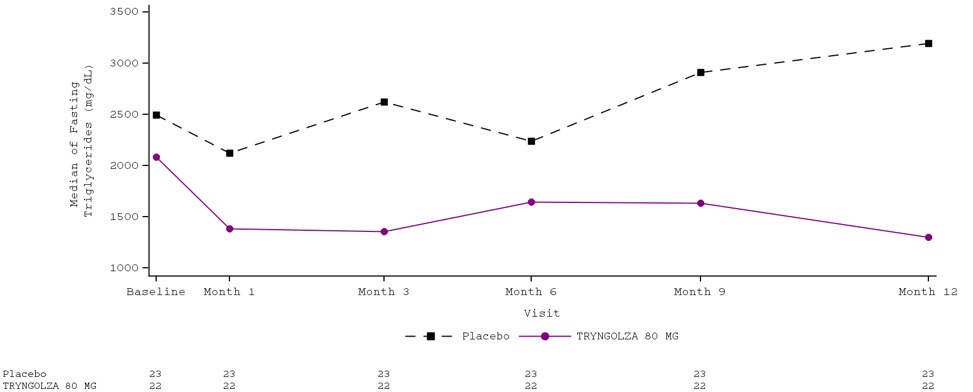
Median percent change from baseline (Figure 1) and median absolute TG values (Figure 2) over time demonstrated a consistent lowering effect during the 12-month treatment period.
Figure 1. Percent Change in Fasting TG (mg/dL) Over Time in Patients with FCS (Trial 1)
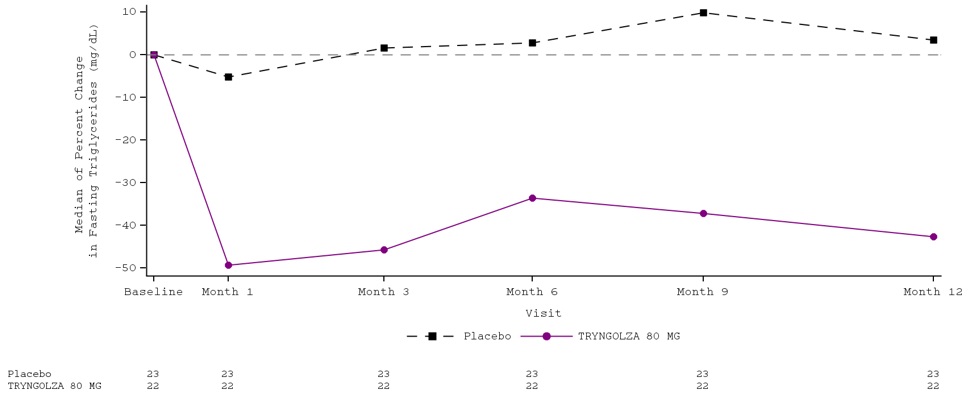
Figure 2. Fasting TG (mg/dL) Over Time in Patients with FCS (Trial 1)
Over the 12-month treatment period, the numerical incidence of acute pancreatitis in patients treated with TRYNGOLZA 80 mg was lower compared with placebo [1 (5%) patient in the TRYNGOLZA 80 mg group compared with 7 (30%) patients in the placebo group]; all of these patients had a prior history of pancreatitis within 10 years prior to screening.
Adult Patients with Severe Hypertriglyceridemia
The efficacy of TRYNGOLZA was demonstrated in two randomized, double-blind, placebo-controlled trials (Trial 2, NCT05079919 and Trial 3, NCT05552326 ). These trials enrolled adult patients with sHTG. Patients had fasting TG ≥500 mg/dL and were on optimized, stable background lipid-lowering therapy prior to enrollment and throughout the trial. After an approximately 4- to 8-week screening and qualification period that included at least 2 weeks of diet and lifestyle stabilization, patients were randomly assigned to receive subcutaneous injections once every 4 weeks of TRYNGOLZA 50 mg (n=354) or 80 mg (n=351), or placebo (n=356) for a 53-week treatment period.
Patient demographic and baseline characteristics across pooled Trial 2 and Trial 3 were generally similar across treatment groups [see Adverse Reactions (6.1) ] . At enrollment, 23% of patients had atherosclerotic cardiovascular disease, 63% of patients had type 2 diabetes mellitus (59% Trial 2; 68% Trial 3); 99% of patients were on background lipid-lowering therapies, (42% high-intensity statin, 27% moderate-intensity statin, 63% fibrates, 32% omega-3 fatty acids), and 15% of patients had a history of pancreatitis within the prior 10 years. (19% Trial 2; 10% Trial 3). Mean (SD) and median fasting TG at baseline were 1,116 (990) mg/dL and 793 mg/dL, respectively (range 379 to 13,545 mg/dL).
The primary endpoint in Trial 2 and Trial 3 was the percent change in fasting TG from baseline to Month 6 (average of Weeks 25 and 27) compared with placebo. Table 4 summarizes the mean percent change from baseline in TG at Month 6 and other key lipid parameters (non-HDL-C, LDL-C, total ApoB, and ApoB-48) for TRYNGOLZA 50 mg and 80 mg compared with placebo in Trial 2 and Trial 3. In both Trial 2 and Trial 3, TRYNGOLZA demonstrated statistically significant decreases in fasting TG at Month 6 and Month 12. In Trial 2, the placebo-corrected difference in percent change in fasting TG from baseline to Month 6 was -63% (95% CI: -72%, -54%; p <0.0001) for TRYNGOLZA 50 mg and -72% (95% CI: -81%, -63%; p <0.0001) for TRYNGOLZA 80 mg. In Trial 3, the placebo-corrected difference in percent change in fasting TG from baseline to Month 6 was -49% (95% CI: -60%, -39%; p <0.0001) for TRYNGOLZA 50 mg and -55% (95% CI: -65%, -44%; p <0.0001) for TRYNGOLZA 80 mg.
Table 4. Mean Baseline (BL) and Mean Percent (%) Change from Baseline in Lipid/Lipoprotein Parameters at Month 6 in Patients with sHTG – Trial 2 and Trial 3
Abbreviations: apoB = apolipoprotein B; non-HDL-C = non high-density lipoprotein cholesterol; LDL-C = low-density lipoprotein cholesterol. Note: Analysis results were based on an analysis-of-covariance model with treatment, two randomization stratification factors, i.e., Qualification fasting TG ≥ 880 mg/dL (yes/no) and prior history of pancreatitis within 10 years prior to Screening (yes/no) as the fixed effects and baseline value as a covariate; missing data were imputed using a placebo-washout multiple-imputation approach. | ||||||||
| Trial 2 | ||||||||
| Parameter (mg/dL) | TRYNGOLZA 50 mg N=205 | TRYNGOLZA 80 mg N=204 | Placebo N=208 | TRYNGOLZA 50 mg vs. Placebo | TRYNGOLZA 80 mg vs. Placebo | |||
| BL | % change Month 6 | BL | % change Month 6 | BL | % change Month 6 | Treatment Difference % change (95% CI) at Month 6 | ||
| TG | 1169 | -63 | 1169 | -73 | 1208 | 0 | -63 Reached statistical significance (p value <0.05) (-72, -54) | -72 (-81, -63) |
| Non-HDL-C | 224 | -28 | 219 | -35 | 221 | -3 | -25 (-30, -19) | -33 (-38, -27) |
| LDL-C | 66 | 69 | 64 | 65 | 63 | 7 | 62 (46, 78) | 58 (42, 74) |
| Total ApoB | 109 | -4 | 103 | -10 | 104 | -2 | -1 (-6, 3) | -7 (-12, -3) |
| ApoB-48 | 8 | -60 | 7 | -66 | 8 | 13 | -73 (-85, -62) | -79 (-91, -68) |
| Trial 3 | ||||||||
| Parameter (mg/dL) | TRYNGOLZA 50 mg N=149 | TRYNGOLZA 80 mg N=147 | Placebo N=148 | TRYNGOLZA 50 mg vs. Placebo | TRYNGOLZA 80 mg vs. Placebo | |||
| BL | % change Month 6 | BL | % change Month 6 | BL | % change Month 6 | Treatment Difference % change (95% CI) at Month 6 | ||
| TG | 968 | -63 | 1088 | -68 | 1019 | -14 | -49 (-60, -39) | -55 (-65, -44) |
| Non-HDL-C | 211 | -27 | 205 | -30 | 191 | -7 | -19 (-25, -13) | -22 (-28, -16) |
| LDL-C | 71 | 85 | 65 | 73 | 62 | 36 | 49 (29, 69) | 37 (17, 56) |
| Total ApoB | 113 | -8 | 105 | -11 | 101 | -2 | -6 (-11, -1) | -9 (-14, -4) |
| ApoB-48 | 7 | -62 | 6 | -68 | 6 | -6 | -56 (-67, -45) | -62 (-73, -51) |
In Trial 2 (Figure 3) and Trial 3 (Figure 4), TRYNGOLZA demonstrated a consistent TG-lowering effect during the 12-month treatment period, as shown by reductions in mean percent change from baseline over time.
Figure 3. Percent Change in Fasting TG (mg/dL) Over Time in Patients with sHTG (Trial 2)
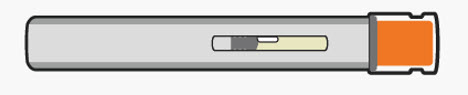
Figure 4 . Percent Change in Fasting TG (mg/dL) Over Time in Patients with sHTG (Trial 3)
Pancreatitis events were assessed as a secondary endpoint in an integrated analysis of Trials 2 and 3. Events were adjudicated by a blinded, independent committee according to the Revised Atlanta Diagnostic Criteria, and event rates were compared between TRYNGOLZA groups and pooled placebo over 53 weeks. In the integrated analysis, TRYNGOLZA 50 mg and 80 mg reduced the adjudicated acute pancreatitis event rate by 91% (Rate Ratio: 0.09; 95% CI: 0.02, 0.42) and 76% (RR: 0.24; 95% CI: 0.08, 0.69) relative to placebo, respectively, with the pooled TRYNGOLZA group demonstrating an 85% reduction (RR: 0.15; 95% CI: 0.05, 0.40).
The overall treatment effect was predominantly observed in the prespecified high-risk subgroup of subjects with baseline fasting TG ≥880 mg/dL and a prior history of pancreatitis, which accounted for 25 of 29 total adjudicated acute pancreatitis events (86%). In this subgroup (N=141), TRYNGOLZA 50 mg and 80 mg reduced the acute pancreatitis event rate by 89% (RR: 0.11; 95% CI: 0.02, 0.51) and 75% (RR: 0.25; 95% CI: 0.08, 0.82) relative to placebo, respectively, with the pooled TRYNGOLZA group demonstrating an 83% reduction (RR: 0.17; 95% CI: 0.06, 0.47). For additional results, see Table 5.
Table 5. Adjudicated Acute Pancreatitis Event Rate from Week 1 to Week 53 in Patients with sHTG from Trials 2 and 3
Abbreviations: CI = confidence interval. | |||||
Population | Statistic | TRYNGOLZA 50 mg | TRYNGOLZA 80 mg | Pooled TRYNGOLZA | Placebo |
Trial 2 (N=617) | Subjects, N | 205 | 204 | 409 | 208 |
Subjects with Events, n (%) | 0 (0.0) | 2 (1.0) | 2 (0.5) | 14 (6.7) | |
Events, n | 0 | 4 | 4 | 19 | |
Rate Ratio (95% CI) The mean rate and 95% CI for each treatment group, mean rate ratio and its 95% CI and p-value were estimated from a Negative Binomial regression model with treatment group, and the 2 randomization stratification factors as the factors. The logarithm of time in years that each patient was observed from Week 1 to Week 53 was used as an offset variable. | 0.11 (0.03, 0.36) | ||||
Trial 3 (N=444) | Subjects, N | 149 | 147 | 296 | 148 |
Subjects with Events, n (%) | 2 (1.3) | 1 (0.7) | 3 (1.0) | 3 (2.0) | |
Events, n | 2 | 1 | 3 | 3 | |
Rate Ratio (95% CI) | 0.46 (0.09, 2.39) | ||||
Integrated Trial 2+Trial 3 (N=1061) | Subjects, N | 354 | 351 | 705 | 356 |
Subjects with Events, n (%) | 2 (0.6) | 3 (0.9) | 5 (0.7) | 17 (4.8) | |
Events, n | 2 | 5 | 7 | 22 | |
Rate Ratio (95% CI) The mean rate and 95% CI for each treatment group, mean rate ratio and its 95% CI and p-value were estimated from a Negative Binomial regression model with study (Trial 2 or Trial 3), treatment group, and the 2 randomization stratification factors as the factors. The logarithm of time in years that each patient was observed from Week 1 to Week 53 was used as an offset variable. | 0.09 (0.02, 0.42) | 0.24 (0.08, 0.69) | 0.15 (0.05, 0.40) | ||
Subjects, N | 49 | 43 | 92 | 49 | |
High Risk Patients at high risk for pancreatitis were defined as those with an average baseline fasting TG ≥ 880 mg/dL and a prior history of pancreatitis. The 880 mg/dL threshold was used to define this population because it is associated with increased risk of chylomicronemia. Integrated Trial 2+Trial 3 | Subjects with Events, n (%) | 2 (4.1) | 2 (4.7) | 4 (4.3) | 14 (28.6) |
(N=141) Data reported represents an integrated analysis of Trials 2 and 3. | Events, n | 2 | 4 | 6 | 19 |
Rate Ratio (95% CI) | 0.11 (0.02, 0.51) | 0.25 (0.08, 0.82) | 0.17 (0.06, 0.47) | ||
In the integrated analysis of Trials 2 and 3, the pooled TRYNGOLZA group had a statistically significantly longer time to first adjudicated acute pancreatitis event compared with placebo (p<0.0001), with consistent separation between treatment groups throughout the follow-up period (see Figure 5).
Figure 5. Kaplan−Meier Estimate of Time to First Acute Pancreatitis in Patients with sHTG from Trials 2 and 3

a. The time was censored at Week 53, or at the post-treatment follow-up termination date, whichever occurred first.
b. The time to the first adjudicated pancreatitis event was compared between the pooled TRYNGOLZA treatment group and the placebo group using a log-rank test, stratified by study identifier (Trial 2 or Trial 3).
HOW SUPPLIED/STORAGE AND HANDLING
How Supplied
TRYNGOLZA injection is a sterile, preservative-free, clear, colorless to yellow solution supplied in a single-dose autoinjector. Each autoinjector of TRYNGOLZA is filled to deliver 0.8 mL of solution containing 50 mg or 80 mg of olezarsen.
TRYNGOLZA is supplied as:
- Carton containing one 50 mg single-dose autoinjector: (NDC 71860-102-01).
- Carton containing one 80 mg single-dose autoinjector: (NDC 71860-101-01).
Storage and Handling
Store the TRYNGOLZA autoinjector in the refrigerator between 2°C and 8°C (36°F and 46°F) in the original carton.
Once taken out of the refrigerator, the TRYNGOLZA autoinjector can be stored at room temperature between 15°C and 30°C (59°F and 86°F) in the original carton for up to 6 weeks. If not used within the 6 weeks stored at room temperature, discard TRYNGOLZA.
Do not expose to heat. Protect from light.
| INSTRUCTIONS FOR USE TRYNGOLZA ® [trin-GOLE-zah] (olezarsen) injection, for subcutaneous use Single-dose autoinjector 50 mg/0.8 mL and 80 mg/0.8 mL | |||
|---|---|---|---|
| This Instructions for Use has been approved by the U.S. Food and Drug Administration | Revised: 06/2026 | ||
| This Instructions for Use contains information on how to inject TRYNGOLZA ® using the autoinjector. | |||
Read this Instructions for Use before you start using your TRYNGOLZA autoinjector and each time you get a refill. There may be new information. This information does not take the place of talking to your healthcare provider about your medical condition or treatment. Your healthcare provider should show you or your caregiver how to use the TRYNGOLZA autoinjector the right way. If you or your caregiver have any questions, talk to your healthcare provider. | |||
 | |||
Important information:
| |||
Storage information:
| |||
| Keep TRYNGOLZA and all medicine out of the reach of children. | |||
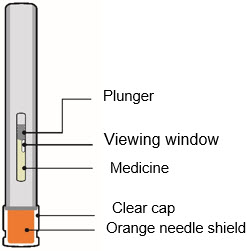
Parts of your TRYNGOLZA autoinjector | |||
| Single-dose autoinjector |  | ||
| Other supplies (not included) |
Alcohol wipe |
Sharps container | |
Cotton ball or gauze |
Small bandage | ||
| Preparing to inject TRYNGOLZA | |||
| Step 1 Remove from the refrigerator a) Remove the autoinjector from the refrigerator. | 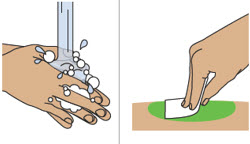 | ||
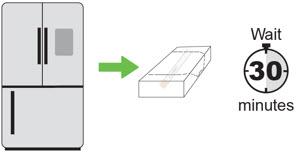
| b) Keep the autoinjector in the original carton and let the autoinjector come to room temperature for 30 minutes before injecting. | |||
| Do not try to speed up the warming process using other heat sources, such as a microwave or hot water. | |||
| Step 2 Check the medicine | |||
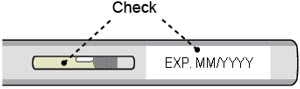
| a) Check the expiration (EXP) date. | 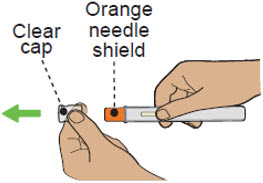 | ||
| b) Check the medicine through the viewing window. The TRYNGOLZA medicine should be clear and colorless to yellow. There should be no particles. It is normal to see air bubbles in the solution. | |||
Do not use the autoinjector if the:
| |||
| Step 3 Choose the injection site | 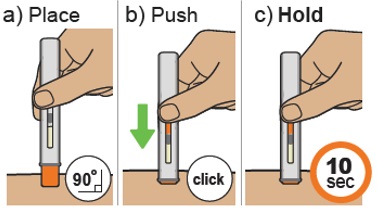 | ||
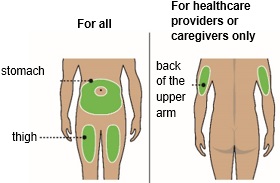
| a) Choose an injection site on the stomach or the front of the thigh. | |||
| b) Only your healthcare provider or caregivers may choose the back of upper arm. | |||
Do not inject:
| |||
| Step 4 Wash hands and clean the injection site | 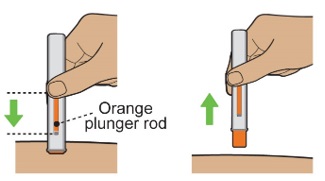 | ||
| a) Wash your hands with soap and water. | |||
| b) Clean the injection site with an alcohol wipe in a circular motion. Let the skin air dry. | |||
| Do not touch the cleaned skin before injecting. | |||
| Injecting TRYNGOLZA | |||
| Step 5 Remove and throw away the clear cap | |||
| a) Hold the autoinjector by the middle with the clear cap facing away from you. |  | ||
| b) Remove the clear cap by pulling it straight off. Do not twist it off. The needle is inside the orange needle shield. | |||
| c) Throw away the clear cap in the trash or sharps container. | |||
| |||
| Step 6 Begin injection | |||
| a) Hold the autoinjector in 1 hand. Place the orange needle shield at a 90-degree angle against your skin. Make sure you can see the viewing window. | 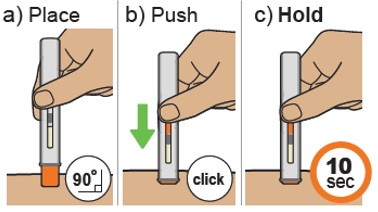 | ||
| b) Push firmly and hold the autoinjector straight against the skin. You will hear a click as the injection starts. | |||
| You may hear a second click. This is normal. The procedure is not finished. | |||
| c) Hold the autoinjector against the skin for 10 seconds to make sure the full dose has been given. | |||
| Do not move, turn, or change the angle of the autoinjector during the injection. | |||
| Step 7 Finish injection | |||
a) Check that the orange plunger rod has moved down to fill the entire viewing window.
| 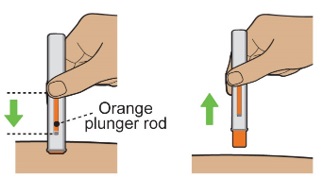 | ||
| b) Remove the autoinjector by lifting it straight up. After removal from the skin, the orange needle shield locks into place and covers the needle. | |||
| c) There may be a small amount of blood or liquid where you injected. This is normal. | |||
| If needed, press a cotton ball or gauze on the area and apply a small bandage. | |||
| Do not reuse the autoinjector. | |||
| Throwing away TRYNGOLZA | |||
| Step 8 Throw away autoinjector |  | ||
| a) Put the used autoinjector in a sharps container right away after use. | |||
| Do not throw away the autoinjector in your household trash. Do not recycle your used sharps disposal container. Do not reuse the autoinjector or clear cap. | |||
If you do not have an FDA-cleared sharps container, you may use a household container that is:
| |||
| When your sharps disposal container is almost full, you will need to follow your community guidelines for the right way to dispose of your sharps disposal container. There may be state or local laws about how you should throw away used autoinjectors. | |||
| For more information about safe sharps disposal, and specific information about sharps disposal in the state that you live in, go to the FDA's website at: http://www.fda.gov/safesharpsdisposal. | |||
| Do not throw away your used sharps disposal container in your household trash unless your community guidelines permit this. Do not recycle your used sharps disposal container. | |||
| For more information, go to https://www.TRYNGOLZA.com or call 1-833-644-6647. If you still have questions, contact your healthcare provider. | |||
| Distributed by: Ionis Pharmaceuticals, Inc., Carlsbad, CA 92010 | |||

Mechanism of Action
Olezarsen is an ASO-GalNAc 3 conjugate that binds to apoC-III mRNA leading to mRNA degradation and resulting in a reduction of serum apoC-III protein. Reduction of apoC-III protein leads to increased clearance of plasma TG and very low-density lipoprotein (VLDL).